
Tools
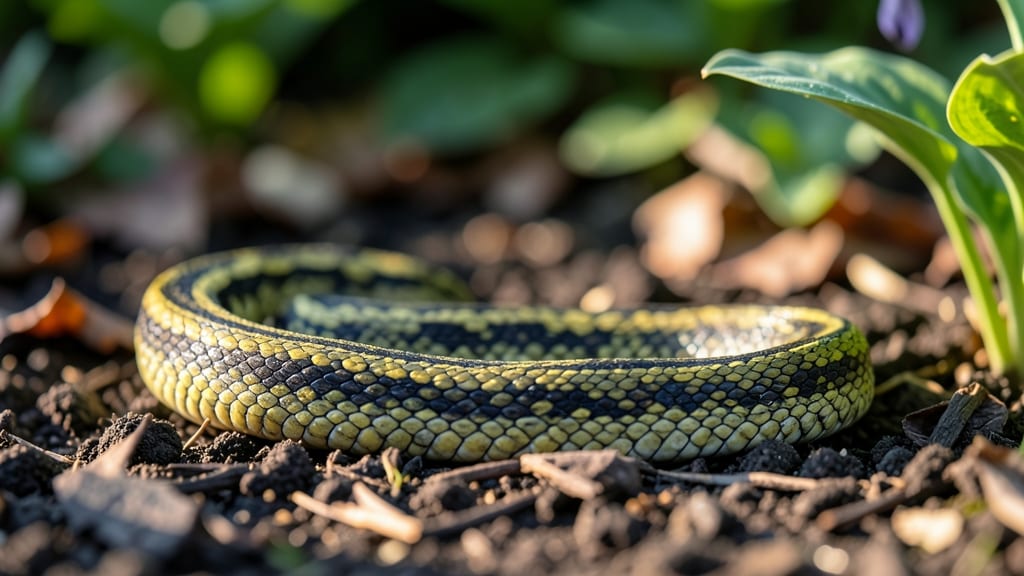
Finding images of garden snakes reveals striking species like garter snakes with bright yellow stripes, rat snakes with glossy black-and-white patterns, or milk snakes showcasing bold red-and-white bands. These non-venomous serpents often appear in garden habitats across North America, where their camouflage helps them thrive near logs, rocks, or dense foliage.
Garden snakes are some of the most visually diverse reptiles you'll encounter in nature. 🐍 Their markings aren't just for show—they serve as camouflage against predators and help them ambush prey like insects or small rodents.
For instance, garter snakes often sport three yellow stripes along their backs, while rat snakes may display intricate patterns that mimic bark or leaf litter. These visual adaptations make them fascinating subjects for photography, especially when spotted basking on rocks or sunning themselves along garden paths.
When photographing these serpents, timing matters most. Dawn and dusk are prime times to capture them active, while macro lenses (100mm or longer) bring out their intricate scales and coloration. Always maintain a safe distance—never corner or handle wild snakes, as their first instinct is to flee rather than strike.
The key is patience and respect for their natural behavior, which makes every encounter and image opportunity even more rewarding.
💡 In This Article
- Identifying Garden Snake Species by Visual Traits
- Best Ways to Photograph Garden Snakes in Nature
Identifying garden snake species by visual traits
Garden snakes showcase remarkable diversity in their visual traits, with each species developing unique patterns that serve survival functions. For example, garter snakes (Thamnophis spp.) often display three distinct yellow or green stripes running along their backs, separated by darker brown or black bands.
These stripes aren't just decorative—they help break up their outline when viewed from above, making them harder for predators like birds of prey to spot. Their scales typically measure around 1.5-2 millimeters in width, giving them a sleek, streamlined appearance perfect for gliding through grassy habitats.
Rat snakes (Pantherophis spp.), on the other hand, boast glossy, smooth scales that reflect light differently than garter snakes, creating a slightly iridescent sheen. Their patterns often mimic bark or leaf litter—think intricate swirls of black, gray, and white that blend seamlessly with forest floors.
What's fascinating is how their coloration varies by region: Northern rat snakes may appear darker to absorb heat in cooler climates, while southern varieties often showcase lighter patterns to reflect sunlight in warmer areas.
Milk snakes (Lampropeltis spp.) take a different approach with their bold red, black, and white banding, a color scheme that mimics the venomous coral snake as a form of mimicry to deter predators.
Habitat plays a crucial role in these visual adaptations. Garter snakes thrive near water sources like ponds or streams, where their semi-aquatic lifestyle supports their diet of fish and amphibians. Their bodies are typically 1-2 feet long as adults, with slender builds that allow them to navigate through dense vegetation.
Rat snakes, however, prefer wooded areas and rocky outcrops, where their climbing abilities come into play—look for them coiled on tree branches or sunning themselves on warm rocks.
Milk snakes often inhabit grasslands and open fields, where their bright patterns stand out against the vegetation, making them easier to spot during their active periods.
One key trait to watch for when identifying these species is their head shape. Rat snakes have broader heads compared to their slender necks, an adaptation for consuming larger prey like mice or birds. Garter snakes, meanwhile, maintain a more uniform head shape that complements their insect-heavy diet.
These subtle differences become more apparent when observing snakes in their natural habitats, where their behaviors—like flicking their tongues to gather scent—provide additional clues. For instance, garter snakes often exhibit a more nervous demeanor, quickly retreating when threatened, while rat snakes may remain still before slowly slithering away.
Their eye color also offers distinguishing features. Garter snakes typically have round pupils, while rat snakes and milk snakes often display vertically elliptical pupils—similar to cats—which help them see clearly in low-light conditions. This adaptation is particularly useful during dawn and dusk, when these snakes are most active.
Understanding these visual cues not only helps in identification but also provides insight into their ecological roles. For example, garter snakes' bright stripes may attract pollinators, inadvertently aiding nearby plants, while rat snakes' camouflage helps them stalk prey without being detected.
When examining these snakes in the wild, pay attention to their movement patterns. Garter snakes often move in a smooth, undulating motion, while rat snakes may exhibit a more deliberate, sidewinding gait when climbing.
Milk snakes, with their vibrant patterns, tend to move more quickly when disturbed, using their bright colors as a warning signal. These behavioral traits, combined with their visual characteristics, create a comprehensive picture that makes identifying garden snakes both an art and a science. 🔥