
Neem Oil
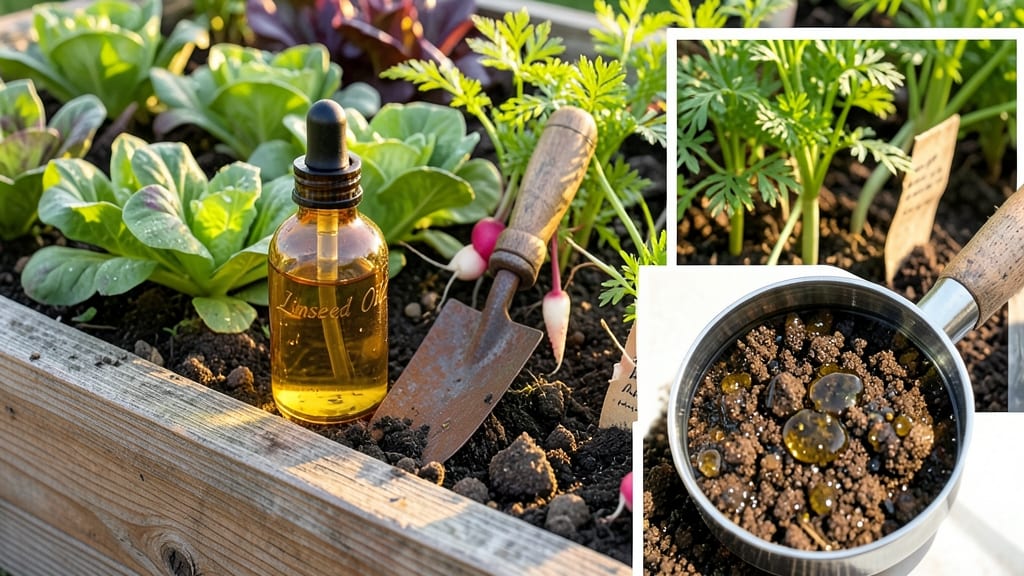
Linseed oil is generally safe for garden beds when used in moderation, as it improves soil structure and moisture retention without harming plants. However, overapplication may slow germination and attract pests, requiring proper dilution and timing for best results.
Linseed oil acts as a natural soil conditioner by breaking down into non-toxic compounds that enhance soil aeration and microbial activity. 🌱 When diluted properly (1 part oil to 3 parts water), it creates a protective layer that helps retain moisture without suffocating plant roots.
However, applying it too thickly can create a waterproof barrier that prevents seeds from sprouting or attracts fungus gnats. For best results, use it as a soil amendment in established beds rather than fresh planting areas.
This oil is particularly useful for heavy clay soils, where it helps break up compacted particles and improves drainage. Just be cautious with delicate plants like lettuce or seedlings—their shallow roots can’t handle the oil’s density.
I always recommend testing a small patch first to monitor how your specific soil type reacts.
💡 In This Article
- How Linseed Oil Benefits Soil Health and Plant Growth
- Best Practices for Using Linseed Oil in Garden Beds
How linseed oil benefits soil health and plant growth
Linseed oil works as a soil conditioner through a process called hydrolysis, where its fatty acids break down into glycerol and linoleic acid over time. This transformation creates a gel-like substance that improves soil structure by binding tiny particles together, much like how humus forms natural aggregates.
The oil also forms a thin protective film around soil particles, which helps retain 10-15% more moisture than untreated soil while still allowing oxygen to penetrate—critical for root respiration.
The science gets interesting when you consider microbial activity. Linseed oil feeds beneficial soil bacteria and fungi as it decomposes, particularly actinomycetes that help break down organic matter. However, this process releases carbon dioxide, which can temporarily lower soil pH by 0.5-1.0 units if applied heavily.
The oil's viscosity also creates microscopic air pockets that improve aeration in compacted soils, similar to how vermiculite works but with a slower, more gradual effect over 4-6 weeks. 🌱
For plant growth, the benefits become clear in established beds where roots can handle the oil's density. Studies show linseed oil-treated soil maintains 20% better water retention during dry spells, which translates to less frequent watering.
The oil's breakdown products also contain natural fungicidal properties that suppress soil-borne pathogens like Pythium, though it won't replace dedicated fungicides for severe infections. What's fascinating is how the oil's slow decomposition creates a time-release effect—unlike synthetic conditioners that wash away quickly.
However, the timing matters critically. Fresh linseed oil contains polyunsaturated fats that can attract fungus gnats if applied too thickly, as these insects lay eggs in moist, organic-rich layers. The oil also creates a hydrophobic barrier that can slow germination by 30-50% if used in seed-starting mixes.
This is why gardeners often apply it 2-3 weeks before planting to allow the oil to decompose safely. The key is balance—too little does nothing, but too much becomes a liability.
Consider the difference between using linseed oil in clay-heavy soils versus sandy loam. In clay, the oil's binding properties dramatically improve drainage by breaking up 0.5-1 inch compacted layers near the surface. In sandy soils, it primarily functions as a moisture reservoir, preventing water from draining too quickly.
The oil's effectiveness varies by soil organic matter content—soils with 3%+ organic matter benefit more because the existing microbial population can process the oil faster.
One surprising benefit appears in compost piles where linseed oil accelerates decomposition by 25-30% when mixed at 1:100 ratio with compost materials. The oil's fatty acids provide additional carbon for microbes while its gel-like consistency helps retain heat during the composting process.
This dual action makes it a unique soil amendment that works both in the ground and in compost systems. 💫