
Tools
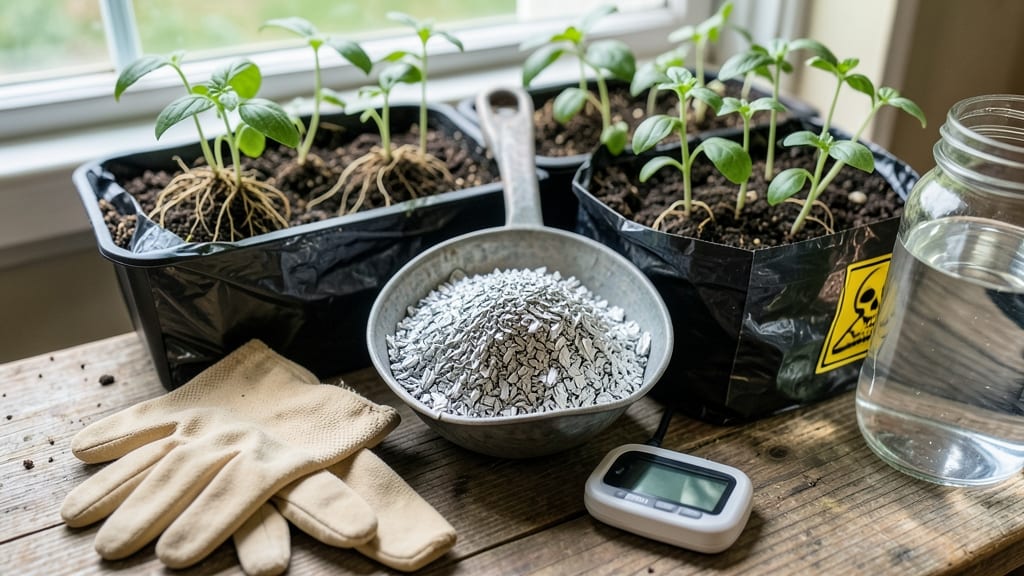
Gardening with vermiculite can be dangerous because older supplies often contain asbestos, which creates serious inhalation risks when disturbed. Always choose asbestos-free brands or safer alternatives like perlite or coconut coir for your potting mixes.
This risk stems from historical mining practices, particularly in places like Libby, Montana, where asbestos was accidentally mixed into commercial vermiculite during processing. 🌱 Even small particles released when handling contaminated bags can lodge in your lungs over time, leading to diseases like mesothelioma or asbestosis.
The good news? Reputable brands now test their products for asbestos, so checking for third-party certifications gives you peace of mind.
If you're unsure about your current supply, consider switching to alternatives like perlite (for aeration) or coconut coir (for moisture retention), both of which are completely safe and widely available.
For seed starting, I've found that a mix of coconut coir and rice hulls works just as well while eliminating any health concerns entirely.
💡 In This Article
- Asbestos Risks in Vermiculite: What You Need to Know
- Safer Vermiculite Alternatives for Soil and Seed Starting
Asbestos risks in vermiculite: what you need to know
The danger with vermiculite lies in its historical contamination with asbestos, a naturally occurring mineral that was accidentally mixed into commercial supplies during mining and processing.
The most infamous case involved the Libby, Montana, mine, where asbestos fibers were present in vermiculite ore from the 1920s through the 1990s. When heated during processing, these fibers became airborne and were packaged into bags sold worldwide for gardening. 🏗️
Inhaling even microscopic asbestos fibers can lead to serious health issues, including mesothelioma (a rare but deadly lung cancer) and asbestosis (a chronic lung disease). The fibers are needle-like, sharp enough to pierce lung tissue and cause inflammation over decades.
Studies show that prolonged exposure to contaminated vermiculite increases lung cancer risk by up to 500% compared to unexposed populations. The latency period—time between exposure and disease—can be 20-50 years, making early detection difficult.
Identifying safe vermiculite requires checking for third-party certifications, such as those from the U.S. Consumer Product Safety Commission (CPSC) or Environmental Protection Agency (EPA). Brands like Therm-O-Rock and W.R. Grace now offer asbestos-free products, but older bags (pre-1990s) should be avoided entirely.
If you're unsure, test your vermiculite with a polarized light microscope (PLM), the gold standard for asbestos detection.
Even handling contaminated vermiculite poses risks. When you open a bag or sift through loose material, fibers can become airborne and linger in the air for hours. Wearing an N95 respirator mask and working in a well-ventilated area reduces exposure, but the safest option is to replace contaminated supplies entirely.
The EPA recommends disposing of old vermiculite as hazardous waste, not compost or garden soil.
Here’s what happens when fibers enter your lungs: they trigger chronic inflammation, scarring (fibrosis), and genetic mutations in lung cells. Unlike other contaminants, asbestos fibers don’t break down naturally—they remain embedded in tissue for life. 🚨 This is why prevention is critical: once damage starts, it’s often irreversible.
For visual identification, asbestos-contaminated vermiculite often appears slightly darker or has a shiny, fibrous texture when crushed. If you suspect contamination, avoid using it for seed starting or potting mixes, especially for edible plants where soil may be ingested. The risks aren’t worth the temporary benefits of moisture retention.
Always prioritize certified, asbestos-free products. The peace of mind is worth the slight extra cost—your lungs will thank you decades down the road. 💫