
Container Gardens
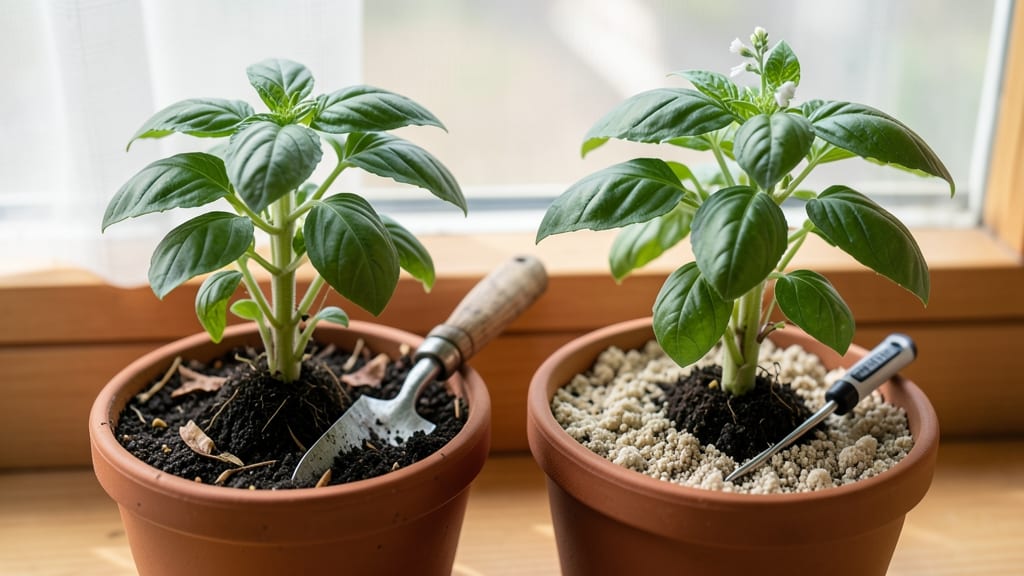
Garden soil can't be used directly in pots because it compacts easily, drains poorly, and may contain weeds or pests. Mix it with perlite or coconut coir for better aeration and drainage, or opt for lightweight potting mixes instead.
Garden soil's heavy clay or sand content makes it too dense for container plants, which need free-draining media to prevent root rot. 🌱 The lack of organic matter also means nutrients deplete faster in small pots, stunting growth.
I've seen beginners struggle when using garden soil straight from the yard—even adding compost won't fully solve the drainage issue. For best results, start with a quality potting mix and only amend garden soil if you're creating custom blends for large containers.
If you must use garden soil, blend it with 30-50% perlite or coconut coir to improve aeration, and add a slow-release fertilizer to compensate for nutrient loss. Just remember: plants in containers rely on you to mimic ideal growing conditions, and heavy soil won't cut it without modification.
💡 In This Article
- Why Garden Soil Fails in Container Planting
- Best Ways to Adapt Garden Soil for Pots
Why garden soil fails in container planting
Garden soil's natural composition makes it a poor fit for pots because its particles pack tightly together, creating a dense matrix that restricts oxygen flow to roots.
Unlike loose potting mixes designed for containers, garden soil often contains 20-40% clay or sand, which holds water like a sponge—leading to waterlogged conditions that suffocate roots within 24-48 hours.
This compaction issue stems from how soil particles bind during natural settling processes in the ground, where they're constantly compressed by weight and moisture.
The problem worsens in containers because there's no room for expansion.
When watered, garden soil swells slightly as it absorbs moisture, then contracts as it dries—this constant movement creates tiny cracks that eventually become pathways for air, but they're never sufficient for proper aeration. 🌱 For comparison, ideal potting mixes contain 30-50% organic matter (like peat or coconut coir) that stays fluffy even when wet, allowing roots to breathe while holding just enough moisture.
Without this structure, container plants often develop root rot from poor drainage.
Nutrient availability becomes another critical issue. Garden soil's nutrients are bound to clay particles and organic matter that decompose slowly over years, while container plants need readily available nutrients delivered through regular watering.
The confined space of pots accelerates nutrient depletion—what might last a season in garden beds gets exhausted in just 6-12 weeks in containers. This explains why plants grown in unamended garden soil often show yellowing leaves (a classic sign of nutrient deficiency) despite appearing well-watered.
Weed seeds and pathogens present in garden soil pose additional risks. A single handful of garden soil can contain thousands of weed seeds that will germinate in the warm, moist conditions of pots, competing with your intended plants for resources.
Similarly, soilborne diseases like Pythium or Fusarium thrive in the stagnant water conditions created by compacted soil, making containers breeding grounds for plant infections that are nearly impossible to eradicate once established.
Consider the texture difference: garden soil feels heavy and gritty when dry, while quality potting mix has a light, almost powdery consistency that breaks apart easily. This structural difference isn't just about feel—it directly impacts how water and air move through the growing medium.
In containers, where every inch matters, this physical property becomes the difference between thriving plants and struggling ones that never reach their full potential.
The root zone in pots is also more vulnerable to temperature extremes. Compacted garden soil retains heat during sunny days and stays cold at night, creating thermal stress for delicate root systems.
Most container plants prefer soil temperatures between 60-75°F—a range that's hard to maintain when using garden soil's heat-retaining properties. 🌡️ This thermal instability further compounds the stress plants experience from poor aeration and drainage.