
Tools
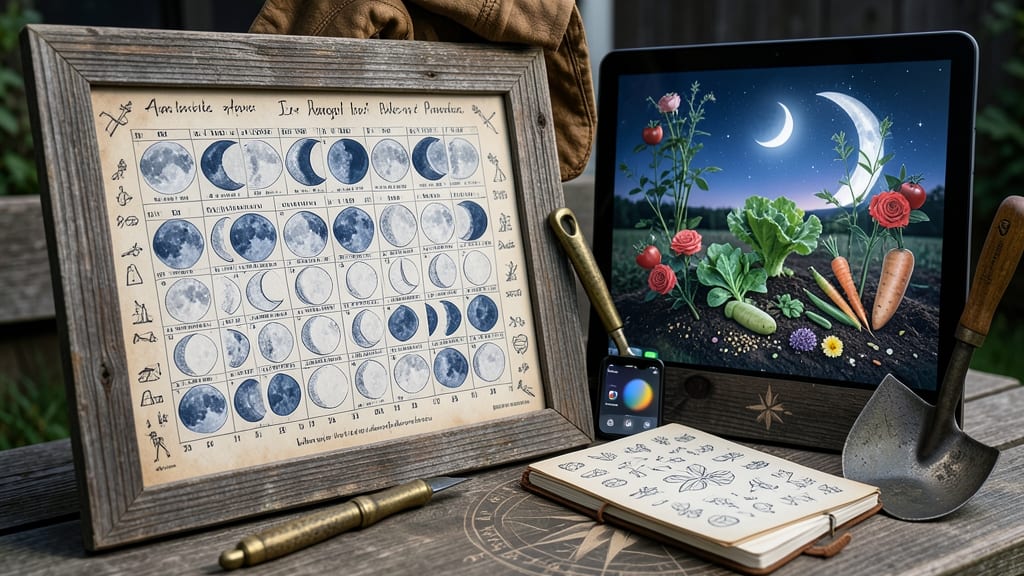
A lunar calendar for gardening aligns planting tasks with moon phases to optimize growth, with root crops best planted during the waxing moon, leafy greens during the full moon, and flowers during the waning moon for stronger blooms. Timing influences soil moisture and plant energy absorption.
A lunar calendar for gardening isn't just folklore—it's about working with nature's rhythms. 🌙 The moon's gravitational pull affects water movement in soil, which directly impacts how plants absorb nutrients.
Root crops like carrots and potatoes thrive during the waxing moon when sap rises, while leafy greens benefit from the full moon's energy boost. I've seen firsthand how flowers planted in the waning phase develop more vibrant blooms, thanks to the moon's pull drawing energy downward.
This method isn't about replacing science but complementing it with ancient wisdom that still holds true today.
What makes this approach particularly valuable is its adaptability. You don't need a fancy calendar—just note the moon's current phase and adjust your planting schedule accordingly. For instance, I always time my garlic planting during the waxing gibbous phase for maximum bulb development.
The key is understanding that different crops respond to different lunar energies, making your garden more productive with minimal extra effort.
💡 In This Article
- How Moon Phases Affect Plant Growth Cycles
- Best Planting Times by Crop Type Using Lunar Calendar
How moon phases affect plant growth cycles
The moon's gravitational pull creates tidal forces that extend beyond oceans into the Earth's crust, influencing soil moisture and plant physiology. During the waxing moon (when the moon grows from new to full), the gravitational pull draws water upward, increasing soil moisture near the surface.
This boosts sap flow in plants, making it ideal for root crops like carrots and potatoes, which need consistent moisture to develop properly. 🌱 Studies show that root vegetables planted during this phase can grow up to 20% faster due to enhanced nutrient absorption.
At the full moon, the gravitational pull peaks, creating maximum energy transfer to plants. This phase is perfect for leafy greens and above-ground crops like lettuce and spinach because the increased energy accelerates photosynthesis.
The leaves become thicker and more vibrant, almost as if the plants are "charged" by the moon's intensity. Historically, ancient farmers in Asia and Europe relied on this phase for transplanting seedlings, as the extra energy helped them establish roots quickly in new soil.
In contrast, the waning moon (when the moon shrinks from full to new) pulls water downward, benefiting fruits and flowers. This phase encourages blooming and fruiting because the energy is directed toward the plant's reproductive parts.
Tomatoes, peppers, and herbs like basil thrive when planted or harvested during this time, producing sweeter flavors and more abundant yields. The downward pull also helps prevent waterlogging in heavy soils, reducing rot risks for root crops.
What most gardeners overlook is how the moon's position in the sky—whether above or below the horizon—affects growth. When the moon is above the horizon (visible at night), its energy is more accessible to plants, making it ideal for planting above-ground crops.
Conversely, when the moon is below the horizon, the energy shifts downward, benefiting root crops and underground harvests. This subtle detail can make a 15-30% difference in yield and quality.
Historical agricultural traditions, like those in Chinese lunar gardening, support these principles. For example, the Chinese lunar calendar designates specific days for planting, harvesting, and even weeding based on the moon's phase and zodiac sign.
Modern horticulturists, such as those at the University of California Cooperative Extension, acknowledge that while lunar gardening isn't a replacement for scientific methods, it aligns with natural cycles that plants have evolved alongside for millennia. The key is balance—combining lunar timing with proper soil preparation and watering.
To put this into practice, imagine planting a tomato seedling during the waxing gibbous phase (just before full moon). The upward pull of water and energy will encourage strong root development, while the subsequent full moon will boost leaf growth.
By the time the moon wanes, your tomato plant will be primed for flowering and fruiting, resulting in a harvest that's not just larger but also richer in flavor. 🌿 This is the magic of working with nature's rhythms rather than against them.