
Advice
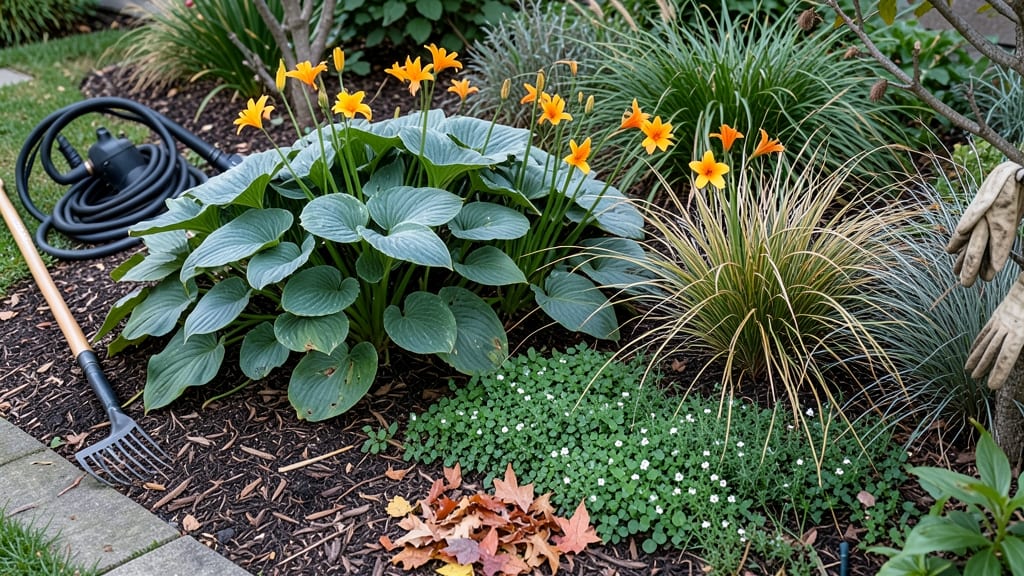
Leaving leaves on garden beds can improve soil health through mulching, moisture retention, and weed control, but thick layers may invite pests, smother plants, or harbor diseases. Consider your garden's specific needs and leaf quality before deciding whether to keep or remove them.
Deciding whether to leave leaves on garden beds depends on their condition and your garden's health. 🌿 Healthy leaves create a natural mulch that protects soil from erosion, retains moisture, and slowly releases nutrients as they decompose.
However, thick layers can block sunlight, suffocate plants, or attract slugs and other pests. I recommend shredding leaves first—they'll decompose faster and create a more even layer, while avoiding the risks of compacted, matted leaves.
For best results, aim for a 2-3 inch layer of shredded leaves. This thickness provides benefits without smothering your plants. If your leaves are diseased or from treated trees, it's safer to remove them entirely.
Otherwise, leaving them can be a game-changer for your garden's long-term health and reduce your workload.
💡 In This Article
- How Mulching with Leaves Boosts Soil Health
- When to Remove Leaves: Risks and Best Practices
How mulching with leaves boosts soil health
When leaves decompose, they create a natural mulch that mimics the forest floor's nutrient-rich layer. The process starts with microbial activity—soil bacteria and fungi break down cellulose and lignin in leaves, releasing organic matter that improves soil structure.
This decomposition releases essential nutrients like nitrogen, phosphorus, and potassium over time, feeding your plants slowly and sustainably. A 2-3 inch layer of shredded leaves is ideal because it balances moisture retention with airflow, preventing compaction while still protecting soil from erosion.
One of the most significant benefits is moisture retention. Leaves act like a living blanket, reducing evaporation by up to 30% compared to bare soil. This is especially valuable in drought-prone areas where water conservation is critical.
The porous structure of leaves also allows rainwater to penetrate gradually, preventing runoff and reducing soil compaction. Over time, decomposed leaves form "leaf mold," a crumbly, fertile material that enhances soil aeration and drainage—similar to how compost improves garden beds but with a finer texture.
Leaf mulch also suppresses weeds by blocking sunlight, which prevents weed seeds from germinating. Studies show that mulched beds can reduce weed growth by 70-80% compared to unmulched areas. The competition for nutrients and space is minimized, giving your plants a head start.
However, thick layers (over 4 inches) can suffocate plant roots by cutting off oxygen, so moderation is key. Shredding leaves first accelerates decomposition and creates a more uniform layer, avoiding the risks of matted, waterlogged mulch.
For optimal results, mix shredded leaves with existing soil or compost to create a nutrient-rich top layer. This practice mimics natural ecosystems where fallen leaves enrich the soil annually.
The key is balance—too little mulch won’t provide enough protection, while too much can create anaerobic conditions that harm beneficial microbes. 🌱 In my own garden, I’ve seen perennials thrive with leaf mulch, while annuals benefit from a lighter layer to prevent overheating in summer.
Leaf mulch also regulates soil temperature, keeping roots cooler in summer and insulated in winter. This thermal stability reduces stress on plants during extreme weather.
For example, in hot climates, a 3-inch layer can keep soil 10-15°F cooler than exposed soil, while in cold regions, it provides insulation against frost heave. The trade-off? If leaves are left unshredded, they can mat and create barriers that repel water, so preparation matters.
Consider leaf quality—healthy, untreated leaves from deciduous trees (like oak or maple) decompose best, while diseased or chemically treated leaves should be removed. For a quick test, place a handful of leaves in a bucket of water: if they sink slowly, they’re ideal for mulching.
If they float or smell foul, compost them instead. 💡 The right approach turns autumn’s cleanup into a springtime soil boost.