
Tools
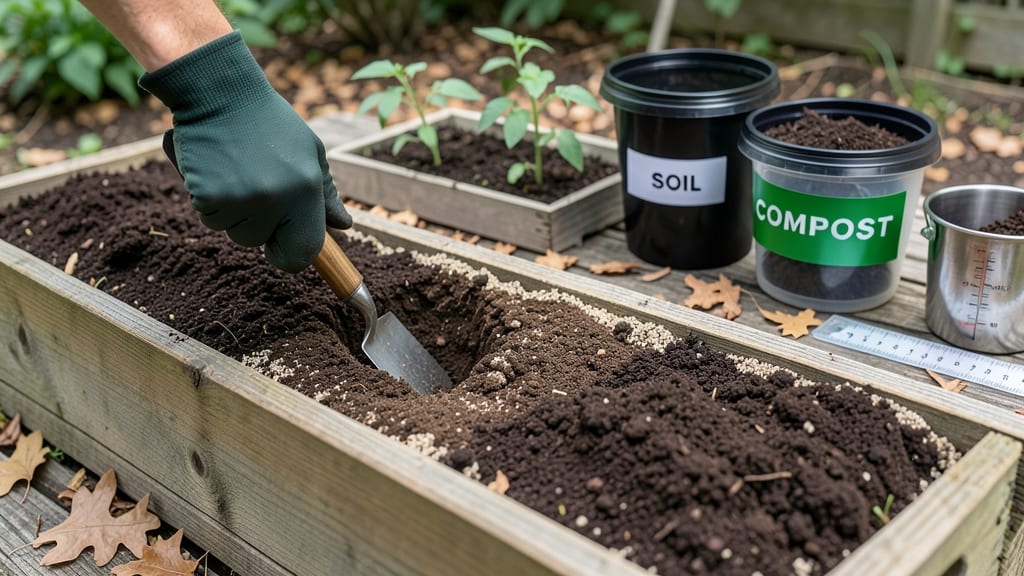
The ideal soil to compost ratio for vegetable gardens balances nutrients and structure: use 3 parts soil to 1 part compost for general planting, 2 parts soil to 1 part compost for heavy-feeding plants like tomatoes, and 4 parts soil to 1 part compost for root vegetables. Always blend well to prevent nutrient pockets and improve root penetration.
This ratio works because compost adds organic matter that improves soil texture and microbial activity, while native soil provides structure and stability. 🌱 For heavy feeders like peppers, the higher compost ratio feeds their rapid growth, while root crops need more soil to prevent stunting.
I recommend testing your compost first—fresh, nitrogen-rich compost can burn roots, so aged compost (2-3 months) works best for most vegetables.
Season matters too: in spring, when plants start actively growing, you might increase the compost ratio slightly to support new root development. Conversely, in late summer, reducing compost helps prevent fungal issues from excess moisture.
Always mix thoroughly to distribute nutrients evenly—this prevents clumping and ensures consistent growth across your garden.
💡 In This Article
- How Compost Composition Affects Vegetable Growth
- Adjusting Soil-Compost Ratios by Plant Type and Season
How compost composition affects vegetable growth
Compost acts like a nutrient powerhouse, but its impact depends on the balance between nitrogen (green materials like grass clippings) and carbon (brown materials like dried leaves).
Fresh compost, high in nitrogen, can "burn" young roots by creating a salty environment, while aged compost (2-3 months) breaks down into a stable, crumbly texture that plants love.
The 3:1 soil-to-compost ratio works for most vegetables because it provides enough organic matter to feed soil microbes without overwhelming the plant's ability to absorb nutrients. 🌱
Heavy feeders like tomatoes and peppers need more compost because they deplete soil nutrients rapidly. A 2:1 ratio gives them the extra phosphorus and potassium they crave for fruit development, while root crops like carrots and potatoes prefer a 4:1 ratio to prevent stunted growth from compacted soil.
The extra soil here improves drainage and prevents roots from becoming forked or twisted—a common problem in overly rich mixes.
Soil aeration plays a hidden but crucial role. Compost improves pore space in clay soils, while sandy soils benefit from its water-holding capacity. The ideal mix creates a "sponge-like" structure where roots can breathe and microbes thrive.
For example, adding 1 part compost to 3 parts clay soil can transform it from a brick-like barrier to a workable medium within weeks. This structural improvement is why compost isn't just fertilizer—it's a soil architect.
pH balance shifts with compost type too. Worm castings (a premium compost) are nearly neutral (pH 6.5-7.5), while fresh manure can be acidic (pH 5.5-6.5). Leaf mold, on the other hand, is slightly acidic (pH 5.5-6.0) and perfect for acid-loving plants like blueberries.
Always test your soil before amending—this tells you whether to adjust compost ratios or choose different types for optimal plant health. 💫
Microbes are the unsung heroes here. A good compost introduces billions of beneficial bacteria and fungi that break down organic matter and make nutrients available to plants. The 1:3 ratio creates an ideal microbial habitat where these organisms can thrive without competing with plant roots for resources.
Too much compost? Microbes outcompete plants for nitrogen. Too little? Roots struggle to access the nutrients microbes release.
Seasonal variations matter too. In spring, when roots are establishing, a slightly higher compost ratio (2.5:1) supports early growth. In fall, reducing compost (4:1 ratio) prevents winter rot from excess moisture.
This seasonal flexibility is why experienced gardeners keep compost ratios as dynamic as their planting schedule. The key is observing your plants—their color, growth rate, and leaf texture will tell you if you've got the mix just right. ✨
What most gardeners overlook is compost maturity. Fresh compost can have a 30:1 carbon-to-nitrogen ratio, while aged compost drops to 15:1 or lower. This maturity affects how quickly nutrients become available.
For example, fresh compost releases nitrogen rapidly, which is great for leafy greens but can scorch fruiting plants. Aged compost, with its balanced 20:1 ratio, provides steady nutrition that matches plant needs throughout the growing season.