
Watering
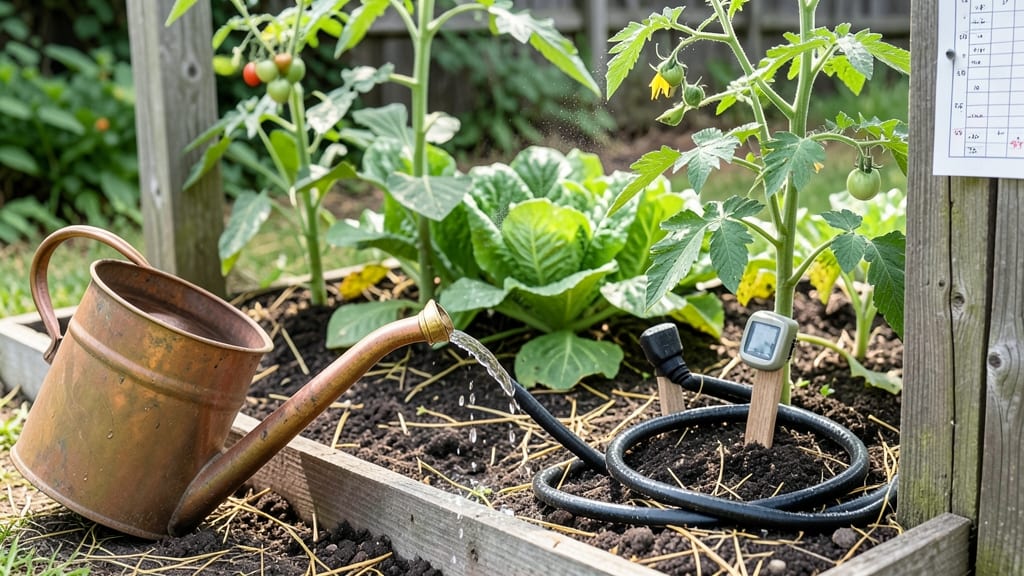
Watering your vegetable garden every day can actually harm your 🥬 plants more than help them — the key is understanding when and how much your plants truly need.
Overwatering is a silent killer in gardens, drowning roots and inviting pests like fungus gnats. Yet skipping water entirely can leave your tomatoes wilting by noon. The solution? A smarter approach that balances moisture, soil type, and plant needs.
In this guide, I’ll break down the science behind watering schedules, from leafy greens that thrive with frequent shallow drinks to root crops that demand deep, infrequent soaks. You’ll also learn how to read your soil and adjust for heatwaves or drought.
By the end, you’ll know exactly when to skip the daily routine and when to reach for the hose — without guessing or wasting water.
Daily watering rules: when and why it’s harmful (or helpful) for vegetables
Watering your vegetable garden daily can feel like a safety net—especially when you’re worried about drought or wilting plants. But here’s the hard truth: daily watering often does more harm than good unless you’re dealing with extreme heat, sandy soil, or young seedlings.
The key lies in understanding how water affects root development, soil oxygen levels, and plant stress responses. Too much water smothers roots, while too little forces plants to work harder, leaving them vulnerable to pests and disease.
Most mature vegetable plants thrive on deep, infrequent watering rather than shallow, frequent sessions. This encourages roots to grow deeper in search of moisture, making plants more resilient. For example, tomatoes and peppers develop stronger root systems when watered deeply every 2–3 days instead of lightly every day.
Meanwhile, leafy greens like lettuce and spinach have shallow roots and benefit from more frequent moisture—but even they can suffer if water pools around their stems.
Soil type plays a huge role too. Clay soil holds moisture for days, while sandy soil drains like a sieve. If your garden has clay, daily watering can lead to root rot in as little as 48 hours of saturation.
On the flip side, sandy soil may need daily watering in summer—but that’s still not ideal. The goal is consistent moisture, not a soggy mess.
Let’s talk about the hidden dangers of daily watering. When soil stays too wet, it cuts off oxygen to roots, leading to anaerobic conditions—a breeding ground for fungal diseases like Phytophthora and Pythium. You’ll spot these as yellowing leaves, mushy stems, or blackened roots.
Even worse, daily watering can wash away nutrients, forcing you to fertilize more often. It’s a vicious cycle that weakens your plants over time.
🚨 CALLOUT-WARNING 🚨
- Root suffocation: Wet soil blocks oxygen, causing root rot in 2–3 days.
- Fungal outbreaks: Moist leaves at night invite blight and powdery mildew.
- Nutrient loss: Frequent watering leaches away nitrogen and potassium.
- Weak roots: Plants rely on shallow watering and develop shallow root systems.
✅ Exception: Only water daily in extreme heat (90°F+) or with sandy soil.
🌱
Not all vegetables are created equal when it comes to water needs. Leafy greens like kale and Swiss chard have shallow roots and prefer even moisture, but they still don’t need daily watering unless it’s scorching hot. Root vegetables—think carrots, beets, and radishes—actually deteriorate if overwatered, as excess moisture causes them to split or rot.
Even herbs like basil and cilantro can suffer if their roots sit in soggy soil for too long.
So how do you know if you’re overwatering or underwatering? Wilting isn’t always a sign of thirst—it can also mean your plants are drowning. Check the soil 1–2 inches deep: if it’s damp, hold off on watering.
For underwatering, look for crispy leaf edges, drooping foliage that doesn’t bounce back, or soil pulling away from container walls. These are clear signals to increase watering—but not necessarily to the daily routine.
Timing matters just as much as frequency. Watering in the early morning (before 10 AM) gives plants time to dry out, reducing fungal risks. Night watering is a common mistake—it keeps leaves wet overnight, inviting diseases like downy mildew.
If you must water in the evening, aim for the base of plants and avoid wetting foliage. A soaker hose or drip irrigation system is your best friend here, delivering water directly to roots without waste.
Let’s debunk a myth: “Vegetables need daily watering in summer.” While it’s true that summer heat increases evaporation, most plants handle deep watering every 2–3 days just fine—provided your soil has good drainage.
The exception? Seedlings and transplants, which need daily moisture until they establish roots (usually 2–3 weeks). Even then, a light misting or shallow watering is enough to keep them happy without drowning them.
Here’s a quick rule of thumb: Water when the top 1–2 inches of soil feel dry. Stick your finger in the soil—if it’s moist, wait. If it’s bone-dry, it’s time to water. This method beats guesswork and keeps your garden healthy without overdoing it.
And remember, mulch is your ally: a 2–3 inch layer of straw or wood chips locks in moisture, cutting your watering needs by 30–50%.
💧 The bottom line? Daily watering is a crutch, not a rule. Most vegetables prefer deep, infrequent watering that builds strong roots and resilience. Pay attention to your soil, your plants, and the weather—and adjust accordingly.
Your garden will thank you with bigger yields, fewer diseases, and less wasted water.
Science-backed watering schedule by plant type: how often to water each vegetable
Not all vegetables crave the same watering routine—some thrive with daily sips while others need deep, infrequent drinks. The key is matching your watering schedule to your plants' natural needs.
For example, leafy greens like lettuce and spinach prefer consistent moisture, while root vegetables such as carrots and potatoes need deeper watering to prevent splitting. Climate and soil type also play huge roles, so adjust these guidelines based on your local conditions.
In hot, dry climates, you may need to water more frequently, while cooler, humid areas can often get by with less. Sandy soils drain quickly and require more frequent watering, while clay soils hold moisture longer.
Always check the top inch of soil—if it's dry, it's time to water. Below, I’ve broken down the ideal watering schedules for your most common vegetable garden stars.
For tomatoes and peppers, consistency is key—uneven watering leads to blossom-end rot or cracked fruits. Aim for deep watering at the base to encourage strong root growth. Leafy greens like lettuce and spinach need frequent, shallow watering to stay crisp, but avoid waterlogging, which causes rot.
Meanwhile, root vegetables like carrots and potatoes thrive with less frequent but deeper watering to prevent splitting.
Adjust your schedule based on weather: during heatwaves, increase frequency to daily watering for most vegetables, but reduce to every 3-5 days in cooler months. Always water in the early morning to minimize evaporation and fungal risks.
Mulching with straw or wood chips can cut water needs by up to 30% by retaining moisture in the soil.
Pro tip: Use a moisture meter or the finger test—stick your finger 1 inch into the soil. If it feels dry, it’s time to water. This simple check saves time and prevents overwatering.
Remember, healthy roots are your best indicator of proper watering—if your plants look stressed, adjust your routine immediately.