
Landscaping
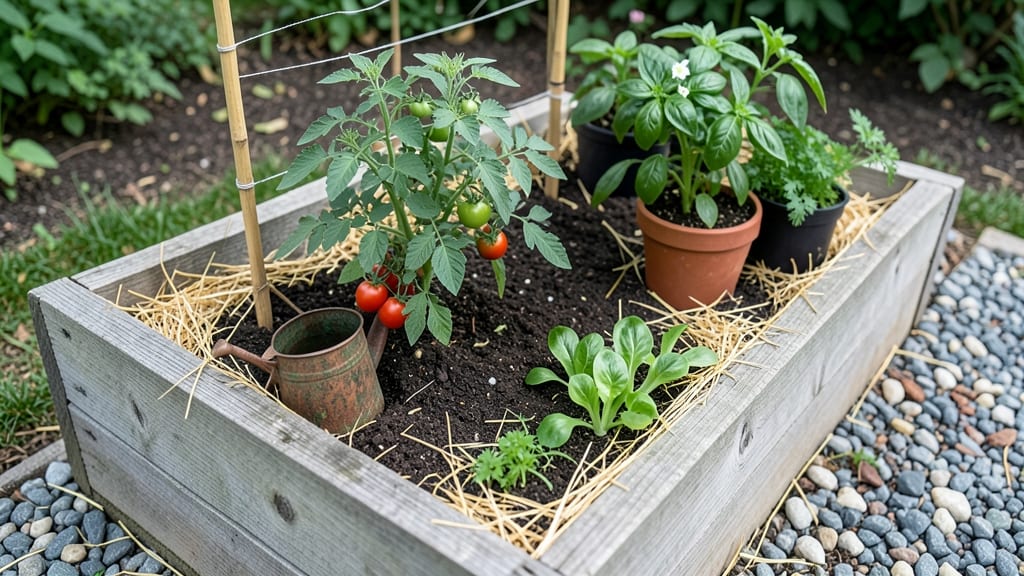
For small backyard vegetable garden design ideas, focus on vertical space, container gardening, and square-foot layouts to boost productivity in tight areas. Raised beds, trellises, and strategic companion planting help you make the most of every inch.
When you're working with limited space, the key is thinking in three dimensions.
Vertical gardening—using trellises for beans, peas, or cucumbers—can double your growing area without taking up extra ground. Square-foot gardening divides your space into 1-foot grids, letting you plant 16 different crops in just 1 square foot by adjusting plant spacing. 🌱 I've found that combining these methods with raised beds (which warm up faster in spring) gives me a head start on the growing season while keeping weeds at bay.
The real magic happens when you pair fast growers like radishes with slower ones like tomatoes, freeing up space as the season progresses.
Don't overlook the power of containers—even a sunny balcony can grow tomatoes, herbs, or lettuce in the right pots. The trick is choosing shallow-rooted varieties for smaller containers and deeper ones for larger pots. Companion planting is another game-changer: basil near tomatoes repels pests, while marigolds deter nematodes.
These small but strategic choices can transform a postage-stamp yard into a thriving edible garden that punches well above its size.
💡 In This Article
- Vertical and Square-Foot Gardening Techniques for Compact Spaces
- Best Space-Saving Vegetable Pairings for Companion Planting
Vertical and square-foot gardening techniques for compact spaces
Vertical gardening transforms limited backyard areas by utilizing walls, fences, and trellises to grow plants upward instead of outward. The science behind this technique revolves around two key principles: maximizing sunlight exposure and improving air circulation.
Plants like pole beans, cucumbers, and indeterminate tomatoes naturally climb, which saves ground space while increasing their access to sunlight—critical for photosynthesis.
For example, a 6-foot-tall trellis can support 10-15 feet of vine growth, effectively turning a small footprint into a high-yield vertical garden. 🌿 The improved airflow also reduces fungal diseases like powdery mildew, which thrives in stagnant, humid conditions.
Square-foot gardening takes efficiency further by dividing raised beds into a 1-foot-by-1-foot grid, allowing you to plant 16 different crops per square foot using a precise spacing chart. This method ensures each plant gets optimal nutrients and sunlight without overcrowding.
For instance, 16 radishes can thrive in one square foot, while only 1 tomato plant would occupy the same space. The grid system also simplifies rotation and succession planting—critical for maintaining soil health in small spaces.
Studies show that square-foot gardens can produce up to 4 times more food per square foot than traditional row planting.
Raised beds play a crucial role in both techniques by providing better drainage and warmer soil temperatures. The edges of raised beds heat up faster in spring, giving you a 2-4 week head start on planting compared to in-ground gardens.
For vertical elements, attach metal or wooden trellises to the sides of raised beds to support climbing plants like peas or malabar spinach.
The combination of raised beds and vertical structures creates a microclimate where plants receive 30-50% more sunlight than ground-level crops, thanks to reduced shading from surrounding plants or structures. 🌞
When implementing these techniques, consider the maturity rates of your crops. Fast-growing plants like lettuce or green onions can be harvested before slower growers like carrots or broccoli take up space. This staggered approach ensures no square foot goes unused.
For vertical gardens, choose plants with different growth habits—like pairing fast-climbing cucumbers with slow-growing eggplants that benefit from shade. The result is a dynamic system where each plant optimizes its environment without competing for resources.
Don't underestimate the role of container gardening in small spaces. Even a 5-gallon bucket can grow 1-2 tomato plants or a herbs-and-veggie mix like basil, thyme, and cherry tomatoes.
The key is selecting containers with proper drainage and depth—12-18 inches deep for root crops like beets or 6-12 inches for shallow-rooted greens. Containers also allow you to move plants to follow the sun, maximizing light exposure throughout the day.
This flexibility is especially valuable in backyards with partial shade or uneven sunlight patterns.
For maximum efficiency, combine these techniques with drip irrigation systems that deliver water directly to roots, reducing waste and evaporation. A well-designed vertical or square-foot garden can produce 20-30 pounds of vegetables per square foot annually—far exceeding traditional methods.
The beauty of these systems lies in their adaptability: whether you have a 4x8-foot raised bed or just a balcony railing, you can create a productive garden that thrives in tight spaces. 💫