
Tools
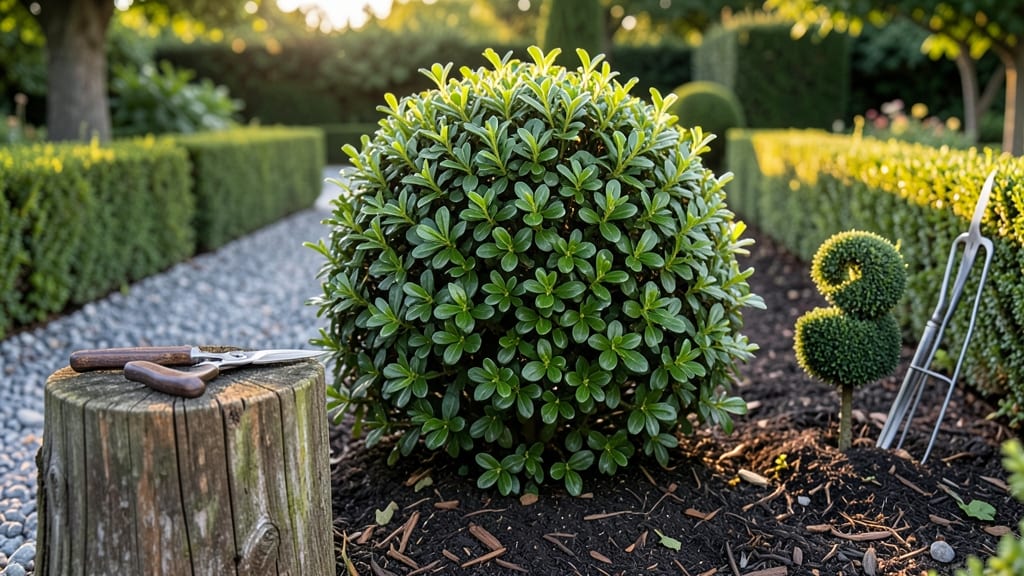
A small formal garden creates refined elegance through structured layouts like symmetrical pathways, geometric plant beds, and precise topiary, all designed to make the most of limited space. Incorporate durable plants, strategic lighting, and balanced hardscapes for timeless sophistication.
A small formal garden thrives on precision and restraint—think clean lines, repeating shapes, and carefully placed focal points. Symmetry is your best friend here, whether through mirrored flower beds or balanced hedges, while axial lines (like straight paths or fences) draw the eye deeper into the space. 🌿 The key is to use architectural plants like boxwood or lavender that hold their shape with minimal pruning, freeing you from constant upkeep.
Even in tight spaces, a well-placed obelisk or sculptural urn can anchor the design and add that classic formal touch.
Lighting plays a crucial role too—layered illumination with path lights, uplights, and spotlights transforms a daytime garden into an evening masterpiece. For hardscapes, opt for materials like stone or gravel that complement the structured plantings without overwhelming the space.
The result? A garden that feels both grand and intimate, where every element has purpose and every inch counts.
💡 In This Article
- Key Design Elements for Formal Small Gardens
- Plant Selection and Maintenance Tips for Formal Gardens
Key design elements for formal small gardens
Formal gardens rely on symmetry and axial lines to create a sense of order and balance, even in small spaces. Imagine dividing your garden into equal halves with a central path or focal point—this creates visual harmony.
For example, a 6-foot-wide gravel path flanked by identical boxwood hedges on each side instantly establishes symmetry. The human brain perceives balanced designs as more elegant, which is why formal gardens have endured for centuries.
Geometric shapes like rectangles, circles, and squares are foundational. A 4-foot-diameter circular bed filled with lavender or a rectangular parterre (raised flower bed) with precise edges adds structure.
These shapes should align with your garden's axial lines—think of a straight path leading to a focal point like a fountain or statue. In tight spaces, use proportionate scaling: a 3-foot-tall topiary beside a 2-foot-wide bench feels cohesive, while mismatched sizes create visual chaos.
Borders and hedges act as "frames" for your garden, guiding the eye and defining spaces. A 2-foot-tall privet hedge along a fence line creates a clean boundary, while a low boxwood border (about 12 inches tall) around a path adds refinement.
These borders should mirror each other—if one side has a curved edge, the other should too. For depth, layer plants: taller hedges in the back, medium-height shrubs in the middle, and low ground covers like creeping thyme up front.
Focal points anchor the design and draw attention. In a small garden, even a single sculptural urn (placed at the end of a path) or a small fountain (with a 1-foot-wide basin) can serve as a dramatic centerpiece.
Lighting enhances these focal points—uplights (placed at 45-degree angles) behind a topiary or path lights (every 3 feet) along a walkway add dimension. The goal is to create a "wow" moment, even in limited space.
Hardscapes—like stone steps, gravel paths, or a small patio—should complement the plantings without competing for attention. For instance, a 3-foot-wide stone path with 1-inch-deep grooves for drainage adds texture while keeping the space functional.
Avoid clutter: every element, from a small bench to a wall-mounted lantern, should serve a purpose. The result? A garden that feels intentional, not cramped.
Here’s a pro tip: Use color repetition to tie elements together. If your hedges are green, repeat that hue in pots or a small trellis. For contrast, add a single pop of color—like purple lavender or white roses—to create visual interest without overwhelming the space. 🌟