
Tools
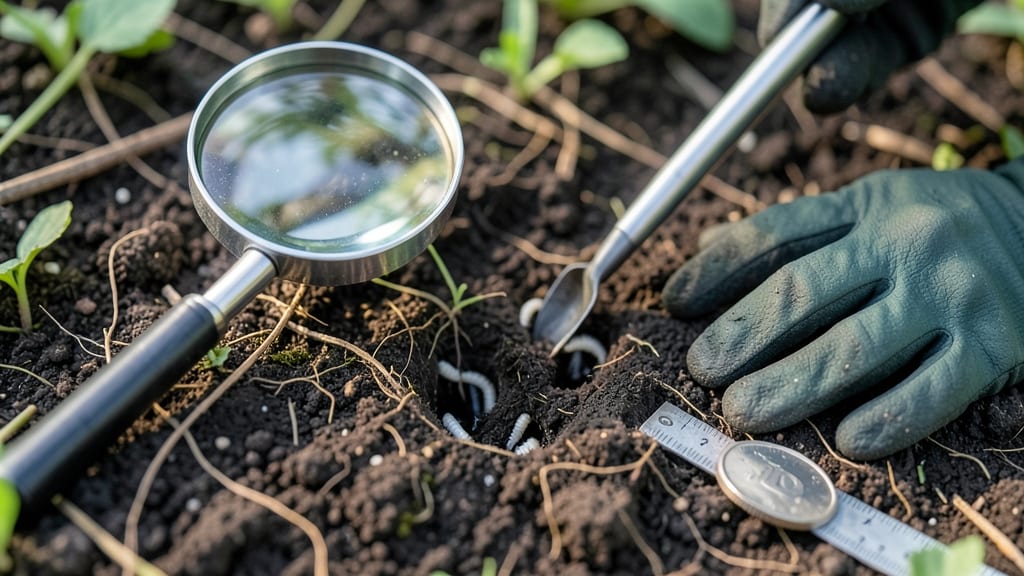
Small holes in garden soil usually appear from insect larvae, fungal networks like honey fungus, or erosion, and can be corrected naturally by boosting drainage, adding organic mulch, or using beneficial nematodes. Always start by pinpointing the root cause for the most effective fix.
Those tiny craters in your soil aren't just an eyesore—they're often a sign of hidden activity beneath the surface. 🌱 Insect larvae, particularly grubs and beetle larvae, create these holes as they burrow through the soil, while fungal mycelium like honey fungus can weave intricate networks that leave similar patterns.
Even erosion from heavy rainfall or poor drainage can create these telltale marks. The key to fixing them lies in understanding what's causing them—whether it's biological activity or physical breakdown—so you can target the solution directly.
Once you've identified the cause, you can move to natural remedies that restore your soil's health. For example, diatomaceous earth acts as a barrier against insect larvae, while compost tea strengthens the soil's natural defenses against fungal growth.
Adding amendments like perlite or coconut coir can also improve soil structure, making it more resistant to erosion. The goal isn't just to fill the holes but to create an environment where your soil stays stable and thriving for the long term.
💡 In This Article
- Common Causes of Tiny Holes in Garden Soil
- Natural Remedies to Eliminate and Prevent Soil Holes
Common causes of tiny holes in garden soil
Fungal mycelium, particularly from honey fungus (Armillaria spp.), creates intricate networks of tiny holes as it spreads through soil.
These holes appear as fine, web-like patterns when you gently sift the topsoil, often accompanied by a musty aroma from the decomposing organic matter the fungus feeds on. 🌱 Unlike insect holes, fungal holes lack the distinct burrow shapes and are more uniformly distributed across the soil surface, especially in damp conditions where fungal growth thrives.
Insect larvae, such as Japanese beetle grubs or chafer beetle larvae, create more distinct holes measuring about 1/8 to 1/4 inch wide. These larvae burrow vertically, leaving behind small, cylindrical tunnels that collapse into shallow craters.
You'll often notice these holes clustered in areas where the soil is rich in organic matter, as larvae prefer these nutrient-dense zones. Seasonal patterns matter too—grub activity peaks in late summer and early fall, when larvae are most active before pupating into adult beetles.
Physical erosion from heavy rainfall or poor drainage creates holes that differ in texture and appearance. These holes often have jagged edges and appear in patches where water has washed away finer soil particles, leaving behind larger voids.
The soil around these holes may feel gritty or sandy, lacking the smoothness of insect or fungal-altered soil. 🌧️ This type of erosion is more common in sloped gardens or areas with compacted soil that prevents proper water absorption.
Distinguishing between these causes involves simple tests. For fungal holes, look for a white, web-like growth on plant roots or nearby mulch. Insect holes often reveal larvae when you dig deeper, while erosion-related holes will show a lack of organic debris and a more uniform, sandy texture.
Understanding these differences helps you choose the right remedy—fungal issues require different treatments than insect infestations or erosion problems.
Seasonal timing also provides clues. If holes appear in spring or early summer, insect larvae are likely the culprit. Fungal activity, however, tends to increase during prolonged wet periods, especially in shaded or poorly ventilated garden areas.
By observing these patterns, you can predict when holes will reappear and take preventive measures before they become a recurring issue.
One key visual cue is the presence of frass (insect excrement) around the holes. If you find small, dark pellets near the craters, it’s a strong indicator of insect activity.
Fungal holes, on the other hand, rarely produce such debris and instead leave a more uniform, almost "sifted" appearance in the soil. This distinction is critical for selecting the most effective natural remedy.