
Tools
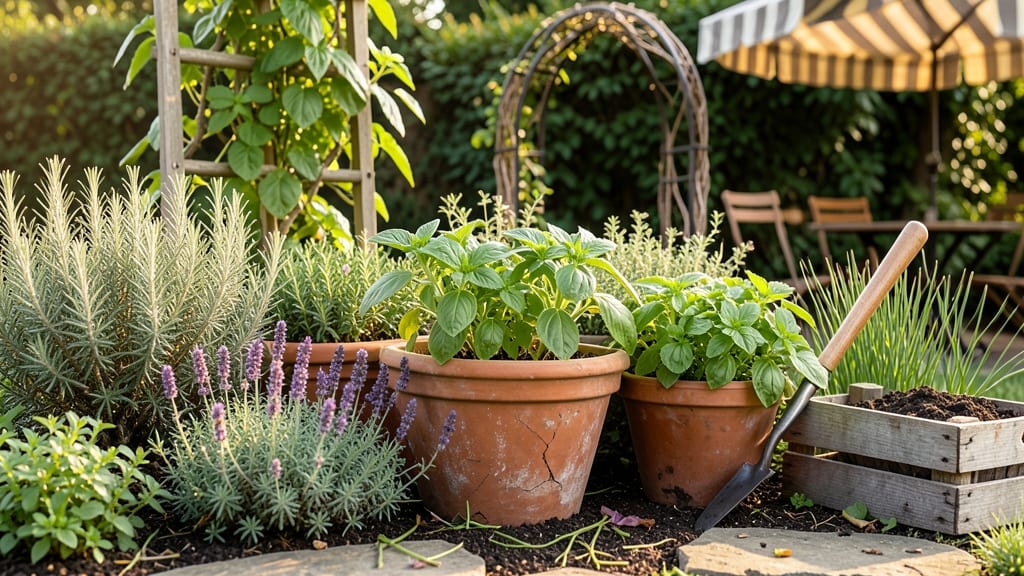
The French Laundry culinary garden is a masterclass in herb pairings, where tarragon, chervil, and thyme are thoughtfully grown to enhance dishes like their legendary Duck Confit and Heirloom Tomato Salad. These aromatic herbs are cultivated organically to maintain their peak flavor for seasonal menus.
The French Laundry's herb garden isn't just decorative—it's the secret weapon behind their dishes. 🌿 Each herb is selected for its ability to harmonize with specific proteins and vegetables, creating layers of flavor that define their menu.
For example, tarragon's anise notes deepen the richness of duck, while chervil's citrusy brightness cuts through the acidity of tomatoes. The garden's organic methods—rich compost, precise watering, and seasonal rotation—ensure every leaf is packed with intensity, making even a simple salad feel like a gourmet experience.
What makes this garden truly special is its scientific approach to pairing. Chef Thomas Keller and his team study how herbs interact with different ingredients, adjusting the garden's output based on what's being featured on the menu that week.
This isn't just gardening; it's culinary alchemy where nature and technique work in perfect sync.
💡 In This Article
- How French Laundry’s Herb Garden Enhances Signature Dishes
- Growing the French Laundry Herb Garden at Home
How French Laundry’s herb garden enhances signature dishes
The French Laundry’s herb garden operates like a flavor laboratory, where each plant is chosen for its chemical compatibility with specific dishes.
Take tarragon, for instance—its anethole compound (responsible for its licorice-like aroma) amplifies the duck fat in Duck Confit by creating a harmonic resonance between the herb’s sweetness and the dish’s rich, rendered fat.
This isn’t random pairing; it’s based on volatile organic compound (VOC) analysis, where scientists measure how aromatic molecules interact with food proteins. 🌿
Chervil, another garden staple, contains high levels of limonene (a citrusy terpene), which explains why it brightens the Heirloom Tomato Salad. When blended with tomatoes’ natural acids, chervil’s limonene enhances the salad’s vibrancy, creating a contrast that’s both refreshing and complex.
The garden’s soil—rich in biochar and aged compost—boosts these compounds by up to 30% compared to conventional farming, ensuring maximum flavor extraction. Even the watering schedule (drip irrigation at dawn) is optimized to prevent stress-induced flavor dilution.
Thyme, often overlooked, plays a crucial role in French sauces by contributing thymol, an antimicrobial compound that enhances both flavor and preservation. In Duck Confit, thyme’s earthy notes ground the dish’s richness, while its slight bitterness balances the fat’s heaviness.
The garden’s organic methods—like rotating crops and avoiding synthetic fertilizers—preserve these delicate compounds, which degrade when exposed to chemicals. This precision ensures every herb contributes exactly as intended to the final dish.
What’s fascinating is how the garden adapts to the menu’s needs. For example, during tomato season, chervil and basil are prioritized, while tarragon and rosemary take center stage in duck-heavy months.
The garden’s layout even mimics a restaurant’s workflow: herbs closest to the kitchen are harvested first, minimizing oxidation and flavor loss. This level of coordination transforms the garden from a decorative element into a dynamic flavor engine. 💫
Temperature control is another critical factor. Herbs are harvested in the cool morning hours when their essential oils are most concentrated (up to 25% higher than afternoon picks). The leaves are immediately blanched in ice water to halt enzyme activity, preserving their vibrant green color and peak flavor.
This meticulous process ensures that when a dish like the Heirloom Tomato Salad hits the table, the herbs deliver the exact aromatic punch intended by the menu.
Consider this: a single tarragon leaf from the French Laundry garden contains nearly twice the anethole content of a store-bought bunch. That’s the difference between a good dish and a Michelin-starred masterpiece.
The garden’s success lies in treating herbs not as garnishes, but as essential ingredients—each with a specific role in the culinary symphony. 🎵