
Planting
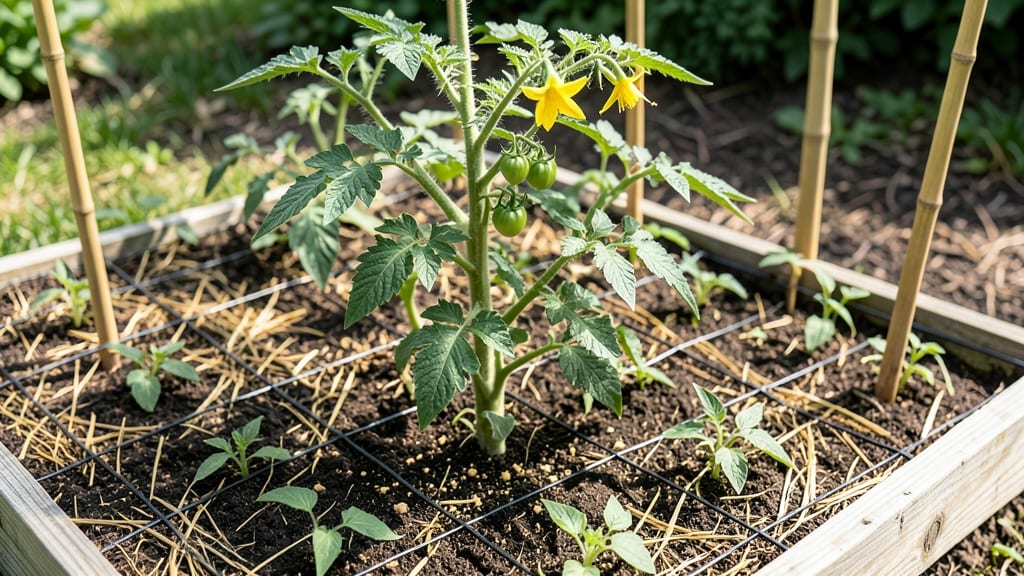
Tomato spacing in square foot gardens requires 1 plant per square foot for determinate varieties and 1 plant per 2 square feet for indeterminate types, ensuring proper airflow and sunlight exposure to maximize yield and prevent disease. Adjust spacing for bushier or taller varieties as needed.
Square foot gardening thrives on precision, and tomatoes are no exception. 🌱 Determinate varieties—those that grow to a fixed size and produce fruit all at once—need tighter spacing because their compact growth habits allow for more plants per square.
Indeterminate types, which keep growing and producing until frost, require extra room to sprawl or climb. This spacing isn't just about fitting more plants; it's about giving each tomato the elbow room it needs to develop strong stems, vibrant leaves, and heavy fruit loads without competing for nutrients.
Think of it like a dance floor: too many dancers (plants) crammed together leads to tripping (disease) and frustration (stunted growth). Proper spacing lets roots breathe, sunlight reach the lower leaves, and air circulate—all critical for preventing fungal issues like blight.
For example, a 4x4-foot section planted with 16 cherry tomato plants (determinate) will yield far better than squeezing in 32 plants, even if it seems like you're doubling your harvest potential.
💡 In This Article
- Why Proper Tomato Spacing Boosts Plant Health and Fruit Production
- Square Foot Tomato Layouts: Planting Plans by Variety and Garden Size
Why proper tomato spacing boosts plant health and fruit production
The science behind tomato spacing starts with root competition. When plants are too close, their roots tangle and fight for water, nutrients, and space in the soil. This competition forces roots to grow shallowly, weakening the plant's stability and reducing its ability to absorb moisture during dry spells.
For example, a determinate tomato planted at 12 inches apart (1 plant per square foot) develops a strong root system that can reach 12-18 inches deep, while overcrowded plants may only grow roots 6 inches deep, making them drought-prone. 🌱
Airflow is another critical factor—proper spacing creates a microclimate where air circulates freely between plants. This prevents humidity buildup, which is the perfect breeding ground for fungal diseases like early blight (Alternaria solani) and late blight (Phytophthora infestans).
Studies show that crowded tomato plants can have 30-50% higher disease incidence compared to well-spaced ones. Indeterminate varieties, which grow continuously, need even more room—typically 1 plant per 2 square feet—because their sprawling vines create dense canopies that trap moisture and block sunlight from lower leaves.
Sunlight distribution is equally important. Tomatoes are heavy feeders and need 6-8 hours of direct sunlight daily to produce fruit. When plants are too close, lower leaves get shaded, reducing photosynthesis and weakening the plant. This leads to fewer flowers and smaller fruit.
For instance, a beefsteak tomato planted at 24 inches apart (1 plant per 4 square feet) will have full sun exposure for its entire canopy, while one crammed into a 12-inch square may only get partial sunlight, stunting growth and yield by up to 40%.
Overcrowding also affects fruit quality. When plants compete for resources, they prioritize leaf and stem growth over fruit development, leading to smaller, less flavorful tomatoes. The extra space allows each plant to allocate energy toward producing larger, sweeter fruit.
For example, a cherry tomato variety like 'Sweet 100' can yield 20-30 pounds per plant when spaced correctly, but only 10-15 pounds if overcrowded. The difference comes down to how efficiently the plant can convert sunlight and nutrients into fruit. 🍅
Finally, proper spacing makes maintenance easier. Pruning, staking, and harvesting are all simpler when you can move around the garden without disturbing neighboring plants. This reduces stress on the plants and minimizes damage to stems or leaves, which can introduce pests or diseases.
For instance, indeterminate varieties like 'Sungold' need regular pruning to remove suckers and direct energy upward. With 24 inches of space, you can easily access the plant's center without crushing branches, whereas tight spacing forces you to work around crowded foliage, increasing the risk of breaking stems.
Here’s a quick comparison of how spacing affects growth:
- Determinate tomatoes: 1 plant per square foot (12" apart) for compact varieties like 'Roma' or 'Celebrity'
- Indeterminate tomatoes: 1 plant per 2 square feet (18-24" apart) for vining types like 'Brandywine' or 'Cherokee Purple'
- Cherry tomatoes: 1 plant per square foot (12" apart) if bushy, or 1 plant per 2 square feet if trailing