
Tools
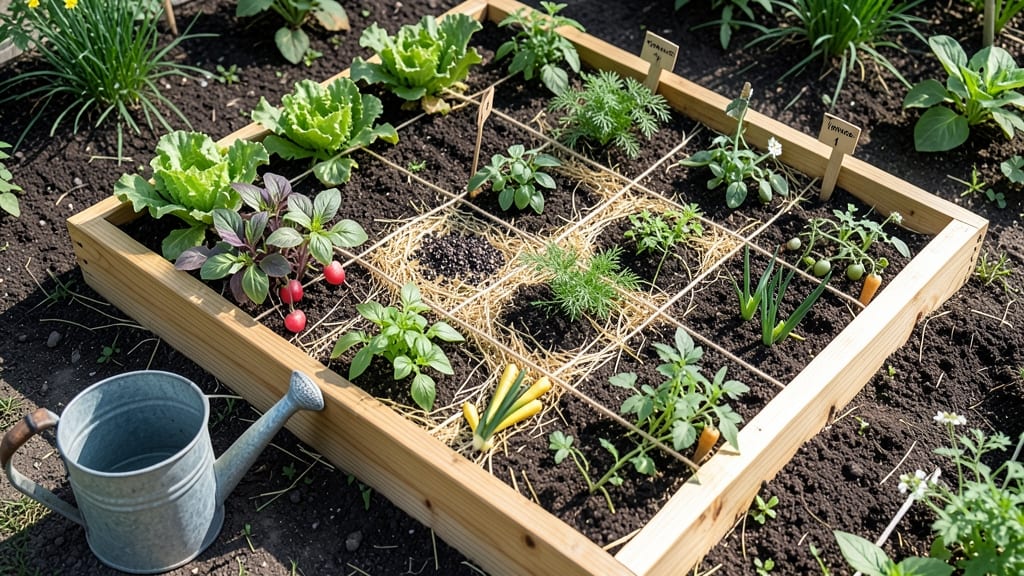
Square foot gardening plans maximize small spaces by dividing beds into 1-foot squares, using precise plant spacing rules to boost yield without overcrowding. Begin with a 4x4-foot raised bed and group compatible plants by their growth habits and root depth.
This space-efficient method lets you grow more food in less area by eliminating wasted space between plants. 🌱 The 1x1-foot grid system ensures each plant gets exactly the room it needs—radishes thrive in 1 square while tomatoes need 4.
I've seen beginners double their harvest just by following these simple spacing guidelines. The key is pairing plants that support each other's growth, like basil near tomatoes to repel pests.
For a 4x4-foot bed, you'll get 16 planting squares—enough for a full season's worth of vegetables, herbs, and flowers. The system works best with raised beds because they allow perfect drainage and soil control, two factors that make all the difference in small-space gardening.
Start with your most sun-loving plants in the center squares where they'll get maximum exposure.
💡 In This Article
- How Square Foot Gardening Maximizes Yield in Small Spaces
- Customizable Square Foot Garden Layouts for Beginners
How square foot gardening maximizes yield in small spaces
The square foot gardening method transforms wasted space into high-productivity zones by applying simple geometry to plant biology. Each 1x1-foot square contains exactly the root zone a plant needs—no more, no less.
For example, a bush bean requires 4 inches of space in all directions, so it occupies a quarter of a square. This precision eliminates the guesswork of traditional row gardening, where plants often get either too crowded (limiting growth) or too spread out (wasting space).
The math is straightforward: 16 squares in a 4x4-foot bed can produce as much as 100 square feet of conventional gardening when optimized correctly.
The botanical science behind this system focuses on root competition and above-ground growth patterns. Plants with shallow roots like lettuce (1 square) won't compete with deep-rooted carrots (1 square) in the same space.
What's fascinating is how this method actually improves plant health—roots can't spread into neighboring squares, so they develop stronger, more efficient structures.
Companion planting comes into play here too: basil in a tomato square doesn't just repel pests—its growth habit complements tomatoes by providing shade for the soil while the tomato's larger leaves create a microclimate that retains moisture better than open air.
What makes this system particularly effective is how it accounts for plant maturity cycles. Fast growers like radishes (1 square) can be interplanted with slower growers like onions (1 square) in the same square after the radishes are harvested.
This sequential planting technique, called "succession planting," ensures no square sits empty for long. The result?
A 4x4-foot bed can produce continuous harvests throughout the growing season when properly managed. 🌱 For instance, I've seen gardeners grow 16 heads of lettuce in a single season from one bed by rotating crops every 4-6 weeks.
Another key advantage is the elimination of soil compaction that occurs when walking between rows in conventional gardens. In square foot gardening, you only step on the pathways between squares, preserving soil structure where plants are growing.
The grid system also makes irrigation more efficient—you can water each square individually based on its specific needs, rather than applying uniform water across an entire bed where some plants might get too much or too little.
This targeted approach reduces water waste by up to 30% compared to traditional methods.
The yield advantages become even more apparent when comparing square foot gardens to container gardening. While containers limit root growth, square foot beds provide the depth (typically 6-12 inches) that most vegetables need while maintaining the space efficiency of containers.
For example, a single tomato plant in a 4-square-foot allocation will produce just as many fruits as one in a 5-gallon container, but you can fit 4 tomato plants in that same 4x4-foot bed instead of just one.
This density is what makes square foot gardening particularly valuable for urban gardeners with limited space.
What most people don't realize is how this system extends beyond vegetables. Flowers and herbs can be strategically placed to attract pollinators or deter pests. For instance, marigolds in the corners of your bed can repel nematodes while providing visual appeal.
The grid layout also makes it easier to rotate crops annually, preventing soil-borne diseases from building up in concentrated areas. This rotational aspect is crucial for maintaining long-term soil health in small spaces where soil volume is limited.