
Vegetables
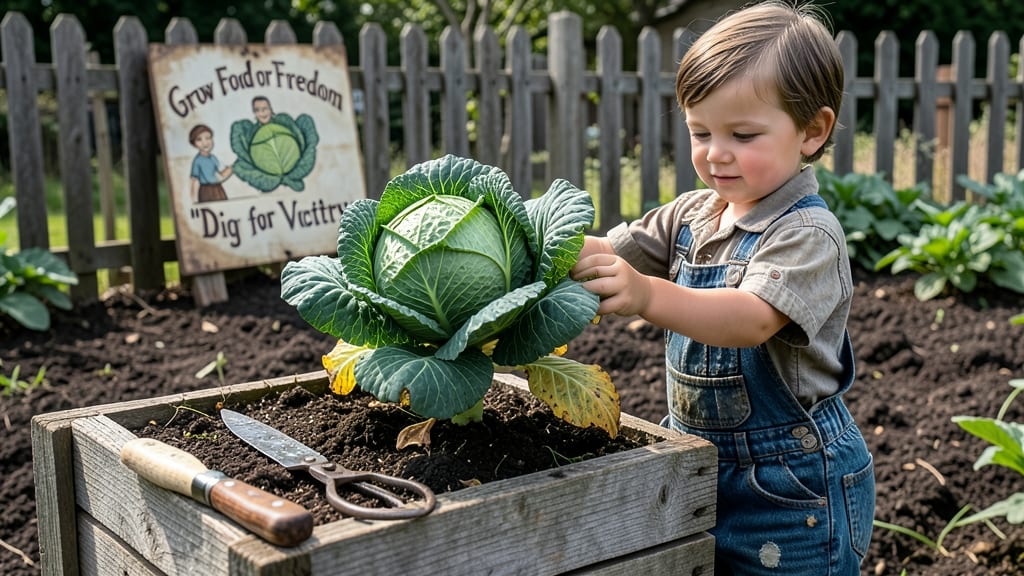
Victory gardens during WW2 were homegrown vegetable plots that produced over 40% of the U.S. fresh produce, helping combat food shortages while boosting morale. Families grew tomatoes, carrots, and potatoes to support the war effort and reduce grocery demand.
These wartime gardens weren't just practical—they became a symbol of patriotism and self-sufficiency. 🌱 With rationing limiting grocery store options, Americans turned to their backyards, growing everything from leafy greens to root vegetables.
The U.S. government even launched campaigns like "Food Will Win the War," encouraging participation through seed drives and gardening guides. What's fascinating is how this movement laid the foundation for modern community gardening and urban farming initiatives we still see today.
Beyond food production, victory gardens played a psychological role too. They gave families a sense of control during uncertain times and created shared purpose through neighborhood gardening clubs. Many of the techniques used—like crop rotation and seed saving—are now celebrated in sustainable agriculture circles.
💡 In This Article
- How WW2 Victory Gardens Revolutionized Food Production
- Planting a Modern Victory Garden: Tips and Techniques
How WW2 victory gardens revolutionized food production
The U.S. government's push for victory gardens stemmed from a perfect storm of agricultural challenges. With 16 million men enlisted by 1945, farm labor shortages left fields understaffed while commercial food production struggled to meet demand. The solution?
Transforming every available yard into productive growing space. 🌱 By 1943, over 20 million victory gardens were producing 40% of the nation's fresh vegetables, equivalent to the output of 41 million acres of commercial farmland.
Rationing played a crucial role in making victory gardens essential. The government limited meat, sugar, and butter to redirect resources to troops, forcing families to rely on vegetables for nutrition.
Potatoes became a staple because they stored well and required minimal processing—families could harvest 200-300 lbs per 100 sq ft of garden space. Tomatoes followed closely, with varieties like 'Roma' and 'Beefsteak' chosen for their productivity and versatility in sauces and salads.
The psychological impact was equally significant. Gardening provided a tangible way to contribute to the war effort, with propaganda posters showing children planting seeds alongside soldiers. Schools even participated, teaching children about nutrition through garden clubs.
This collective effort created a sense of unity—neighbors shared seeds, tools, and harvests, forming communities centered around food production.
Technically, victory gardens utilized intensive planting methods that maximized yield in small spaces. Crops were planted in successive rows rather than traditional grids, allowing for two or three harvests per season from the same plot.
Techniques like hill planting for potatoes (mounding soil around plants) and trellising for beans saved space while increasing production by up to 30% compared to conventional methods.
What's often overlooked is how victory gardens addressed nutritional gaps. With protein sources rationed, families relied on legumes like peas and beans—packed with 15-20g of protein per cup—and leafy greens rich in vitamin C to prevent scurvy.
The government even distributed 10 million seed packets annually through the Victory Garden Seed Program, ensuring families had access to high-yielding varieties.
The movement's legacy extends beyond WW2. Many modern urban farming initiatives, like community gardens and vertical farming, trace their roots to victory garden principles.
Today's gardeners can replicate this success by focusing on high-yield crops like kale (1.5 lbs per plant) and beets (5-6 lbs per sq ft) while using space-saving techniques like container growing.