
Planting
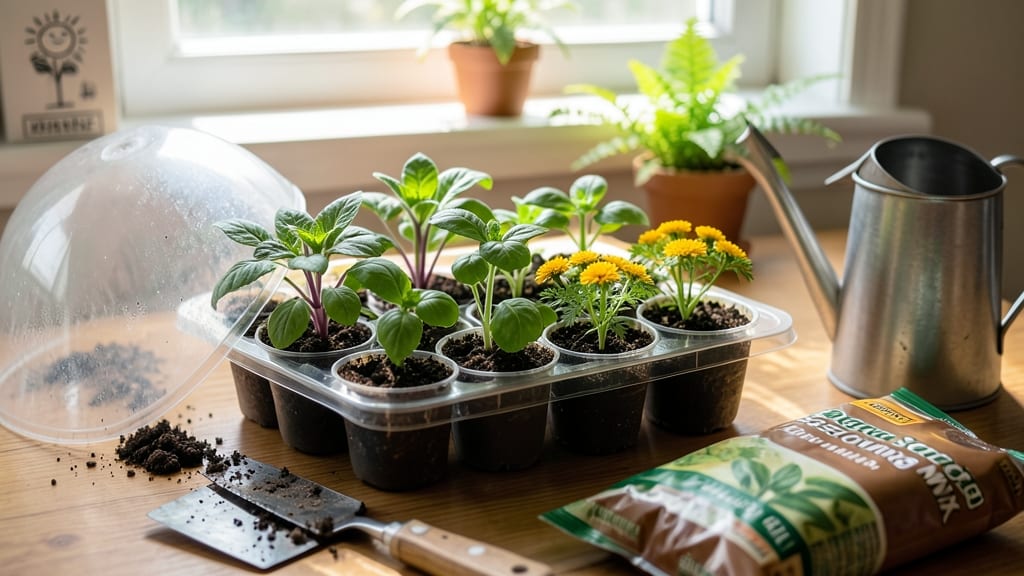
What does sow mean in gardening? It refers to planting seeds—whether directly into garden beds or containers—to cultivate new plants. This term also covers moving young seedlings into soil for continued growth, though it primarily refers to the seed-starting process.
Sowing is the foundation of gardening because it's where every plant begins its life cycle. 🌱 Whether you're planting flower seeds in your backyard or starting herbs in small pots, this process determines how well your plants will grow.
The key difference from transplanting is that sowing focuses on the initial seed placement, while transplanting deals with moving already sprouted plants to their permanent home.
I always recommend checking seed packets for specific depth requirements—some need just a light dusting of soil, while others require burial up to twice their size.
Timing matters too: some seeds thrive when sown directly in the ground, while others need an indoor head start. For example, tomatoes and peppers often do better when started indoors before the last frost date. Understanding these nuances can make the difference between a thriving garden and struggling seedlings.
💡 In This Article
- Sowing Seeds vs Transplanting: Key Differences in Gardening
- Best Practices for Sowing Seeds in Gardens and Containers
Sowing seeds vs transplanting: key differences in gardening
The core distinction between sowing and transplanting lies in the plant's growth stage. When you sow seeds, you're initiating the germination process by placing seeds directly into soil—either outdoors in garden beds or indoors in containers.
This method relies on the seed's natural ability to sprout under controlled conditions, with germination typically occurring within 3-14 days depending on the plant species. For example, radish seeds often sprout in just 3-5 days when kept at 60-70°F, while tomato seeds may take 7-14 days.
Transplanting, on the other hand, involves moving young seedlings—already at the 2-4 leaf stage—into their permanent growing location. The key difference is that transplanting requires careful handling of the root system to avoid shock.
Most gardeners wait until seedlings have developed true leaves (not just the initial seed leaves) before transplanting, as these indicate the plant has established a stronger root network.
The timing also depends on weather: hardy crops like kale can handle cooler temperatures, while tender plants like basil need to wait until nighttime temperatures stay above 50°F.
Botanically, sowing triggers the seed's dormancy-breaking mechanisms through moisture and temperature cues. When you plant a seed, it absorbs water, swells, and activates enzymes that break down stored nutrients in the seed's endosperm. This process creates the energy needed for the radicle (root) to emerge first, followed by the shoot.
Transplanting interrupts this natural process, so the plant must quickly adapt to new soil conditions—a stress that's why many gardeners use root stimulators or mycorrhizal fungi to help seedlings establish faster.
Practical considerations also differ significantly. Sowing requires precise seed placement—some seeds need light to germinate (like lettuce) and should only be covered with 1/8 inch of soil, while others (like beans) need 1-2 inches of depth.
Transplanting demands more space between plants to accommodate their mature size, often following the "square foot gardening" principle where each plant gets 1 square foot of growing area. For instance, a tomato plant might need 18-24 inches of space, while a carrot needs just 2-3 inches between plants.
Seasonal timing creates another critical difference. Many vegetables are best sown directly outdoors during their preferred growing season—like peas in early spring or beans in late spring—while others benefit from indoor sowing 6-8 weeks before the last frost date.
Transplanting typically occurs after the soil warms to 60°F and the threat of frost has passed, often using a hardening-off process where seedlings gradually adapt to outdoor conditions over 7-10 days.
Consider these key factors when deciding between sowing and transplanting:
- Plant type: Fast-growing crops (radishes, lettuce) often do better with direct sowing, while slower growers (tomatoes, peppers) benefit from transplanting
- Climate: Short growing seasons favor transplanting to extend the season, while longer seasons allow more direct sowing
- Seed availability: Some heirloom varieties are only available as seeds, while others may be easier to find as transplants
What most gardeners don't realize is that the soil's microbial community plays a crucial role in both processes. Healthy soil with beneficial bacteria and fungi can increase germination rates by up to 30% and help transplanted seedlings establish roots 2-3 times faster.
This is why amending soil with compost before sowing or transplanting makes such a significant difference in success rates. 🌱