
Tools
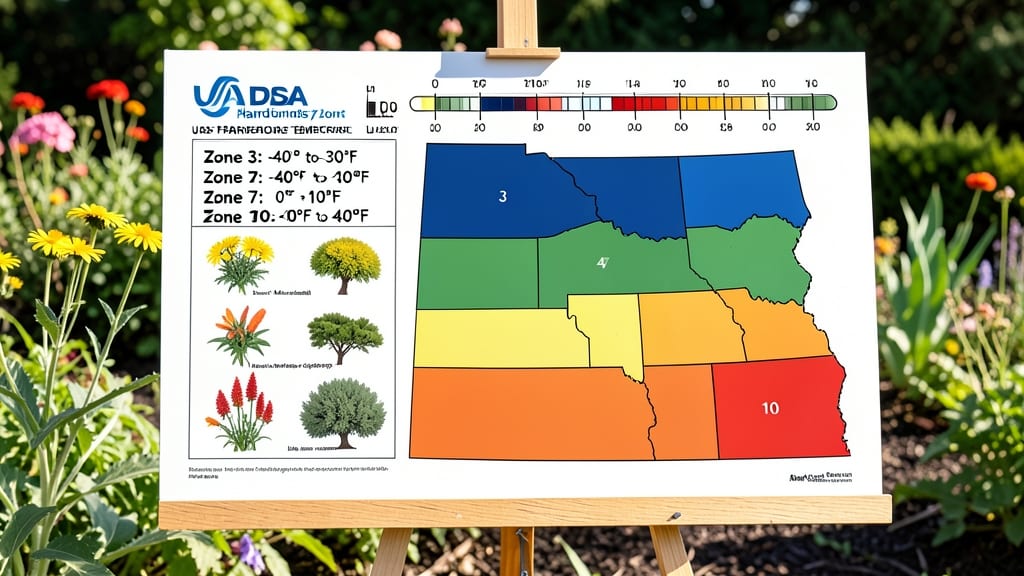
What garden zone is Utah in? Utah covers USDA Plant Hardiness Zones 4 through 9, with most areas falling between Zones 5 and 7, while southern regions like St. George reach Zone 8 or 9. These variations stem from dramatic elevation changes and local climate patterns.
Utah's diverse geography creates a patchwork of growing conditions—mountainous areas like Park City sit in Zone 5, while Salt Lake City spans Zones 6-7, and the southern deserts push into Zone 9. 🌵 The state's high desert climate means even neighboring yards can experience different frost risks, so always check your specific elevation.
For example, a plant thriving in Zone 6 may struggle just 1,000 feet higher in Zone 5.
This variation affects everything from bloom times to winter survival rates. Many gardeners in Utah use the 10°F rule as a guideline: if your zone is 6a, plants rated for 5b should still work with proper winter protection.
Native plants like desert marigold or Utah serviceberry are excellent choices because they've adapted to these fluctuating conditions.
💡 In This Article
- How Utah’s Elevation and Climate Shape Plant Hardiness Zones
- Best Plants for Utah’s Mixed Hardiness Zones
How Utah’s elevation and climate shape plant hardiness zones
Utah's dramatic elevation changes create a vertical climate gradient that directly impacts plant hardiness. The state's lowest point at 2,800 feet in Beaver Dam (Zone 8) contrasts sharply with its highest at 13,876 feet in Kings Peak (Zone 3), though most gardening occurs between 4,000 and 7,000 feet.
This elevation range causes temperatures to drop about 3.5°F per 1,000 feet, meaning a plant that thrives at 5,000 feet in Zone 6 may face frost damage just 1,500 feet higher in Zone 5.
The Wasatch Front's urban heat island effect adds another layer of complexity. Cities like Salt Lake City experience 5-10°F warmer minimum temperatures than rural areas just 10 miles away, shifting effective hardiness zones upward by 1-2 zones.
For instance, a backyard in Midvale (Zone 6b) might support plants rated for Zone 7a, while a nearby mountain community at 6,500 feet remains firmly in Zone 5b. This urban-rural divide explains why frost dates can vary by 2-3 weeks across short distances.
Utah's high desert climate introduces additional challenges. The state's low humidity and intense sunlight create higher daytime temperatures but also rapid nighttime cooling, particularly in valleys. This phenomenon, called "radiation cooling," can drop temperatures 15°F faster than in more humid regions, making frost a greater threat.
Gardeners in southern Utah often face earlier spring planting (by 2-4 weeks) compared to northern areas due to these microclimates.
Precipitation patterns further complicate zone mapping. Northern Utah receives 12-20 inches of annual precipitation, while southern regions average 6-10 inches. This moisture gradient affects soil temperatures and plant stress levels.
For example, a Zone 7 plant in Moab may struggle with drought stress that wouldn't occur in similarly zoned Ogden. The USDA's zone maps don't account for these precipitation differences, which is why local observations often reveal 1-2 zone discrepancies from the official classifications.
Seasonal shifts add another dimension. Utah's growing season varies from 120 days in northern mountains to 200+ days in southern deserts. This means a plant with a 90-day maturity might complete its cycle in St. George but fail to reach harvest in Logan.
Understanding these seasonal windows helps explain why some gardeners in Zone 6 Utah can successfully grow plants rated for Zone 7—if planted early enough to mature before the first frost.
For practical application, always verify your specific location using tools like the USDA Interactive Plant Hardiness Map and cross-reference with local agricultural extension reports. The 10°F rule remains valuable: if your zone is 6a (-10°F), you can often extend plant ranges by 1 zone (to 5b) with proper winter protection.
However, in Utah's variable climate, local observations often trump general zone guidelines. 🌡️