
Tools
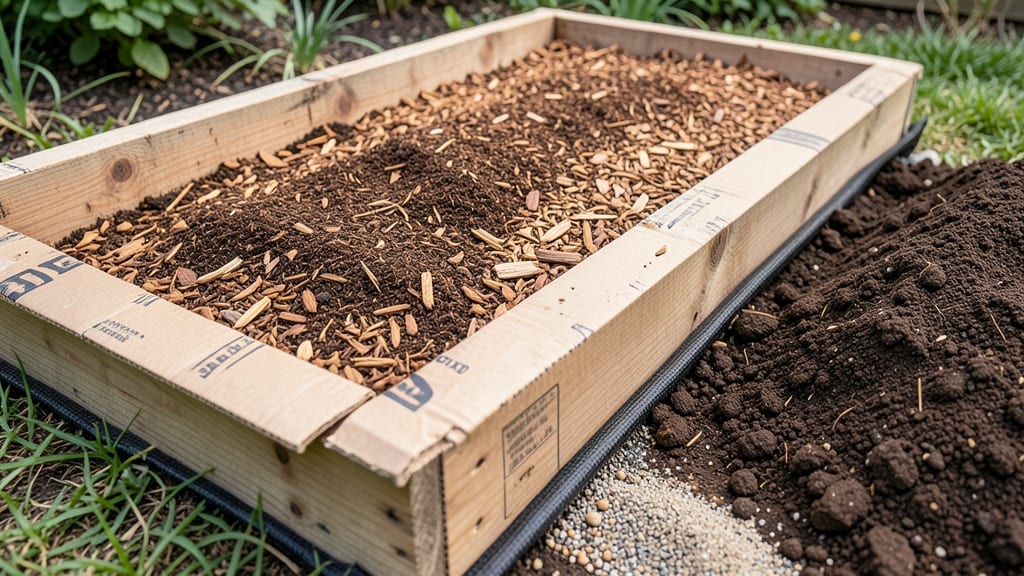
To determine what to put on the bottom of a raised garden bed, start with cardboard or landscape fabric to suppress weeds, then add 4-6 inches of coarse material like gravel or crushed stone for proper drainage. Next, include 2-4 inches of organic matter such as composted wood chips or leaves before adding soil. Avoid using plastic liners, as they can trap moisture and restrict root growth.
Building a functional raised bed isn't just about the soil—it's about creating the right foundation for healthy plant growth. 🌱 The bottom layer acts like a natural filtration system, preventing weeds from invading while ensuring excess water drains away.
Cardboard breaks down over time, adding nutrients to your soil, while landscape fabric provides a longer-lasting barrier. The coarse material layer is crucial for preventing compaction, which helps roots spread freely and oxygen reach the soil.
I always recommend testing your drainage by watering the bed after setup—if water pools after 30 minutes, you may need to add more coarse material.
Organic matter like composted wood chips or leaves further enriches the soil as it decomposes, improving its structure and fertility over time. This layer also helps retain moisture while allowing excess water to escape, creating the ideal balance for most plants.
The key is to tailor your layers based on your climate—drier regions may need more organic matter, while wetter areas benefit from extra coarse material. Avoid plastic at all costs, as it can suffocate roots and create a waterlogged environment that promotes rot.
💡 In This Article
- How Drainage and Aeration Improve Raised Bed Soil Health
- Best Organic vs. Inorganic Materials for Raised Garden Bed Foundations
How drainage and aeration improve raised bed soil health
The foundation of your raised bed directly impacts soil aeration and drainage—two critical factors for plant roots. Gravel or crushed stone at the bottom creates air pockets that prevent soil compaction, allowing roots to spread freely.
This coarse layer mimics natural soil structures where water drains through larger voids while smaller particles retain moisture near the roots. Without proper drainage, soil becomes waterlogged, cutting off oxygen and suffocating beneficial microbes that break down organic matter into plant nutrients.
Cardboard or landscape fabric serves as a weed barrier while also contributing to soil health differently. Cardboard breaks down over 3-6 months, adding carbon-rich material that feeds soil microbes and improves structure.
Landscape fabric, on the other hand, lasts 5-10 years but doesn't decompose, making it ideal for long-term weed control in high-traffic areas. The decomposition process from cardboard actually increases soil porosity—tiny air channels form as fibers break down, further enhancing aeration for root systems.
Think of your raised bed as a layered ecosystem where each component plays a role in moisture management. The coarse drainage layer handles excess water, while the organic matter layer (like wood chips) acts as a sponge that holds moisture for plants.
This balance is crucial: too much drainage leads to dry soil, while too little causes root rot. For example, in clay-heavy soils, the gravel layer becomes even more critical as it prevents water from pooling against the bed's walls, which can cause structural damage over time.
Microbial activity thrives in well-aerated soil with proper moisture levels. The right foundation supports beneficial bacteria and fungi that decompose organic matter, releasing nutrients like nitrogen and phosphorus. Without adequate aeration, these microbes become stressed, reducing their ability to cycle nutrients.
You'll notice healthier plants with deeper root systems when the foundation layers work together—roots can explore 12-18 inches deeper in properly layered beds compared to just 6 inches in compacted soil.
Consider this visual analogy: Your raised bed is like a sponge cake where each layer has a purpose. The coarse material is the sturdy base that prevents sogginess, the cardboard or fabric is the barrier that keeps weeds out, and the organic layer is the moist, nutrient-rich filling.
When all layers work together, you create an environment where plants can thrive without struggling for resources. The result? Stronger stems, better flowering, and higher yields—all from getting the foundation right.