
Shrubs
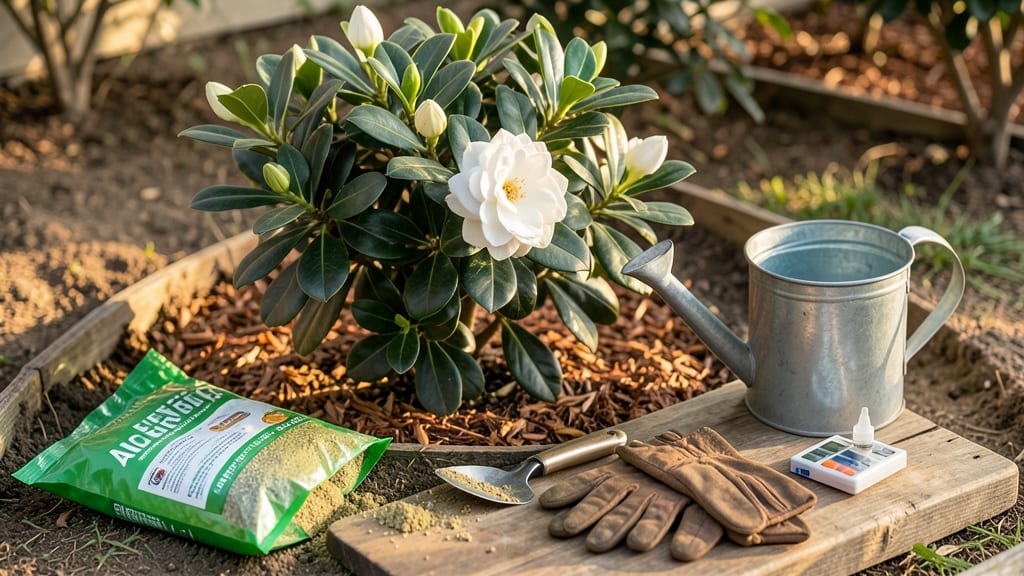
To fertilize gardenias at the right time means feeding them when they’re ready to grow—not before or after their natural cycles.
Picture this: you’ve waited all winter for those glossy, deep-green leaves to signal spring, only to realize you missed the critical window for feeding. The result? Fewer blooms, weaker stems, and maybe even leaf burn from overzealous fertilizing.
The secret lies in aligning your schedule with the plant’s life stages, from early spring awakening to fall revival.
Gardenias in USDA Zones 7b–10b need a tailored approach—think light applications in spring to kickstart growth, regular feeding through summer, and a final boost in early fall to prep for next year’s flowers.
But timing isn’t the only trick; soil pH, fertilizer type (organic vs. synthetic), and even climate play a role in whether your gardenias thrive or struggle.
In this guide, I’ll break down the exact months to fertilize, what to use, and how to spot signs of over- or under-feeding. By the end, your gardenias will be bursting with fragrant blooms—no guesswork required.
Spring fertilization schedule: waking up dormant gardenias for peak blooms
Spring is the make-or-break season for gardenias, when a single missed feeding can mean the difference between lush, fragrant blooms and sparse, weak growth. After winter dormancy, your gardenias need a gentle nutrient wake-up call—but timing matters more than you might think.
Fertilize too early, and you’ll stress roots still adjusting to warmer soil. Wait too long, and you’ll miss the critical pre-bud stage when they’re primed to soak up nutrients.
Think of it like a three-act schedule: Act 1 is soil prep in early spring, Act 2 is the first feeding as buds form, and Act 3 is maintaining that momentum through summer.
Each step builds on the last, ensuring your gardenias don’t just survive spring—they thrive and set the stage for show-stopping summer blooms.
The key is understanding your gardenia’s natural growth rhythms. In USDA Zones 7b–10b, gardenias typically break dormancy between late March and early April, signaled by fresh green growth on stems.
This is your cue to test soil pH (aim for 5.0–6.0) and prepare for the first feeding. But before you reach for that fertilizer bag, let’s map out the exact steps—and what to avoid—to ensure your gardenias get the perfect nutrient boost without the risk of burn or stress.
🌱
Now that you’ve got the timeline down, let’s talk about how to apply fertilizer like a pro. Start with a soil test—gardenias hate alkaline soil, and a pH above 7.0 will stunt their growth.
If your soil is too basic, mix in elemental sulfur (1/4 cup per plant) or use acid-loving plant fertilizer. For organic gardeners, composted pine bark or cottonseed meal are excellent choices, while synthetic options like Miracle-Gro Azalea, Camellia, and Rhododendron food deliver fast results.
When applying, water deeply first to prevent root burn, then scatter fertilizer evenly around the drip line (not the trunk). Use a slow-release formula to avoid nutrient spikes, and always follow the label for dosage—over-fertilizing is worse than under-fertilizing.
Pro tip: If you’re using granular fertilizer, lightly scratch it into the top inch of soil to keep it from washing away during watering.
Watch for three key signs that your gardenias are ready for feeding: new growth (1/4-inch shoots), bud swell (buds larger than a pea), and deep green leaves.
If you see yellowing leaves or leaf drop, you’ve likely overdone it—flush the soil with water and hold off on feeding for 6 weeks. On the flip side, slow growth or small buds mean it’s time to feed again.
Don’t forget: container gardenias need more frequent feeding because their roots are confined. Use a water-soluble fertilizer every 3–4 weeks during spring, and always water thoroughly after applying to prevent salt buildup.
For in-ground plants, a mulch layer (2–3 inches of pine straw or shredded bark) helps retain moisture and slowly releases nutrients as it breaks down.
By following this schedule, your gardenias will burst into bloom by early summer, filling your garden with that unmistakable, intoxicating fragrance. The secret? Patience and precision—feeding them when they’re hungry, not when you remember.
Next up, we’ll cover fall fertilization to set your gardenias up for an even bigger show next year.
🌿🌸
Fall fertilization secrets: revitalizing gardenias for winter resilience
As summer winds down, your gardenias are subtly preparing for winter dormancy—but that doesn’t mean their nutrient needs disappear. In fact, a late-summer/early-fall feeding is one of the most underrated secrets to next year’s abundant blooms.
This is when you strengthen roots, store energy, and set the stage for spring growth. Without it, your gardenias may struggle with weak stems or fewer flowers in warmer climates.
Climate plays a huge role here. Gardenias in USDA Zones 7–9 (like my Atlanta garden) need a light feeding in September to harden off before cooler temps, while those in Zones 10–11 (like my Miami containers) can handle a slightly later boost in October.
The key? A low-nitrogen formula (like 6-6-6) to avoid encouraging late-season growth that won’t survive winter.
- Late August–September: Apply half-strength acid fertilizer (pH 5.5–6.0) when daytime temps drop below 85°F. This encourages root growth without promoting tender new shoots.
- Early October: For Zones 10–11, add a slow-release fertilizer (like sulfur-coated urea) to extend nutrient availability through winter rains.
- Mid-October (Zones 7–9): Switch to organic options (e.g., fish emulsion) to avoid salt buildup in cooling soils. Water deeply afterward to leach excess salts.
- November cutoff: Stop fertilizing entirely by first frost (or when temps stay below 50°F at night) to prevent winter damage.
I’ve learned the hard way that over-fertilizing in fall leads to soggy roots or leaf scorch when winter arrives. Always water before applying fertilizer to prevent root burn, and mulch with 2–3 inches of pine bark afterward to insulate roots and retain moisture.
For container gardenias, reduce fertilizer by 50% since pots dry out faster and salts accumulate quicker.
Watch for yellowing leaves or stunted growth after feeding—these are red flags. In my Zone 8 garden, I once saw this happen when I used a high-nitrogen formula in October. The fix? Flush the soil with rainwater and switch to a balanced 6-6-6 next time.
Gardenias are acid-loving, so test your soil pH in fall too; aim for 5.0–6.0 by adding elemental sulfur if needed.
Timing isn’t just about months—it’s about plant signals. Look for new leaf flushes in late summer as your cue to fertilize. In Zones 10–11, where winters are mild, you can stretch feeding into early November to support continuous (but slower) growth.
Just remember: the goal isn’t big blooms now—it’s strong roots for spring’s showstopper flowers.
Pro tip: Mark your calendar for September 15th as your deadline. After that, your gardenias enter a dormant savings mode, and any extra nutrients will just waste or burn tender roots. With this fall routine, my gardenias now bloom 2–3 weeks earlier than before—and that’s worth the extra effort!