
Fertilization
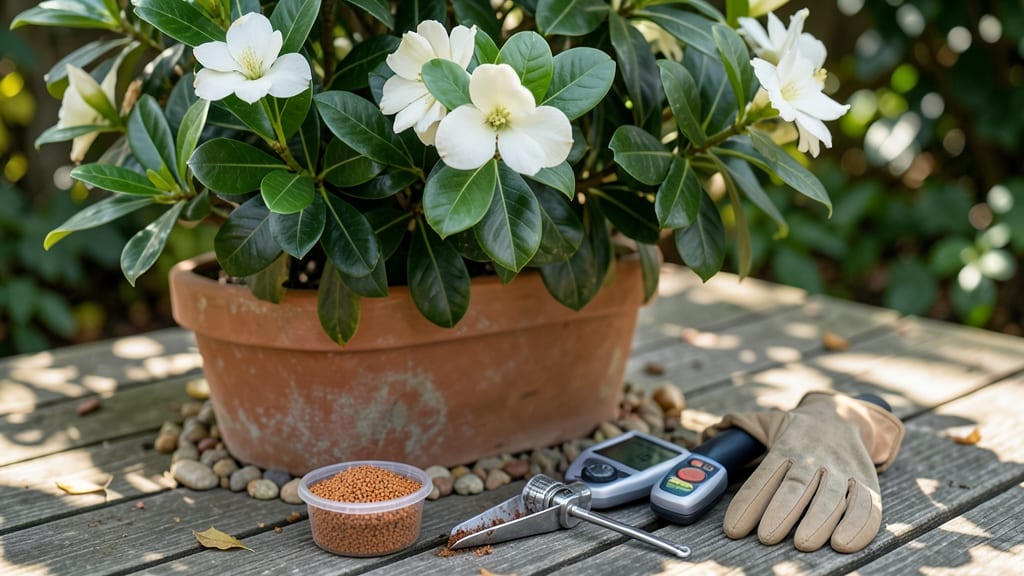
To fertilize gardenias properly, you’ll want to feed them every 4-6 weeks during the growing season — but timing and type matter just as much as frequency.
Struggling to keep your gardenias blooming as beautifully as they did when you first planted them? The secret might be simpler than you think—fertilizing at the right intervals can transform your shrubs from lackluster to lush in just a few months.
Gardenias 🌸 thrive on a consistent but balanced feeding schedule, especially when they’re pushing out new growth in spring and summer. Too much fertilizer can burn their roots, while too little leaves them struggling to produce those signature fragrant blooms you love.
In this guide, I’ll walk you through the exact schedule, the best fertilizer types for acid-loving plants, and how to spot when your gardenias are begging for nutrients—or when you’ve gone overboard.

Optimal gardenia fertilizing schedule by season for maximum blooms
If your gardenias are struggling to produce those fragrant, creamy-white blooms you adore, your fertilization schedule might be the culprit. Gardenias thrive on a seasonal feeding routine that matches their natural growth cycles.
Unlike many plants, they hate over-fertilizing—especially in winter—so timing is everything. Let’s break down the perfect schedule to keep your gardenias lush and blooming year after year.
Gardenias are acid-loving shrubs that need a balanced fertilizer with high acidity (like azalea or camellia blends). The key is feeding lightly in spring, regularly in summer, and skipping entirely in fall and winter.
This mimics their natural dormancy period and prevents nutrient burnout. For newly planted gardenias, cut feeding in half for the first year—they’re still establishing roots!
Pro Tip: Always fertilize in the early morning to avoid leaf burn from heat. Water your gardenias thoroughly 24 hours before applying fertilizer to prevent root damage.
| Season | Fertilizer Type | Frequency | Amount per Plant | Notes |
|---|---|---|---|---|
| Spring (March-May) | Acid-loving (10-10-10 or 8-3-9) | Every 4-6 weeks | 1 tbsp (light feed) | Start after last frost; promotes new growth |
| Summer (June-August) | Acid-loving (10-10-10) | Monthly | 1 tbsp (full feed) | Encourages blooming; avoid late summer feeding |
| Fall (September-November) | None | Skip | — | Plant slows growth; reduce water too |
| Winter (December-February) | None | Skip | — | Dormant period; no feeding needed |
| New Plants (Year 1) | Acid-loving (half-strength) | Every 8-10 weeks | ½ tbsp (light feed) | Focus on root establishment |
Spring is the time to wake up your gardenias after winter dormancy. Start feeding lightly in April (after the last frost) with a balanced acid fertilizer. This jumpstarts new growth and sets the stage for summer blooms.
If you notice yellowing leaves, it might be a sign of iron deficiency—time to test your soil pH (ideal range: 5.0-6.0).
Summer is peak blooming season, so monthly feeding keeps your gardenias producing those fragrant flowers. Use a 10-10-10 fertilizer (equal parts nitrogen, phosphorus, potassium) to support both foliage and blooms. Avoid fertilizing after August—this gives your plant time to harden off before winter.
Over-fertilizing in late summer can lead to soft, leggy growth that won’t survive cold snaps.
Fall and winter are no-feed zones for gardenias. As temperatures drop, your plant enters dormancy, and feeding can stimulate weak growth that’s vulnerable to frost damage.
Instead, focus on mulching around the base with pine needles or peat moss to maintain soil acidity naturally. This also insulates roots during cold months.
For container-grown gardenias, follow the same schedule but reduce amounts by 30-50%—containers dry out faster and roots are more sensitive. Always water thoroughly before fertilizing to prevent salt buildup in the soil.
If you’re using organic fertilizers like fish emulsion or cottonseed meal, apply them every 6 weeks in spring/summer for a slower-release nutrient boost.
Watch for signs of over-fertilization, like crispy leaf edges or yellowing between veins. If this happens, flush the soil with water for 10-15 minutes to leach out excess salts.
Signs your gardenias need fertilizer (and when to skip it)
Your gardenias 🌸 might be silently screaming for nutrients—even if they look healthy at first glance. One of the first clues is yellowing leaves that start at the bottom and work their way up.
This classic nutrient deficiency sign often means your soil lacks essential nitrogen or iron, both critical for vibrant foliage and abundant blooms.
Another red flag is sparse or small blooms compared to what your plant produced last year. Gardenias are heavy feeders, especially when pushing out those fragrant white flowers. If your shrub is putting more energy into leaves than blossoms, it’s time to reassess your fertilization routine.
Even worse? Bud drop before flowers fully open is a desperate cry for help—often tied to phosphorus deficiency.
⚠️ Warning: Over-Fertilizing is Just as Harmful
Fertilizing too often or using the wrong type can cause burnt roots and leaf drop. Here’s how to tell you’ve gone overboard:
- Brown leaf tips or crispy edges
- Stunted growth despite regular watering
- White crust on soil surface (fertilizer salt buildup)
Solution: Flush soil with water and reduce feeding to every 8-12 weeks while monitoring recovery.
Don’t overlook soil pH issues, which can mimic fertilizer problems. Gardenias thrive in acidic soil (pH 5.0-6.0). If your soil is too alkaline, even the best fertilizer won’t help.
Test your soil with a home pH kit—if it reads above 6.5, amend with sulfur or peat moss before adding more nutrients.
New gardenias or those recovering from transplant shock may need gentler feeding. Look for weak stems or delayed growth after planting. In these cases, wait 6-8 weeks before introducing fertilizer, and start with half the recommended dose to avoid stressing the plant further.
Seasonal cues matter too. If your gardenias bloom heavily in summer but drop leaves in fall, they might be over-fertilized for dormancy. Always skip fertilization in winter—your plant is resting, not feeding. Resume light feeding in early spring as new growth appears.
Pro tip: Observe your gardenias’ natural rhythm. Healthy plants have dark green, glossy leaves and strong, upright stems. If yours look tired or leggy, it’s time to feed them gently—but first, check for pests or disease that might be draining their energy.
Sometimes the fix isn’t fertilizer at all!