
Picking
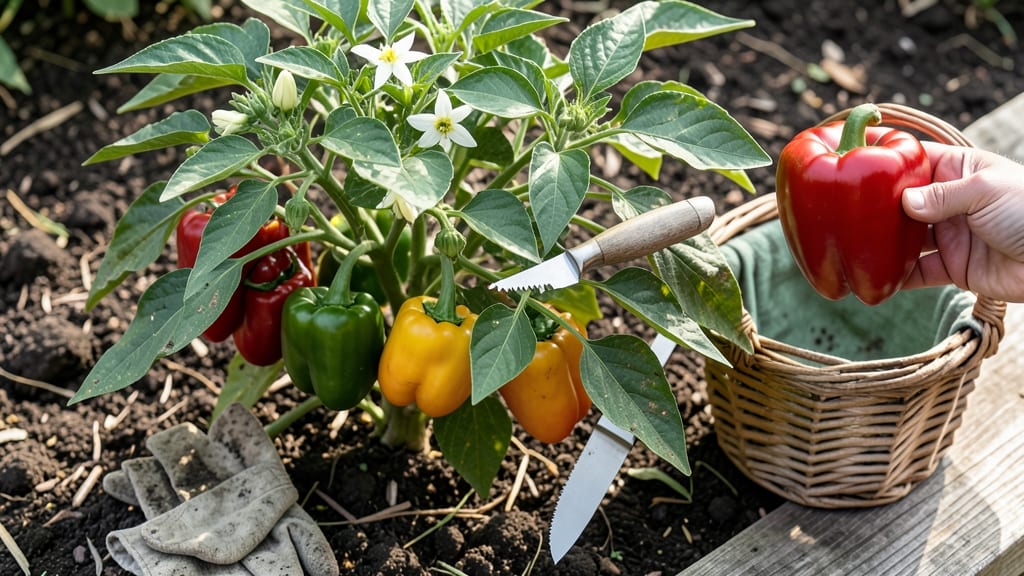
To pick bell peppers from your garden at the perfect time, watch for fully developed color, firm skin, and a clean stem break—these cues ensure the best flavor and texture.
Harvesting too early means bland, rubbery peppers, while waiting too long risks overripe, mealy ones. I’ve learned the hard way that missing this window can turn a bountiful harvest into a sad pile of underwhelming pods.
In Zone 6a, bell peppers planted in spring typically reach peak ripeness between July and October, but the exact timing depends on your variety and local climate. Cool mornings and warm afternoons speed up ripening, so check your plants daily once they start coloring up.
Below, I’ll break down the 3 visual cues to spot perfectly ripe bell peppers, how to test them without damaging the plant, and why picking at dawn keeps them fresher longer.


3 Visual cues to identify perfectly ripe bell peppers
Knowing when to pick bell peppers from your garden can feel like guessing if you're not sure what to look for. The good news? Three simple visual cues—color, size, and skin firmness—will tell you exactly when to harvest for peak flavor and texture.
Ignoring these signs often means peppers that are either too hard or past their prime, both of which affect taste and storage life.
Bell peppers don’t all ripen to the same color—some stay green, while others turn red, yellow, or orange—but every variety has distinct maturity markers. For example, a red bell pepper won’t develop its signature sweetness until fully colored, while a green pepper can be harvested earlier.
Understanding these differences ensures you never miss the perfect moment.
Here’s the key: color consistency across the entire pepper, a firm yet slightly yielding skin, and a size that matches the variety’s mature dimensions. These three factors work together to guarantee you’re harvesting at peak ripeness.
Let’s break them down so you can confidently pick your peppers the next time you’re in the garden.
🌶️ 3 Visual Cues for Perfectly Ripe Bell Peppers
-
1. Full, Consistent Color
Peppers should be uniformly colored—no green stems or patchy hues. For example, a red bell pepper should be deep red all over, while a yellow pepper should have no green tinges.
-
2. Firm but Slightly Yielding Skin
Press a fingernail into the skin—it should leave a slight dent but not feel mushy. Overripe peppers will feel soft, while underripe ones stay hard.
-
3. Mature Size for the Variety
Check the diameter (typically 3-4 inches) and length. Dwarf varieties stay smaller, while standard types reach full size. Smaller peppers are usually underripe.
Let’s start with color, the most obvious cue. A pepper’s hue isn’t just about aesthetics—it’s a direct indicator of sugar development.
For instance, green bell peppers can be picked early for a crisp, tangy bite, but if you wait, they’ll turn red, yellow, or orange and develop a sweeter, richer flavor. Always check the entire surface for uniformity—no green patches or uneven shading.
Next, pay attention to size. While some varieties stay compact, most bell peppers reach their ideal harvest size between 3 and 4 inches in diameter. If your pepper is smaller than expected, it’s likely still maturing.
Conversely, if it’s larger but still green (for colored varieties), it might be overripe or struggling to ripen properly due to insufficient sunlight or nutrients.
Finally, skin firmness is your final check. Gently press a fingernail into the pepper’s skin—it should yield slightly but spring back. A hard pepper is underripe, while a mushy one is past its prime.
This test is especially useful for red or yellow varieties, which can overripen quickly if left too long on the plant.
One common mistake is assuming all peppers ripen at the same rate. Dwarf varieties mature faster than standard types, and cool-season peppers may ripen more slowly.
If you’re in a shorter growing season, prioritize harvesting when the color is 70-80% developed—even if not fully mature—to avoid losing your crop to frost.
For green bell peppers, you can harvest them as soon as they reach full size, even if they’re not fully colored. But if you’re growing colored varieties, wait until the hue is deep and consistent.
Pro tip: Red peppers are the sweetest when fully ripe, while yellow or orange types often peak slightly earlier in the season.
Remember, the best time to harvest is in the morning, when temperatures are cooler and peppers are at their crispest. Use a sharp pair of pruning shears or clean scissors to avoid damaging the plant.
Cut the stem just above the fruit to encourage more peppers to develop in its place.
By mastering these three visual cues—color, size, and skin firmness—you’ll never second-guess when to pick your bell peppers again. Happy harvesting! 🌱
How to check bell pepper ripeness without damaging the plant
Testing bell pepper ripeness doesn’t have to mean rough handling. With gentle pressure tests and visual inspections, you can confirm readiness while keeping your plant healthy. I’ve perfected these methods over years of gardening—no more guessing or accidentally harming your pepper plants!
The key is to use finger pressure and stem flexibility as your guides. A ripe bell pepper will yield slightly when pressed but won’t bruise easily. This method works for all varieties, from classic green bell peppers to vibrant red or yellow types.
How to Test Bell Pepper Ripeness
- Gentle Finger Press: Press a fingernail into the pepper’s skin. If it gives slightly but doesn’t dent deeply, it’s ripe. A hard pepper is underripe; a mushy one is overripe.
- Stem Twist Test: Gently twist the pepper near its stem. A ripe pepper will detach cleanly with minimal resistance. If the stem snaps or tears, wait a day or two.
- Leaf Inspection: Check the leaf color near the pepper. Healthy, dark green leaves indicate the plant is thriving and the pepper is ready. Yellowing leaves suggest stress or overripeness.
- Size Check: Compare the pepper to the variety’s mature size (e.g., 3-4 inches for most types). Under-sized peppers need more time on the plant.
- Color Uniformity: Ensure the pepper’s color is fully developed and consistent. Uneven coloring means it’s not yet ready.
Timing matters too! Always test peppers in the morning when they’re cool and firm. Avoid harvesting after heavy rain, as moisture can make the skin overly tender and prone to bruising.
For green bell peppers, harvest when they’re fully sized and firm, even if not fully colored. For colored varieties, wait until the skin deepens to red, yellow, or orange. Pro tip: Harvest frequently to encourage more peppers—overcrowded plants produce smaller, less flavorful pods.
If you’re unsure, pick a few peppers and taste-test them. Underripe ones taste bland and rubbery, while overripe ones are mealy. With practice, you’ll train your eye to spot the perfect moment—no tools required!