
Picking
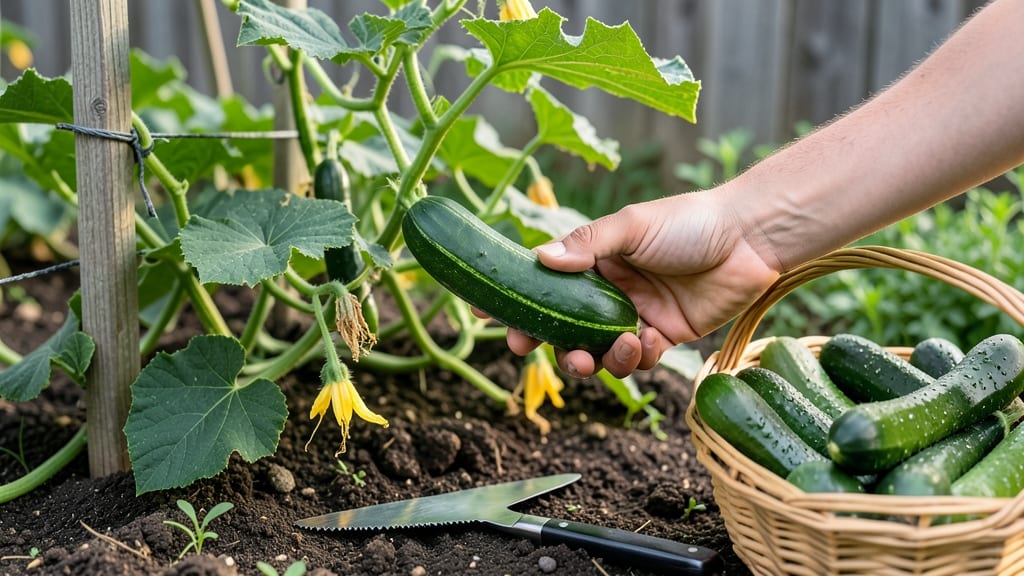
Picking cucumbers from your garden at the right time ensures crisp, flavorful harvests instead of bitter, seedy disappointments.
Picture this: you’ve been waiting weeks for your 🥒 plants to produce, only to pick a cucumber that’s either rock-hard or mushy. The difference between a perfect harvest and a disappointment often comes down to timing—and knowing the exact signs to watch for.
Most gardeners pick cucumbers when they reach 6-8 inches in length, but the real clues lie in skin texture and color. A firm cucumber with a deep, even hue is ready, while one that feels soft or bounces back is still too young.
And if the stem end turns yellow or brown, that’s your cue to grab your shears.
In this guide, I’ll walk you through the 3 key ripeness indicators, the best time of day to harvest, and how climate affects your cucumbers’ readiness. Whether you’re growing slicing, pickling, or heirloom varieties, these tips will help you maximize flavor and yield.


3 Visual signs your cucumbers are ready for harvesting
Knowing exactly when to pick cucumbers from your garden is the secret to enjoying crisp, flavorful produce instead of bitter, seedy disappointments. Unlike some vegetables, cucumbers don't ripen well after picking, so timing is everything. The good news?
Three simple visual cues will tell you when your cucumbers are at their peak—whether you're growing slicing varieties, pickling cucumbers, or heirloom types. Let's break down what to look for to harvest at the perfect moment.
First, consider your cucumber variety because harvest timing can vary slightly. Slicing cucumbers like 'Straight Eight' or 'Marketmore' typically reach ideal size between 6-8 inches, while pickling cucumbers such as 'Boston Pickling' or 'National Pickling' are best harvested smaller—around 2-3 inches—when their skin is still tender.
Heirloom varieties may take longer to mature, so always check the seed packet for specific guidance. Understanding these differences ensures you don't miss the sweet spot for flavor and texture.
🌱 3 Key Signs Your Cucumbers Are Ready
- 1. Size Matters: Most slicing cucumbers are ready when they reach 6-8 inches in length. Pickling varieties should be harvested at 2-3 inches for optimal crunch. Measure from the stem end to the blossom end—this ensures consistency in your harvest.
- 2. Skin Texture: Gently press a cucumber with your thumbnail. If the skin resists slightly but doesn't dent deeply, it's ready. Overripe cucumbers will feel soft or spongy, while underripe ones will bounce back when pressed. Aim for a firm yet yielding feel.
- 3. Color Consistency: Look for a deep, even color without yellowing or browning. Most cucumbers should be a vibrant green (or their variety-specific hue). The stem end may turn yellow or brown, which is a sign of maturity. Avoid harvesting if the cucumber has dark spots or mold, as this indicates overripeness.
Color is one of the most obvious cues, but it’s not the only factor. For example, striped varieties like 'Armenian cucumbers' should have bold, defined stripes that run the entire length of the fruit. If the stripes fade or the cucumber develops yellow patches, it’s past its prime.
Similarly, white or yellow cucumbers, like 'Lemon cucumbers,' should be fully colored before harvesting. Waiting too long can turn them mealy and less flavorful.
Don’t overlook the stem end of the cucumber—this is where subtle changes signal readiness. When the stem end turns from bright green to yellow or brown, it’s a clear sign the cucumber is mature.
However, if the stem end remains completely green and tender, the cucumber needs more time on the vine. This small detail can save you from harvesting too early and missing out on the best flavor.
Harvesting at the right time also encourages your cucumber plants to produce more. When you pick cucumbers frequently, the plant redirects its energy to growing new fruit instead of letting existing ones overripe.
This continuous harvest method can extend your growing season by several weeks, giving you a longer supply of fresh cucumbers. Plus, it reduces the risk of pests and diseases that thrive on overripe produce.
If you're unsure whether a cucumber is ready, err on the side of harvesting slightly early. Underripe cucumbers are still edible and often crispier and milder in flavor, while overripe ones can become bitter, seedy, and watery.
For pickling, slightly underripe cucumbers are ideal because their thin skin makes them perfect for brining. Keep a small harvest basket nearby and check your vines every 2-3 days during peak production to catch cucumbers at their best.
Climate plays a role in harvest timing too. In hot, dry climates, cucumbers may mature faster and need more frequent watering to maintain crispness. In cooler or cloudy conditions, they might take longer to reach harvest size.
Always adjust your expectations based on your local growing conditions. If your cucumbers seem to be growing slowly, check for adequate sunlight (6-8 hours daily) and consistent moisture.
Finally, pay attention to the blossom end of the cucumber—the opposite end from the stem. If it’s still closed or slightly firm, the cucumber needs more time. Once it opens and the skin feels smooth and taut, it’s ready.
This is especially important for heirloom varieties, which often have unique shapes and textures. By mastering these three visual signs, you’ll never miss the perfect moment to harvest again.
How cucumber varieties affect harvest timing (and what to watch for)
The variety of cucumber you grow dramatically impacts harvest timing and flavor. Slicing cucumbers like 'Straight Eight' are best picked at 6-8 inches for maximum crispness, while pickling cucumbers such as 'Boston Pickling' should be harvested at 2-3 inches to prevent bitterness. Heirloom varieties like 'Lemon Cucumber' often mature slower, requiring patience for their unique textures.
Ignoring these differences can lead to overripe fruit with seeds and bitter compounds, ruining your harvest.
Underripe cucumbers—those picked too early—tend to be watery and bland, while overripe ones develop yellowed skin and a spongy texture. The harvest window for most varieties is tight, often just 2-3 days between perfect ripeness and spoilage.
For example, 'Armenian cucumbers' (long, snake-like) should be harvested when they reach 10-12 inches, whereas 'Bush Champion' (bush-type) stays compact and ready at 4-6 inches.
| Variety Type | Ideal Size | Harvest Time | Key Signs |
|---|---|---|---|
| Slicing (e.g., 'Straight Eight') | 6-8 inches | 50-60 days | Firm skin, deep green, stem snaps |
| Pickling (e.g., 'Boston Pickling') | 2-3 inches | 45-55 days | Bumpy skin, bright green, tender stem |
| Heirloom (e.g., 'Lemon Cucumber') | 4-6 inches | 60-75 days | Waxy texture, yellow-green hue, firm |
| Armenian (e.g., 'Succession') | 10-12 inches | 65-75 days | Thin skin, straight shape, crisp |
Climate also plays a role in harvest timing. In hot, dry climates, cucumbers ripen faster and may need picking every 2-3 days to avoid overripeness. Meanwhile, in cooler regions, growth slows, extending the harvest window. For example, 'Marketmore' cucumbers in Zone 5 might take 70+ days to mature, while the same variety in Zone 9 could be ready in 55 days. Always adjust your expectations based on local weather patterns.
Storage life varies by ripeness too. Perfectly ripe cucumbers stored in the fridge last 1-2 weeks, while overripe ones spoil within 3-5 days. To extend shelf life, harvest in the morning when temperatures are coolest and store unwashed in a paper towel-lined container.
This prevents moisture buildup, which accelerates rot. For pickling cucumbers, harvest when small to preserve their crunch and tangy flavor.
One common mistake is waiting too long for cucumbers to "get bigger." Overripe cucumbers develop large seeds and a spongy texture, making them unappealing for fresh eating. Instead, prioritize consistent harvesting—picking every 2-3 days encourages more production.
For heirloom varieties, taste-test a few to find your preferred balance between size and flavor, as some varieties improve with slight overripeness.
Pro tip: Use a sharp knife or pruning shears to harvest cucumbers, cutting the stem 1/4 inch above the fruit. This reduces damage to the vine and prevents disease entry points. Always harvest in the morning when cucumbers are cool and crispest.
By paying attention to variety-specific cues and climate conditions, you’ll enjoy a steady supply of flavorful, homegrown cucumbers all season long. 🌱