
Picking
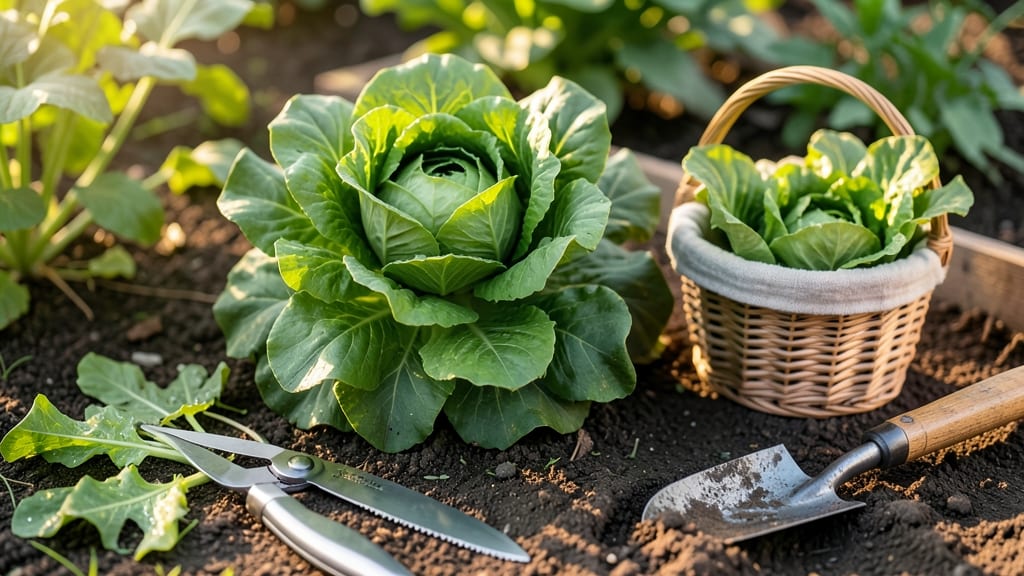
To pick lettuce from the garden at the perfect moment means crisp, sweet leaves every time — and skipping that window turns your harvest into bitter, tough disappointment.
Picture this: you’ve nurtured your 🥬 for weeks, only to pull a leaf that tastes like cardboard or bolts into a flower stalk before you can blink.
That’s what happens when you wait too long. But timing it right? That’s the secret to a steady supply of fresh greens all season.
You don’t need a degree in botany to know when your lettuce is ready. Look for leaves that are 4-6 inches long, dark in color, and firm to the touch — those are your cues.
And here’s the best part: you can keep harvesting leaves without pulling the whole plant, so your garden keeps giving.
In this guide, I’ll walk you through the exact signs to watch for, how to harvest without ruining your crop, and what to do if you’ve already missed the window. Let’s get those leaves tasting fresh again.


How to tell when lettuce is ready for harvesting (by leaf type)
Knowing when to harvest lettuce depends entirely on the variety you're growing. Different types mature at different rates and show unique signs of readiness. For loose-leaf varieties like buttercrunch or oakleaf, you can start picking outer leaves as early as 30 days after planting.
Meanwhile, head-forming types like romaine or iceberg need 60-70 days to reach full maturity. The key is to watch for visual and tactile cues that signal peak flavor and texture.
First, examine the leaf size.
For most varieties, outer leaves should reach 4-6 inches in length before harvesting. Loose-leaf lettuce often has wide, flat leaves that spread outward, while romaine forms a long, upright head. Butterhead varieties develop soft, rounded leaves that form a loose head, while iceberg stays compact and crisp.
Each type has its own ideal size, but all should feel firm and fully unfurled.
Next, check the color intensity. Ready-to-harvest lettuce leaves should be vibrant and deep in their natural hue—whether that’s dark green, reddish-purple, or golden-yellow. Dull or pale leaves often mean the plant isn’t mature enough.
For romaine, look for a rich, emerald-green center, while loose-leaf varieties may show bold streaks or edges that indicate full flavor development.
Texture is another critical clue. Run your fingers over the leaves—ready lettuce feels crisp and slightly firm to the touch, not floppy or rubbery. If the leaves feel soft or mushy, they’re overripe.
For butterhead varieties, the leaves should be tender but still hold their shape. Iceberg, on the other hand, stays crunchy even when fully mature, so don’t rely solely on texture for this type.
Here’s a quick reference to help you spot the perfect harvest time for each type:
Don’t overlook the taste test—it’s the ultimate indicator. Snip a leaf and taste it. If it’s sweet and crisp, it’s ready.
If it’s bitter or tough, wait a few more days. Loose-leaf varieties are especially forgiving—you can pick leaves as they mature, which gives you a longer harvest window. For head lettuce, wait until the entire head feels firm and compact before cutting.
Timing your harvest correctly also prevents bolting, which happens when lettuce flowers prematurely due to heat or stress. If you see the plant sending up a tall stem or producing yellow buds, it’s too late—your lettuce has bolted.
To avoid this, harvest outer leaves first for loose-leaf types or cut the entire head at the base for romaine and iceberg. This encourages regrowth and extends your harvest season.
For continuous harvesting, focus on loose-leaf varieties. Simply snip the outer leaves when they reach 4-6 inches, leaving the inner leaves to grow. This method works best in spring or fall when temperatures are mild.
In hot summer months, lettuce bolts quickly, so prioritize harvesting before the heat sets in. If you’re growing in containers, check leaves more frequently—they may mature faster due to limited root space.
One common mistake is waiting too long, which leads to woody stems or bitter flavors. For romaine, the head should feel solid and heavy for its size.
If it’s light or hollow-sounding, it’s past its prime. Butterhead lettuce should have a soft, almost velvety texture—if it feels tough, it’s overripe. Always harvest in the morning when temperatures are coolest, as this preserves crispness and flavor.
Finally, use the right tools. A sharp pair of scissors or a clean knife makes harvesting easier and prevents damage to the plant. For loose-leaf types, cut individual leaves at the base. For head lettuce, slice the entire head about 1 inch above the soil to encourage
Leaf-by-leaf harvesting vs. whole head removal: which method preserves your lettuce longer?
When it comes to harvesting lettuce, you’ve got two main options: plucking individual leaves as they mature or cutting the entire head at once.
Each method has its own advantages, and choosing the right one can mean the difference between a steady supply of fresh greens and a one-time harvest that leaves your garden bare. I’ve tested both techniques in my garden, and here’s what I’ve learned about preserving your lettuce longer.
Leaf-by-leaf harvesting is perfect if you want to extend your harvest season. By carefully snipping the outer leaves, you encourage the plant to keep producing new growth. This method works especially well for loose-leaf varieties like Buttercrunch or Oakleaf, which regrow quickly.
The key is to avoid damaging the inner leaves or the growing point at the base.
On the other hand, whole head removal is ideal if you’re growing romaine, iceberg, or other varieties that form tight heads. Cutting the entire head at once ensures you get a full, crisp harvest, but it also means the plant won’t regrow.
This method is best for a single, abundant harvest rather than a prolonged one.
Leaf-by-Leaf Harvesting
Pros
- ✅ Extended harvest – Regrow leaves for weeks
- ✅ Continuous supply – No gaps in fresh greens
- ✅ Gentler on plant – Preserves growth center
Cons
- ❌ Slower regrowth – Takes time for new leaves
- ❌ Risk of damage – Over-harvesting can stress plant
- ❌ Less ideal for head types – Not suited for romaine or iceberg
Whole Head Removal
Pros
- ✅ Full, crisp harvest – Best flavor and texture
- ✅ Faster for head types – Ideal for romaine, iceberg
- ✅ No regrowth needed – Perfect for one-time use
Cons
- ❌ No regrowth – Plant won’t produce again
- ❌ Single harvest – Limited to one big cut
- ❌ Waste if overgrown – Bitter or tough leaves
For leaf-by-leaf harvesting, start by selecting the outermost leaves that are at least 4-6 inches long. Use clean, sharp scissors or pruners to snip them just above a leaf node or the base of the plant.
This encourages new growth from the center. I like to harvest in the morning when leaves are crispest and most flavorful.
If you’re going for whole head removal, wait until the head is fully formed and firm. Use a sharp knife to cut the stem at the base, leaving about an inch of stem attached.
This method is best for varieties like romaine or iceberg, which don’t regrow well. Once you’ve cut the head, store it in the fridge for up to a week to keep it crisp.
My personal preference? A mix of both methods. I use leaf-by-leaf harvesting for my loose-leaf varieties to stretch out the harvest season, while I opt for whole head removal for my romaine when it’s fully mature.
This way, I get the best of both worlds: a steady supply of fresh greens and the occasional big, satisfying harvest.