
Light Requirements
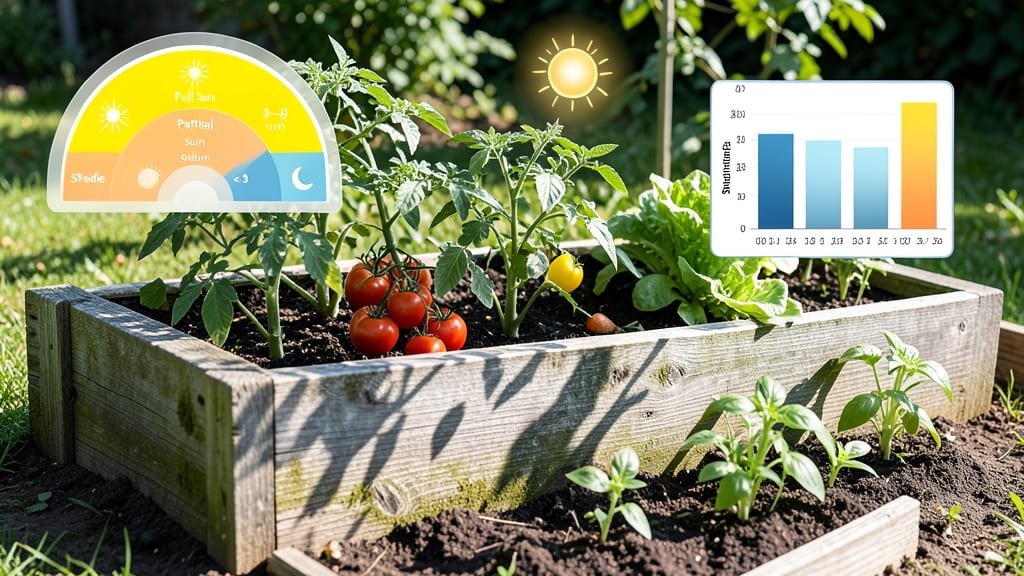
A vegetable garden needs 6 to 8 hours of sunlight daily 🥬 to grow strong, productive crops—yet many gardeners accidentally starve their plants by planting in the wrong spot.
Picture this: you’ve spent hours preparing your soil, carefully selecting seeds, and watering religiously, only to watch your tomatoes turn bitter or your lettuce bolt into flower stalks.
The culprit? Not enough sunlight. Most vegetables crave full sun, but some—like leafy greens—can handle a little shade, and getting this wrong means wasted effort and empty harvests.
Below, I break down exactly how many hours each type of vegetable needs, from sun-loving tomatoes and peppers to shade-tolerant herbs and greens. You’ll also learn how to measure sunlight in your yard, spot hidden shade traps, and adjust your layout for maximum yields—no guesswork required.
Ready to turn your garden into a sun-powered harvest machine? Let’s dive into the sunlight secrets that separate thriving plants from struggling ones.


Sunlight requirements by vegetable type: full sun vs partial shade breakdown
Sunlight is the lifeblood of your vegetable garden—6+ hours of direct sun can mean the difference between a bountiful harvest and struggling plants. Yet many gardeners accidentally plant sun-loving tomatoes in shady spots or leafy greens where they’ll scorch.
Let’s break down exactly what each vegetable needs to thrive, so you can position your plants for success.
Most vegetables fall into three sunlight categories: full sun (6+ hours), partial shade (3-6 hours), or low-light tolerant (under 3 hours). Misplacing even one plant can lead to stunted growth, bitter flavors, or poor yields.
For example, peppers and eggplants wilt in shade, while lettuce bolts when over-exposed to sun. Understanding these needs ensures your garden thrives.
Vegetables like tomatoes and peppers demand 6-8+ hours of full sun to produce fruit. Without enough light, they’ll focus energy on leafy growth instead of setting flowers or fruits. For example, tomato plants in partial shade may produce small, misshapen fruits or none at all.
Even cucumbers, which tolerate partial shade, struggle in deep shade and develop powdery mildew from poor air circulation.
On the other hand, leafy greens like lettuce and spinach thrive in 3-6 hours of partial shade. Too much sun causes them to bolt (go to seed) prematurely, turning bitter and tough.
I once planted lettuce in a south-facing bed and harvested only a handful of leaves before it bolted—now I reserve that spot for tomatoes and peppers instead.
Some vegetables, like carrots and radishes, prefer partial sun (5-6 hours) to avoid forked roots or pithy textures. These root crops grow best in loose, well-draining soil with morning sunlight
How to measure and adjust sunlight for your garden layout
Before you plant a single seed, measuring your garden’s sunlight exposure is the secret weapon for a high-yield harvest. I’ve made the mistake of planting tomatoes in shady spots—only to watch them produce tiny, bitter fruits.
The key is understanding how sunlight shifts throughout the day and season, and how to strategically place your crops for success.
Start by observing your yard for at least a week. Note where shadows fall at solar noon (around 12 PM) and how they change as the sun arcs across the sky. Trees, fences, and even your house can create microclimates that drastically alter sunlight exposure.
For example, a north-facing spot might get only 3 hours of sun, while a south-facing area could receive 8+ hours.
🌞 How to Measure Sunlight in Your Garden
- 1. Use a sunlight tracker (or DIY with sticks and string) to mark shadow patterns every 2 hours for a week. This reveals hidden shade zones you might miss.
- 2. Check seasonal shifts: A spot with 6 hours of sun in summer may drop to 3 hours in winter. Adjust your layout for year-round productivity.
- 3. Group plants by sunlight needs: Place tomatoes, peppers, and cucumbers (6+ hours) in full-sun areas, while lettuce, spinach, and herbs (3-6 hours) can thrive in partial shade.
- 4. Leverage companion planting: Tall plants like corn or sunflowers can provide shade for heat-sensitive crops like beans or peas in hot afternoons.
- 5. Try succession planting: Sow fast-growing crops (e.g., radishes or lettuce) in early spring or fall when sunlight is less intense, then replace them with sun-lovers like zucchini or eggplant in peak summer.
If your garden lacks full sun, don’t despair—shade cloth (30-50% coverage) can mimic partial shade for sun-loving plants. For example, draping 30% shade cloth over tomatoes in the hottest months can prevent sunscald while still providing enough light for growth.
Just avoid blocking all direct sunlight, as vegetables still need at least 4 hours of light daily to thrive.
Pro tip: Use reflective surfaces like white mulch or light-colored gravel to bounce extra sunlight onto shaded areas. I’ve seen this boost growth by up to 20% in low-light spots. Pair this with drip irrigation to keep soil consistently moist, as dry soil reflects more light away from plants.
Finally, rotate your crops annually to prevent soil depletion and even out sunlight exposure. For instance, if your south-facing bed gets too hot for tomatoes in summer, move them to a west-facing spot in their second year.
This simple adjustment can double your yields by matching plant needs to changing light conditions.
With these strategies, you’ll turn your garden into a sunlight-optimized powerhouse, ensuring every plant gets exactly what it needs to grow big, bold, and bountiful. Happy planting! 🌱