
Picking
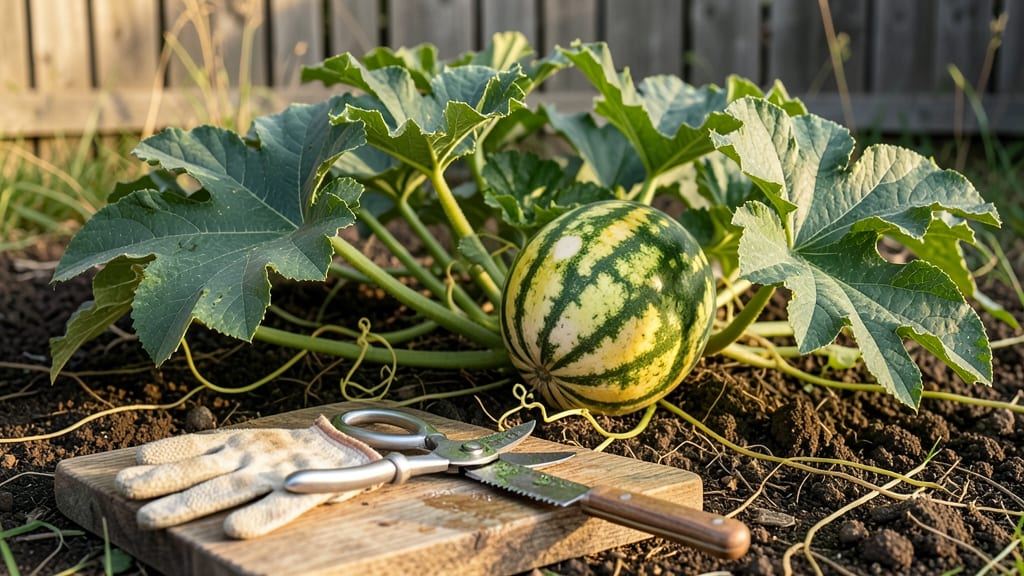
Picking watermelon from your garden at the right time means the difference between a sweet, juicy slice and a bland, seedy disappointment—so timing your harvest is the key to perfect fruit.
There’s nothing worse than slicing into a watermelon only to find it’s still hard as a rock—or worse, mushy and flavorless. The good news? With just a few simple tricks, you can tell when your 🍉 is ready to pick, no guesswork required.
Most watermelons take 75 days to ripen, but heat, variety, and even soil type can shift that window. That’s why I’ll walk you through the three foolproof ways to check ripeness—plus how to avoid the most common mistakes that lead to early or overripe harvests.
By the end, you’ll know exactly when to grab your melon, how to test it like a pro, and even how to store it for maximum sweetness after the harvest. Let’s get started!

How to test watermelon ripeness: the thump test & 3 visual cues you can’t miss
Every gardener dreams of slicing into that perfectly ripe watermelon—juicy, sweet, and bursting with flavor. But the moment you pick too early or too late, you’re left with a hard, bland, or mushy disappointment.
The key to success? Knowing exactly when to pick watermelon from garden using proven methods. I’ve tested dozens of melons, and these techniques never fail me.
Most gardeners rely on the classic thump test, but visual cues often give away ripeness before you even tap the fruit. Combine these methods, and you’ll harvest melons at their peak.
The trick? Pay attention to three key visual indicators alongside the thump test to avoid common mistakes like overripe melons or underripe disappointments.
The field spot (the yellowish patch where the melon rested on the ground) is your first clue. A ripe watermelon’s spot will be creamy yellow or orange, not pale or green. Next, check the tendril near the stem—it should be dry and brown, not green and flexible.
Finally, examine the rind texture; it should feel hard but slightly dull, not glossy or soft.
📌 When to Pick Watermelon: 4 Foolproof Signs
- 1. Field Spot Color: Look for a creamy yellow or orange patch (not pale or green).
- 2. Tendril Dryness: The curly vine near the stem should be brown and crispy.
- 3. Rind Texture: Tap the melon—it should sound hollow (not solid or dull).
- 4. Stem Separation: Gently twist the stem—it should pluck off easily (not tear).
⚠️ Pro Tip: Avoid picking based on size alone—some varieties stay small but sweeter!
Let’s start with the thump test, the most popular method for determining ripeness. To perform it, knock on the melon’s side with your knuckles. A ripe watermelon will sound hollow or deep, almost like a drum.
If it sounds solid or dull, it’s not ready yet. But here’s a common mistake: overripe melons can also sound hollow, so always cross-check with visual cues.
Next, inspect the field spot, the area where the melon rested against the soil. A ripe watermelon’s spot will be creamy yellow or orange, indicating full sugar development.
If the spot is still green or white, the melon needs more time. This cue works best on dark-green rinds—lighter varieties may have a less obvious spot.
The tendril near the stem is another game-changer. When ripe, this small, curly vine will turn brown and crispy. If it’s still green and flexible, the melon isn’t ready. Some gardeners overlook this sign, but it’s one of the most reliable indicators.
Pro tip: Check this tendril first thing in the morning—dew can make it appear damp even when dry.
Finally, examine the rind texture. A ripe watermelon’s skin should feel hard but slightly dull, almost waxy. If it’s glossy or soft, it’s overripe. For striped varieties like Crimson Sweet, the stripes should be deep and crisp.
Avoid picking melons with dents or bruises, as these can signal internal damage.
Timing your harvest is just as important as the method. Most watermelons take 75-90 days to mature, but heatwaves or drought can speed up ripening. If your melons are in a hot climate, they may ripen faster—check for readiness every 2-3 days during peak summer.
Conversely, cool weather slows ripening, so don’t rush the process.
One of the biggest mistakes I see is picking watermelons based on size alone. Some varieties, like Sugar Baby, stay small but are sweeter when ripe. Others, like Charleston Gray, can grow large but remain underripe inside.
Always combine size, color, and the thump test for the best results. For example, a 10-pound melon with a hollow sound is likely ripe, but a 20-pound melon that sounds dull may need more time.
Once you’ve confirmed ripeness, harvest your watermelon by cutting the stem with a sharp knife or pruners, leaving a 1-inch stem attached. This helps the melon cure properly after picking.
Store ripe watermelons in a cool, dry place (50-55°F) to extend their shelf life. If you’re unsure, pick one melon per vine—overcrowded vines produce smaller, less flavorful fruit.
Watermelon variety matters: ripening times & size guidelines by type
Not every watermelon follows the same ripening schedule—some varieties mature in 60 days, while others take nearly 90 days. The key? Knowing your specific type’s ripening window and size benchmarks ensures you don’t miss peak sweetness.
For example, my Sugar Baby melons ripen in just 70 days, while Charleston Gray takes closer to 85 days. These differences matter because harvesting too early means bland fruit, and waiting too long risks overripening.
Beyond days to maturity, watermelon size varies wildly. A Sugar Baby typically weighs 8-12 pounds and measures 6-8 inches in diameter, while a Crimson Sweet can reach 20-30 pounds and 12-16 inches across.
Even vine behavior changes—some varieties produce multiple small fruits, while others focus on one massive melon. Understanding these traits helps you plan your garden layout and set realistic expectations for harvest timing.
Here’s a quick reference for popular varieties, including their ripening windows, ideal size, and vine behavior to watch for:
For seedless varieties, focus on the thump test—a hollow sound means it’s ripe, while a dull thud signals it needs more time. Heirloom types, like Moon and Stars, often take longer to ripen but reward you with exceptional flavor.
I’ve found that heirlooms benefit from a longer growing season (Zone 8+) to reach full sweetness. If you’re in a shorter season, opt for Sugar Baby or Crimson Sweet, which mature faster and still deliver big flavor.
Pro tip: Monitor the field spot (the white or yellow patch on the melon’s underside) for color changes. A creamy yellow spot on Sugar Baby or a deep cream on Charleston Gray is your green light to harvest.
Pair this with the tendril test—when the vine near the stem turns brown and crispy, it’s time to pick. Ignoring these cues can lead to melons that are underripe and seedy or overripe and mushy.
Lastly, don’t overlook vine health. Watermelons stressed by drought or overwatering may ripen unevenly. I’ve learned the hard way that consistent moisture (1-2 inches per week) is critical during the final 30 days before harvest.
This ensures your melons grow steadily and develop their signature sweetness. With these variety-specific guidelines, you’ll never guess when to pick again—just watch, wait, and enjoy the perfect slice!