
Planting
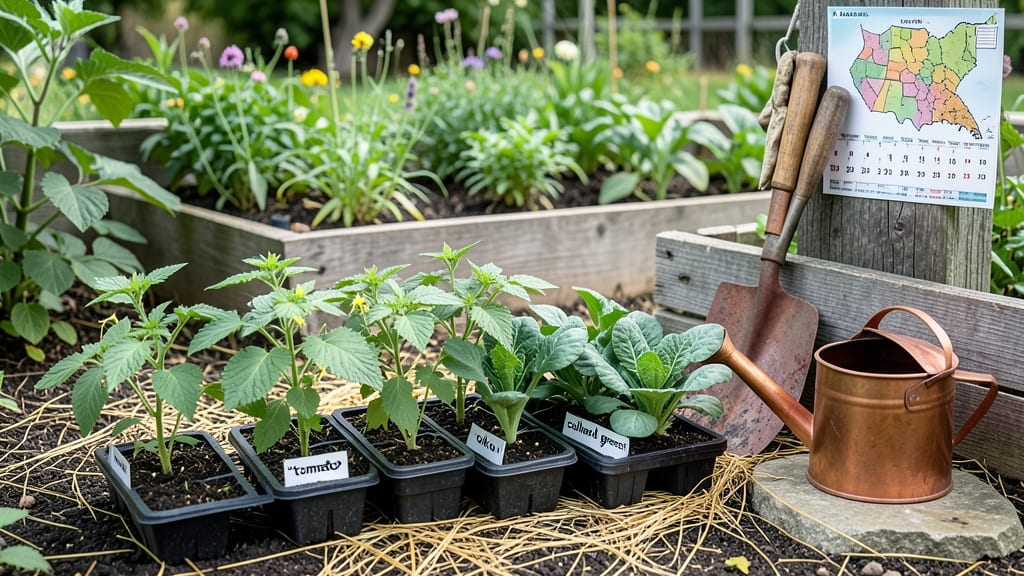
To plant a garden in Alabama, timing is everything—cool-season crops like lettuce and broccoli go in February to March, while tomatoes and peppers wait until April or May after the last frost.
Alabama’s warm climate and long growing season make it a gardener’s paradise—but planting at the wrong time can mean wasted seeds and stunted plants. Timing is everything, and knowing exactly when to plant each crop (from cool-season greens to heat-loving tomatoes) can double your harvest success.
Whether you’re in North Alabama’s 7a zone or South Alabama’s milder 8b, the frost-free window stretches from March 15 to November 15, giving you two full growing seasons if you plan right. Miss the mark, though, and you’ll end up with bolting greens or blighted tomatoes.
Below, I break down the exact weeks to plant your favorite veggies, flowers, and herbs—plus how to adjust for Alabama’s unpredictable weather, so you can grow a thriving garden all year long.
Alabama’s frost-free planting zones & critical dates by region
Alabama’s gardening success starts with understanding your USDA hardiness zone and last frost dates. Most of the state falls within Zone 7a/7b in the north (like Huntsville) and Zone 8a in the south (like Mobile), but microclimates create big differences.
Urban areas like Birmingham can hit 10°F warmer than rural spots, while high-altitude regions may see frost 2 weeks later than coastal zones.
Your last frost date determines when to plant cool-season crops like broccoli and spinach. In North Alabama (Zone 7a/7b), expect frost until mid-April, while South Alabama (Zone 8a) typically warms up by mid-March.
First-time gardeners often misjudge these dates, leading to frost damage on tender seedlings. Always check local AL Extension Service alerts for real-time updates.
Here’s how to use this frost-free planting guide:
- Identify your region and zone (North vs. South Alabama)
- Note your last frost date (2–4 weeks earlier in the south) 3.
Adjust for urban heat islands (+5–10°F warmer in cities) 4. Plant warm-season crops (tomatoes, peppers) 2–3 weeks after your last frost
If you’re in Zone 7a (North Alabama), wait until April 15 to plant tomatoes and peppers, as earlier plantings risk frost damage. Meanwhile, South Alabama gardeners can start warm-season crops by March 1, giving you a 6–8 week head start on the harvest.
For high-altitude areas like Huntsville, add 10–14 days to frost dates due to cooler temperatures.
Pro tip: Use row covers to extend your cool-season growing window by 3–4 weeks. These lightweight fabrics protect seedlings from late frosts while allowing sunlight and water through. I’ve used them to grow spinach and kale well into May in my Zone 7b garden—double the harvest!
For urban gardeners, account for the “heat island effect”, which can raise soil temperatures by 5–10°F. If your garden is in a concrete-heavy area, plant heat-tolerant varieties like okra or sweet potatoes earlier than the guide suggests.
Always monitor your soil temperature with a soil thermometer—ideal planting temps for warm-season crops are 60–65°F.
Don’t forget about fall planting! Alabama’s first frost typically hits mid-November in the north and late November in the south. This leaves plenty of time for cool-season crops like broccoli, carrots, and radishes.
Start seeds 8–10 weeks before your first frost for a winter harvest. I’ve had great success with kale and collards thriving through December in my Zone 8a garden.
To stay on track, bookmark the Alabama Cooperative Extension System’s frost date maps or use apps like Frost Date Calculator. These tools adjust for your exact location and provide real-time alerts for frost warnings.
Even a 5-day delay can mean the difference between a thriving tomato plant and a frost-killed seedling.
Remember: Microclimates matter. A garden on a south-facing slope warms up faster than one in a shady valley. Observe your space for 3–5 years to note patterns. My front yard (full sun) gets frost-free
Best planting timeline for Alabama’s top 10 vegetables & herbs
Alabama’s long growing season lets you grow two full harvests of vegetables and herbs—spring and fall—plus summer staples like okra and sweet potatoes.
But timing is critical: plant cool-season crops like lettuce and broccoli too early, and they’ll bolt in the heat; delay warm-season tomatoes past April, and you’ll miss peak production.
Below, I’ve mapped out the exact weeks to plant Alabama’s top 10 crops, plus succession planting tricks to keep your kitchen stocked year-round.
Pro tip: Use row covers for early spring starts and mulch heavily in summer to retain moisture during Alabama’s brutal heat. For North Alabama (USDA Zone 7a), adjust dates 1–2 weeks later than South Alabama (Zone 8a), where winters are milder.
Always check your local last frost date—typically March 15 in the north and February 15 in the south—and count backward for cool-season crops.
Lettuce, Spinach, Broccoli, Kale, Carrots, Onions
Plant 6–8 weeks before last frost (Feb 1–March 15). Use shade cloth in summer for second fall crop (Aug 1–Sept 15). Succession plant every 2–3 weeks for continuous harvest.
Tomatoes, Peppers, Eggplant, Okra, Sweet Corn
Wait until soil temps hit 60°F+ (after April 15 in north, March 15 in south). Tomatoes and peppers thrive with black plastic mulch to warm soil faster. Plant okra in June for summer heat tolerance.
Sweet Potatoes, Southern Peas, Okra, Cucumbers, Melons
These crops love Alabama’s summer heat but need consistent water. Plant southern peas (cowpeas) in June for drought resistance. Succession plant okra every 2 weeks for nonstop pods.
Collards, Mustard Greens, Turnips, Radishes, Beets
Plant 8 weeks before first frost (Sept 1–Oct 15). Collards and mustard greens sweeten after light frosts—perfect for Alabama’s crisp winters. Use straw mulch to protect from early cold snaps.
Basil, Cilantro, Parsley, Dill, Thyme
Sow basil and cilantro in spring/fall—they bolt in summer. Thyme and rosemary thrive year-round in full sun. Harvest dill and parsley regularly to encourage bushier growth.
For continuous harvests, master succession planting: Sow small batches of lettuce or radishes every 2 weeks in spring and fall. In summer, replace bolting greens with heat-tolerant Swiss chard or New Zealand spinach.
And don’t overlook container gardening—it’s perfect for balconies or small spaces, letting you grow tomatoes, peppers, and herbs even in urban Alabama.
Alabama’s climate rewards patient gardeners. By following this timeline, you’ll avoid common pitfalls like blighted tomatoes (plant too late) or bitter greens (plant too early). Start with one or two crops this season, then expand as you gain confidence. Happy planting—your future harvests will thank you!