
Planting
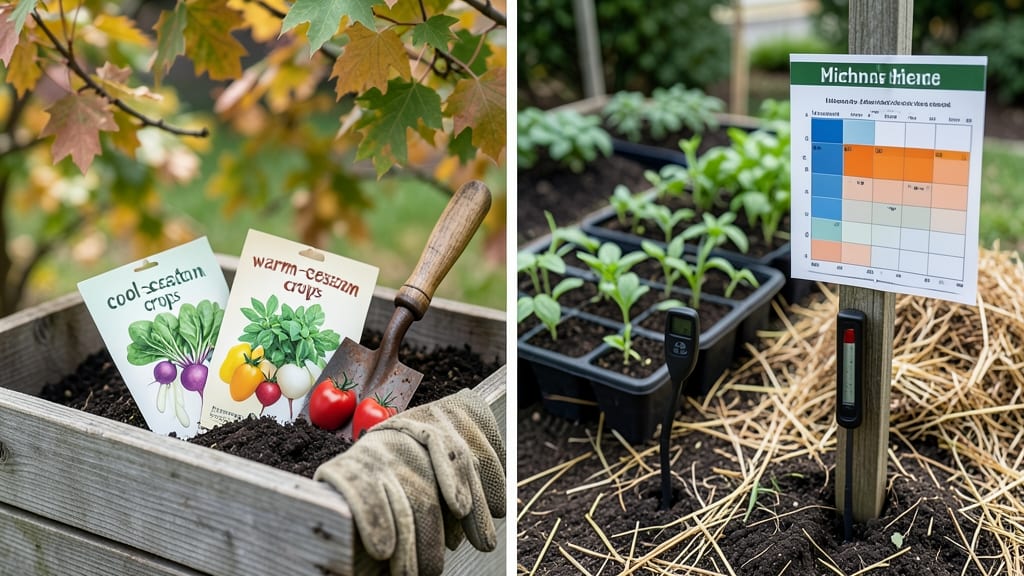
To plant your garden in Michigan with precision, time your starts by USDA zone and last frost dates—cool-season crops go in 4-6 weeks before, while warm-season plants wait until 2-3 weeks after the danger has passed.
Michigan’s unpredictable spring weather can turn a gardener’s carefully planned schedule into a guessing game—but knowing your USDA hardiness zone and heat tolerance triggers lets you plant with confidence.
Skip the trial-and-error and learn the exact windows for cool-season crops like peas and spinach, warm-season starters such as tomatoes and peppers, and frost-sensitive plants that need a little extra protection.
Below, I’ll break down the zone-specific planting timeline for Michigan’s Upper and Lower Peninsulas, plus tips to adjust for organic methods and late frosts that can still sneak in.
Michigan’s planting zones & heat tolerance triggers by region
Michigan spans USDA hardiness zones 4-6, which means your planting schedule should vary depending on whether you're in the Upper Peninsula, Metro Detroit, or Lower Peninsula.
The last average frost date ranges from mid-April in southern Michigan to late May in the UP, creating critical timing differences for your garden. Understanding these heat tolerance triggers helps you avoid frost damage to warm-season crops like tomatoes or peppers while maximizing cool-season harvests.
For example, peas and lettuce thrive when planted 4-6 weeks before your last frost, while basil and cucumbers need soil temperatures above 60°F—a threshold that arrives weeks later in northern regions.
Even within the Lower Peninsula, Metro Detroit’s zone 6b allows earlier planting than zone 5a in the UP, where gardeners often wait until Memorial Day to plant heat-lovers.
Here’s how Michigan’s three key regions differ in planting windows, frost risks, and heat-sensitive triggers:
| Region | USDA Zone | Avg. Last Frost | Cool-Season Planting Window | Warm-Season Planting Trigger | Heat-Sensitive Crops |
|---|---|---|---|---|---|
| Upper Peninsula | 5a-5b | May 15–20 | April 1–May 10 (4–6 weeks before frost) | Soil ≥60°F after May 25 | Tomatoes, peppers, basil (plant after June 1) |
| Metro Detroit | 6a-6b | April 20–May 5 | March 15–April 15 (earlier for hardy crops) | Soil ≥60°F after April 25 | Cucumbers, melons, eggplant (plant May 10+) |
| Lower Peninsula (South) | 5b-6a | April 10–20 | March 20–April 10 (extend with row covers) | Soil ≥60°F after April 15 | Okra, sweet potatoes, okra (plant May 1+) |
Note: Use row covers to extend cool-season windows by 2–3 weeks in all regions.
In the Upper Peninsula, gardeners often wait until after Memorial Day to plant tomatoes or peppers because soil temperatures lag behind southern Michigan.
Meanwhile, Metro Detroit’s zone 6b allows early starts for spinach and kale as early as March 15, but a late frost can still strike in early April. Even within the Lower Peninsula, southern counties can plant beans by April 15, while northern areas wait until May 1.
Heat tolerance is another critical factor. Warm-season crops like cucumbers and squash need consistent temperatures above 70°F to thrive. In zone 5a (UP), this often means waiting until late June for full production, while zone 6b (Detroit) can start them by May 10.
For frost-sensitive plants, use black plastic mulch to warm soil faster in cooler zones.
Regional microclimates also play a role. Urban areas like Detroit experience heat islands, allowing earlier planting of warm-season crops by 1–2 weeks compared to rural areas. Conversely, lakeshore regions (e.g., Traverse City) can have later frosts due to lake-effect cooling.
Always check local frost records from NOAA or your county extension office for precise timing.
For cool-season crops, prioritize hardy varieties like Swiss chard or radishes, which tolerate light frosts. In zone 5a, plant peas by April 15 for a May harvest, while lettuce can go in until June 15 for a fall crop.
In zone 6b, you can stretch this to March 15–July 1 with succession planting.
Pro tip: Use a soil thermometer to confirm 60°F+ for warm-season starters—this is your green light to plant.
In northern Michigan, this might not happen until June 10, while southern Michigan hits it by May 1. Adjust your schedule based on 3-year averages, not just the previous year’s weather.
Finally, don’t forget fall planting! Zone 6b can still grow kale and carrots until September 15, while zone 5a should plant by August 15 for a <
Step-by-step planting timeline for Michigan gardens
Michigan’s last frost dates vary dramatically—from mid-April in southern zones to late May in the Upper Peninsula. To avoid frost damage, I’ve mapped out a month-by-month schedule that accounts for both indoor starts and direct sowing, with special attention to frost-sensitive plants like basil and cucumbers.
For cool-season crops (spinach, peas, lettuce), I recommend starting seeds 4-6 weeks before your average last frost date. Meanwhile, warm-season plants (tomatoes, peppers, beans) need to wait until 2-3 weeks after the last frost, or risk stunted growth from cold soil.
Here’s my step-by-step planting timeline, tailored to Michigan’s USDA zones 4-6. Adjust dates by 1-2 weeks if you’re in a warmer microclimate (like Metro Detroit) or a cooler zone (like the UP).
📅 Michigan Planting Timeline by Month
- 1 February-March (Indoor Starts): Begin tomatoes, peppers, and eggplants indoors under grow lights. These slow-growing plants need 6-8 weeks to harden off before transplanting.
- 2 Late March (Cool-Season Direct Sow): Plant peas, spinach, and lettuce outdoors if soil temps are above 40°F. Use row covers for extra frost protection.
- 3 April (Transplant Warm Starts): Move hardened-off seedlings (tomatoes, peppers) outdoors after last frost. Wait until soil is at least 60°F for best root growth.
- 4 May (Direct Sow Warm Crops): Plant cucumbers, basil, and beans after May 15 (or when soil is 70°F+). These are frost-sensitive—cover with cloches if late frosts occur.
- 5 June-July (Succession Planting): Sow carrots, radishes, and bush beans every 2 weeks for continuous harvests. Mulch to retain moisture in Michigan’s hot, dry spells.
- 6 August (Fall Prep): Start cool-season crops indoors (kale, broccoli) for early fall harvests. Direct-sow spinach and peas in late August for frost-tolerant greens.
Pro tip: Use biodegradable pots for seedlings to avoid transplant shock, and always harden off plants for 7-10 days before moving them outdoors. Michigan’s unpredictable weather means having row covers on hand can save your frost-sensitive plants from surprise freezes.
For organic gardeners, add compost tea to seedlings at transplanting to boost resilience. And if you’re in the Upper Peninsula, push back warm-season planting by 2-3 weeks to account for cooler soil temps.