
Fertilization
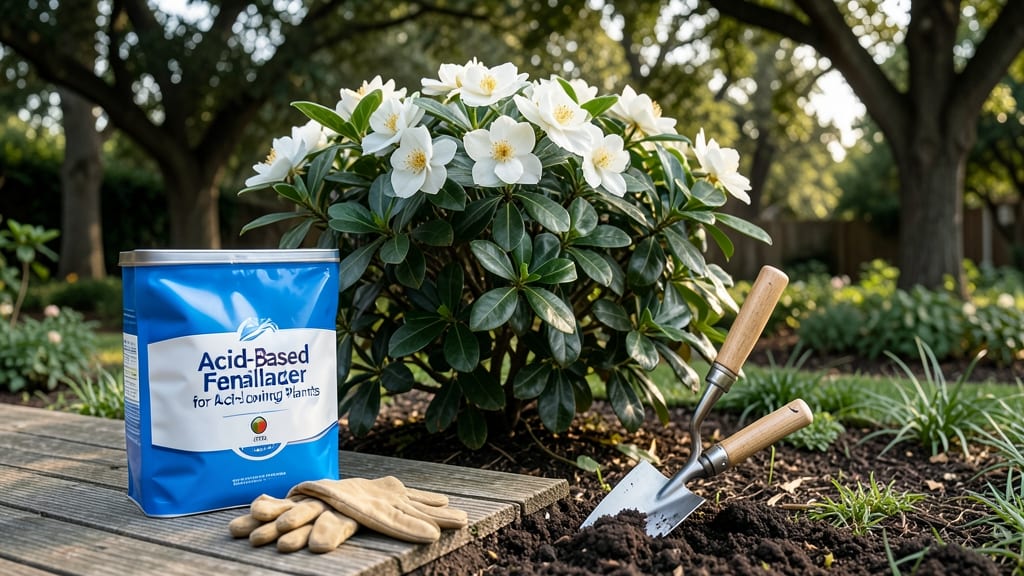
To keep your gardenias 🌸 thriving with vibrant blooms, you need an acid-based fertilizer tailored to their pH-sensitive roots—not just any generic feed.
Struggling to keep your gardenias blooming as vibrantly as they did when you first planted them? The secret might be hiding in your soil’s pH—and the right acid-based fertilizer could be the game-changer your plants need.
Gardenias in Zones 9-11 demand soil between 4.5–6.0 pH, but most garden soil leans alkaline. Without the right acidic feed, your shrubs may yellow, drop buds, or refuse to flower—even with perfect light and water.
Below, I’ll walk you through how to pick, apply, and monitor acid-based fertilizers so your gardenias reward you with fragrant blooms year-round—no guesswork included.
Why gardenias need acid-based fertilizer: the science behind pH and blooms
If your gardenias look lackluster with sparse blooms and yellowing leaves, your soil’s acidity level might be the culprit. Gardenias thrive in acidic soil with a pH range of 4.5–6.0, a condition that most garden soils naturally lack.
This acidity isn’t just a preference—it’s a biological necessity for nutrient absorption, particularly for iron, manganese, and zinc, which gardenias need to produce their signature fragrant flowers.
Without the right acid-based fertilizer, gardenias struggle to access these essential micronutrients, leading to chlorosis (yellowing leaves), stunted growth, and fewer blooms. The science is simple: acidic soil unlocks these nutrients, making them available in forms the plant can absorb.
Think of it like a key turning a lock—without the right pH, even nutrient-rich soil won’t nourish your gardenias effectively.
Soil pH directly impacts how gardenias interact with their environment. For example, in alkaline soils (pH 7.0+), iron becomes locked away as insoluble compounds, leaving your plants starving even if the soil looks fertile. Acid-based fertilizers lower the pH, releasing these nutrients and promoting vibrant foliage and abundant blooms. This is why gardeners swear by products like peat-based fertilizers, iron sulfate, or cottonseed meal—they’re designed to mimic the acidic conditions gardenias crave.
Here’s the kicker: gardenias aren’t the only plants that love acidity. Many azaleas, camellias, and rhododendrons share this preference, which is why acid-based fertilizers are formulated for these acid-loving plants.
But gardenias are particularly sensitive—skipping the right fertilizer can mean the difference between a lush, fragrant shrub and a struggling one with drooping leaves and no flowers.
Let’s break down the ideal pH ranges for gardenias and how common soil types compare. Understanding this will help you diagnose why your gardenias might be underperforming and how to fix it.
Now that you see how your soil type stacks up, let’s talk about what happens when gardenias don’t get the acidic environment they need. The first sign is often yellowing leaves, a condition called chlorosis.
This occurs when gardenias can’t absorb enough iron, even if it’s present in the soil. The veins stay green while the rest of the leaf turns yellow—a classic deficiency symptom that screams for acid-based fertilizer.
Beyond yellow leaves, you might notice smaller blooms or fewer flowers altogether. Gardenias are heavy feeders, and without the right nutrients, they’ll prioritize leaf growth over flower production.
In severe cases, buds may form but fail to open, leaving you with a shrub full of unopened buds that look like tiny green balls. This is your gardenia’s way of saying, “I’m malnourished—fix my soil!”
Another red flag is leaf drop, especially during warmer months. While some leaf drop is normal, excessive shedding paired with weak stems often indicates nutrient stress. The good news? Correcting the pH and feeding your gardenias with an acid-based fertilizer can reverse these symptoms within a few weeks.
I’ve seen gardenias go from nearly bare branches to bursting with blooms in just one growing season after adjusting their soil pH.
So, how do you know if your gardenias are getting the right nutrients? Start by testing your soil’s pH—most garden centers sell affordable test kits for under $10. If the results are outside the 4.5–6.0 range, it’s time to act.
For soils that are too alkaline, elemental sulfur or peat moss can lower the pH gradually. For soils that are already acidic but still lacking nutrients, a slow-release acid fertilizer will keep the pH stable while feeding your plants.
Remember, gardenias aren’t just picky—they’re biologically dependent on acidic soil. Sk
Top 5 acid-based fertilizers for gardenias: organic vs. synthetic options compared
Choosing the right acid-based fertilizer for your gardenias can feel overwhelming with so many options. The key difference lies in whether you prefer organic slow-release or synthetic fast-acting formulas—each with distinct benefits for your pH-sensitive shrubs.
Below, I’ve compared my top 5 picks, including application rates and cost factors to help you decide what works best for your garden.
Gardenias thrive when their soil stays between 4.5–6.0 pH, but most garden soils are alkaline. The fertilizers I recommend below not only supply essential nitrogen, phosphorus, and potassium but also provide the acidity boost your plants crave.
Let’s break down the pros and cons so you can pick the perfect match for your gardenia care routine.
Organic vs. Synthetic Acid-Based Fertilizers
🌱 Organic Options
- Pros: Slow-release, improves soil structure, eco-friendly
- Cons: Requires more frequent applications, slower results
🧪 Synthetic Options
- Pros: Fast-acting, precise nutrient delivery, cost-effective
- Cons: Can burn roots if overused, no soil improvement
My top organic pick is Espoma Garden-Tone, a peat-based fertilizer designed specifically for acid-loving plants. It releases nutrients gradually, reducing the risk of fertilizer burn while maintaining the ideal soil pH.
For a more budget-friendly organic option, cottonseed meal is packed with nitrogen and sulfur, making it a fantastic choice for amending soil over time.
On the synthetic side, Miracle-Gro Azalea/Camellia is my go-to for quick results. Its balanced NPK ratio (12-4-6) provides immediate nutrients while keeping the soil acidic.
If you’re dealing with a severely alkaline garden, elemental sulfur is a game-changer—it’s the fastest way to lower pH, though it requires careful monitoring to avoid over-acidification.
For container gardenias, peat moss is a must-have. It’s lightweight, retains moisture, and naturally keeps the soil acidic. Mix it into your potting soil at a 20% ratio to create the perfect environment for your plants.
Just remember, peat moss loses its effectiveness over time, so you’ll need to replenish it every 1–2 years.
Cost-wise, organic options like cottonseed meal and peat moss are the most budget-friendly, while synthetic fertilizers like Miracle-Gro offer convenience for $10–$15 per bag.
If you’re serious about long-term soil health, investing in Espoma Garden-Tone or sulfur will pay off with healthier plants and fewer pH-related issues down the road.