
Advice
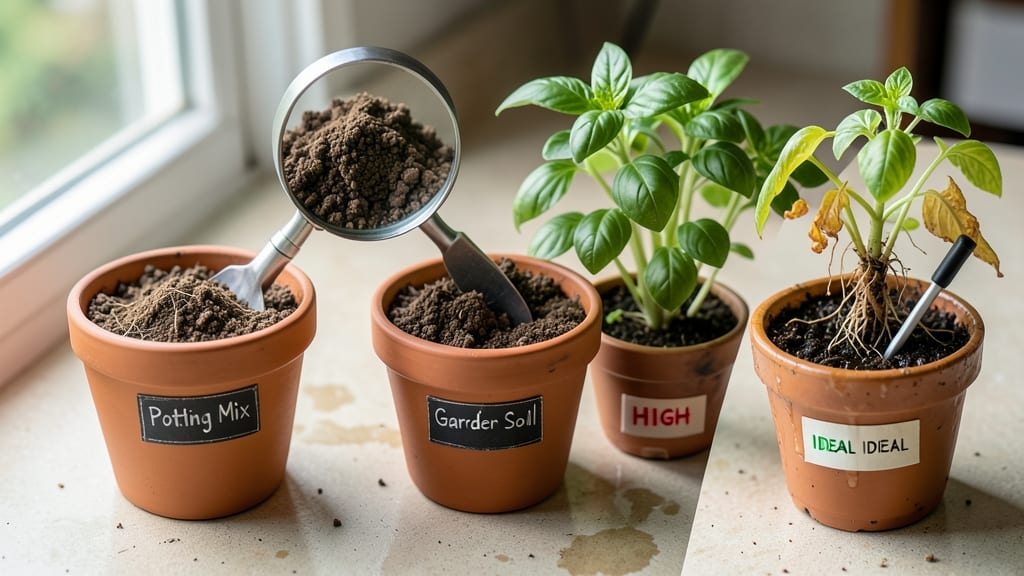
You shouldn't use garden soil for potting because it compacts easily, drains poorly, and may contain weeds, pests, or pathogens. Instead, mix it with perlite or compost for better aeration and drainage while retaining some nutrients.
Garden soil is designed for outdoor beds where plants can spread their roots freely, but potted plants need a lighter, more breathable medium. 🌱 The dense structure of garden soil suffocates roots by trapping moisture, leading to rot or fungal issues.
Even if you sterilize it, the lack of organic matter means slower nutrient release—critical for container-grown plants that rely on limited soil resources. For best results, I recommend blending garden soil with 20-30% perlite or compost to recreate the airy texture potted plants crave.
This modified mix also prevents the common problem of "growing out" of pots too quickly. The added perlite creates pockets for oxygen flow, while compost introduces slow-release nutrients that mirror natural soil conditions.
For heavy feeders like tomatoes or peppers, I often add a handful of worm castings to boost microbial activity—something garden soil alone can't provide.
💡 In This Article
- Why Garden Soil Fails as Potting Mix
- How to Safely Modify Garden Soil for Potting
Why garden soil fails as potting mix
Garden soil is engineered for outdoor beds where roots can spread horizontally and vertically without restriction. However, potted plants face a completely different challenge: their roots are confined to a limited space, creating a high-demand environment for oxygen, water, and nutrients.
The dense clay and silt particles in garden soil pack tightly when watered, reducing pore space by up to 40%—this suffocates roots by blocking oxygen flow, which is essential for respiration. Without proper aeration, roots can't absorb water or nutrients efficiently, leading to stunted growth or even death.
The drainage issue is equally critical. Garden soil retains moisture like a sponge, often staying saturated for days after watering. This creates the perfect conditions for root rot, a fungal infection that thrives in waterlogged environments.
Potted plants, especially in plastic or ceramic containers, have no natural drainage escape route.
Even well-draining garden soil can trap excess moisture at the bottom of pots, where roots often congregate. 🌱 For comparison, ideal potting mixes should drain within 10-15 minutes after watering, while garden soil may take hours—or never fully drain at all.
Another hidden problem is the nutrient imbalance. Garden soil contains a mix of organic matter that decomposes slowly over seasons, but potted plants need nutrients delivered consistently and in higher concentrations.
The microbial life in garden soil, while beneficial outdoors, can become overwhelming in containers, leading to imbalances that harm delicate root systems. Plus, garden soil often contains weed seeds, larvae, or pathogens that can lie dormant until activated by the warm, moist conditions of a pot.
Consider the texture difference: garden soil feels heavy and gritty when dry, while potting mixes should be light and fluffy, almost like a sponge. This structural difference directly impacts a plant's ability to establish roots.
For example, a 6-inch pot filled with garden soil might support a small basil plant for a few weeks, but the roots will quickly outgrow the space, leading to circling or strangling—a common issue in compacted soil. The solution lies in recreating the airy, nutrient-rich environment roots crave.
Even if you sterilize garden soil by baking it, you're left with a nutrient-poor medium that lacks the organic matter potted plants rely on. Without amendments, essential micronutrients like nitrogen, phosphorus, and potassium become locked away, unavailable to plant roots.
This is why many gardeners unknowingly create a "soil desert" in their pots, where plants struggle despite regular watering. The key is to understand that potting soil isn't just "soil"—it's a carefully balanced ecosystem designed for confined roots.
For instance, a 1-gallon pot filled with garden soil might hold 10-15% air space when saturated, while a quality potting mix achieves 30-40% air space. This extra oxygen allows roots to breathe and grow stronger, directly impacting a plant's ability to uptake water and nutrients.
Without this aeration, even healthy-looking plants can suffer from hidden stress, leading to yellowing leaves or wilting despite adequate water.