
Fertilization
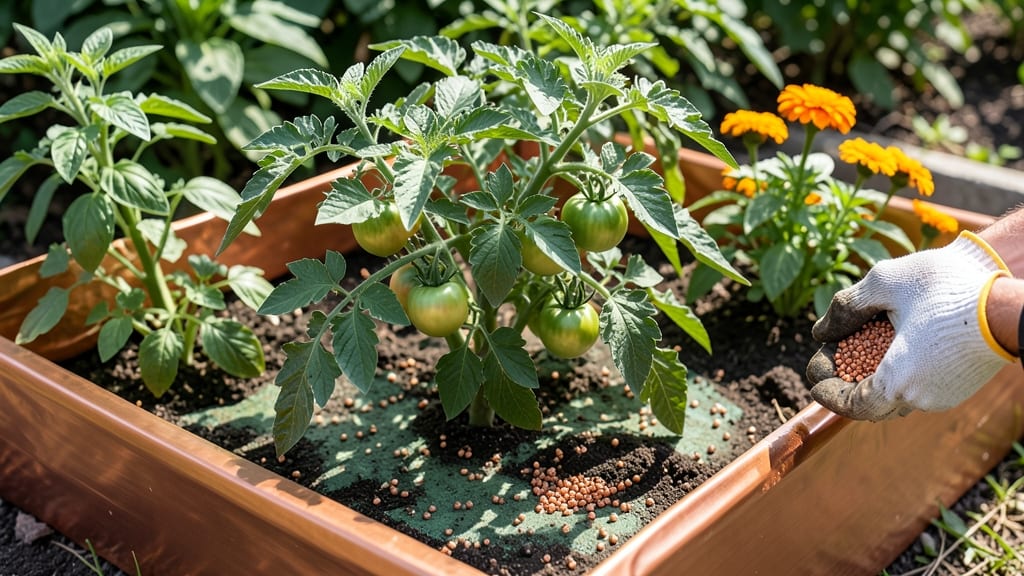
Using copper in garden beds boosts soil health by stimulating beneficial microbes, fighting fungal infections, and improving nutrient absorption—but too much can damage plants and throw off soil balance. Stick to organic options like copper sulfate (applied carefully) or natural sources such as composted plant material.
Copper plays a crucial role in soil ecosystems by acting as a natural fungicide and catalyst for plant enzymes. 🌱 The mineral helps break down organic matter more efficiently, which in turn feeds soil microbes—the tiny workers that keep your garden thriving.
However, the key is balance: most garden soils already contain enough copper, and overapplication can lead to toxicity, stunting growth or even killing plants. I recommend testing soil first or starting with small amounts (like a teaspoon per square foot) if you suspect a deficiency.
For those worried about synthetic chemicals, natural alternatives exist. Composted leaves or plant clippings often contain trace copper, while copper-rich amendments like green sand provide a safer long-term boost.
Always pair copper additions with proper pH management—acidic soils absorb copper more readily, so aim for a slightly acidic to neutral range (6.0-7.0) for best results.
💡 In This Article
- How Copper Enhances Soil and Plant Growth Mechanisms
- Safe Ways to Add Copper to Garden Soil
How copper enhances soil and plant growth mechanisms
Copper acts as a biological catalyst in soil by activating enzymes that break down complex organic compounds into nutrients plants can absorb.
For example, it plays a key role in laccase and oxidase enzymes that decompose lignin in fallen leaves and wood chips, speeding up composting by up to 30%. This process releases phosphorus and nitrogen, which are critical for root development and foliage growth.
Without sufficient copper, these enzymes work sluggishly, leaving organic matter to decompose slowly and inefficiently.
The mineral also functions as a natural fungicide by disrupting the cell membranes of pathogens like Phytophthora (a common soil-borne fungus) and powdery mildew. Copper ions create microscopic pores in fungal cells, causing them to leak essential nutrients and die.
This is why copper-based sprays have been used for over a century to treat fungal infections in gardens. However, the effect is dose-dependent—too little copper won’t suppress fungi, while too much can harm beneficial microbes like mycorrhizal fungi, which form symbiotic relationships with plant roots.
Plants need copper in tiny amounts—typically 5-20 parts per million (ppm) in soil—to synthesize chlorophyll and maintain cell wall integrity. A deficiency shows up as yellowing leaves with green veins (a condition called "copper chlorosis") or stunted growth, especially in nutrient-hungry crops like tomatoes and peppers.
Soil tests reveal that most healthy garden soils already contain 10-30 ppm of copper, so additions are rarely needed unless the soil is sandy or heavily leached.
Overapplication, however, can lead to toxicity, where copper accumulates in plant tissues and causes browning leaf edges or even death in sensitive species like beans and potatoes.
Copper’s role in nutrient uptake is equally fascinating. It helps regulate the absorption of iron and zinc by preventing these minerals from binding too tightly to soil particles.
For instance, in acidic soils (pH < 6.0), copper can "free up" iron, making it more available to plants. This explains why copper amendments sometimes improve growth in iron-deficient soils, even if copper itself isn’t the limiting factor. The catch?
This interaction only works within a narrow range—soils with pH 6.0-7.0 absorb copper most efficiently, while alkaline soils (>7.5 pH) bind copper tightly, reducing its effectiveness.
Consider the case of blueberries, which thrive in acidic soils (pH 4.5-5.5) and often show copper deficiency symptoms. Adding copper sulfate to the soil can correct this, but the dose must be precise—0.5-1 gram per square meter—or the blueberries will suffer from copper toxicity.
The key is monitoring soil pH alongside copper levels, as the two are inseparable in determining plant availability. 🌿 For most gardeners, the goal isn’t to add copper but to ensure the existing amount is accessible, which often means adjusting soil pH rather than adding more mineral.
One often-overlooked mechanism is copper’s role in ethylene regulation, a plant hormone that controls fruit ripening, flower senescence, and stress responses. Copper-deficient plants produce excess ethylene, leading to premature leaf drop or poor fruit set.
This is why copper-deficient tomatoes often develop blossom-end rot—a calcium deficiency symptom triggered by hormonal imbalances. The connection between copper and ethylene highlights why even subtle deficiencies can have cascading effects on plant health.