
Tools
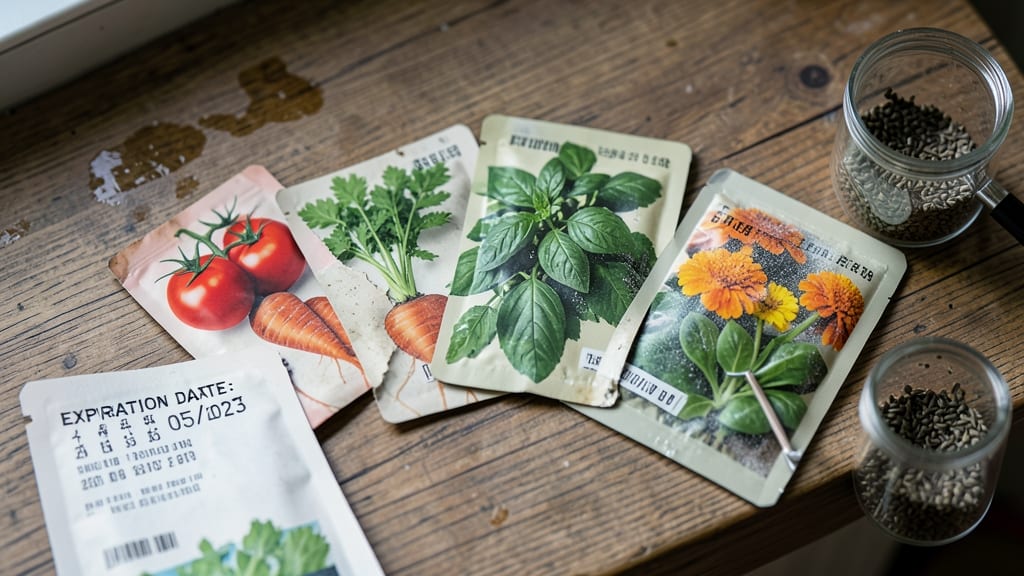
Garden seeds do expire, with their usable lifespan ranging from 6 months to 5 years depending on storage conditions and seed type. While some varieties like beans or peas maintain viability for 2-3 years, others like corn or onions may lose potency much faster. Keeping them in a cool, dry environment preserves their germination potential significantly.
Seed expiration isn't just about age—it's a complex interaction between moisture, temperature, and oxygen exposure. 🌱 The seed coat acts like a protective barrier, but over time, even the hardiest varieties break down.
I've noticed that seeds stored in airtight containers last nearly twice as long as those left in their original packaging. For example, tomato seeds often stay viable for 4-5 years when stored properly, while delicate flowers like snapdragons may only last 1-2 years regardless of conditions.
The good news is that proper storage can dramatically extend seed life. A dark, cool pantry (around 32-41°F) with low humidity is ideal, while refrigeration can preserve some varieties for even longer.
Just remember: even the best storage can't stop all degradation—some seeds simply have shorter natural lifespans due to their biological makeup.
💡 In This Article
- Seed Viability Factors: How Storage Affects Longevity
- Testing Seed Freshness: Simple Germination Checks for Gardeners
Seed viability factors: how storage affects longevity
The lifespan of garden seeds hinges on their biological makeup and environmental exposure. Seeds contain living embryos that gradually lose viability through a process called aging, accelerated by moisture, warmth, and oxygen.
For instance, onion seeds degrade rapidly because their thin seed coats offer little protection against humidity, while hard-coated seeds like those from beans resist moisture better, extending their shelf life to 2-3 years under ideal conditions. 🌱
Temperature is the most critical factor—seeds stored above 75°F degrade 10 times faster than those kept at 32-41°F. The optimal storage environment mimics natural dormancy conditions, where seeds remain dry and cool.
Even a 10% increase in humidity can reduce viability by 30-50% within a year, as moisture triggers metabolic activity that exhausts the seed's energy reserves. For example, lettuce seeds stored at 50°F with 30% humidity last nearly twice as long as those stored at 70°F with 60% humidity.
Oxygen exposure also plays a hidden role—seeds stored in airtight containers preserve their viability longer because oxygen accelerates oxidative damage to cell membranes. This is why vacuum-sealed packets or mylar bags with oxygen absorbers can extend seed life by 2-3 years compared to standard paper packets.
The seed coat's thickness matters too: thick coats (like those on tomato seeds) provide better protection, while delicate coats (like those on petunia seeds) require near-perfect conditions to maintain viability beyond 1-2 years.
Different seed types exhibit unique degradation patterns due to their genetic programming. Vegetable seeds generally last 1-5 years, with corn and onions on the shorter end (6 months-1 year) because their embryos have higher metabolic rates.
Flower seeds often degrade faster (1-2 years) due to their smaller size and thinner protective layers. Herbs like cilantro or dill can last 2-3 years when stored properly, but their germination rates decline sharply after 1 year.
Light exposure matters less than most gardeners realize—seeds don't photosynthesize, so darkness isn't critical unless you're storing light-sensitive varieties like some flower seeds. The real enemy is temperature fluctuations, which create condensation inside storage containers, accelerating decay.
For example, moving seeds between a warm garage and cold basement can reduce their lifespan by up to 50% compared to consistent cool storage.
What most people overlook is the role of seed dormancy in preservation. Many seeds enter a natural dormant state when dry, which pauses their aging process. Breaking dormancy (through scarification or stratification) before storage can actually shorten their lifespan by reactivating metabolic processes.
This is why some gardeners prefer to store untreated seeds—they maintain dormancy longer, preserving viability.