
Planting
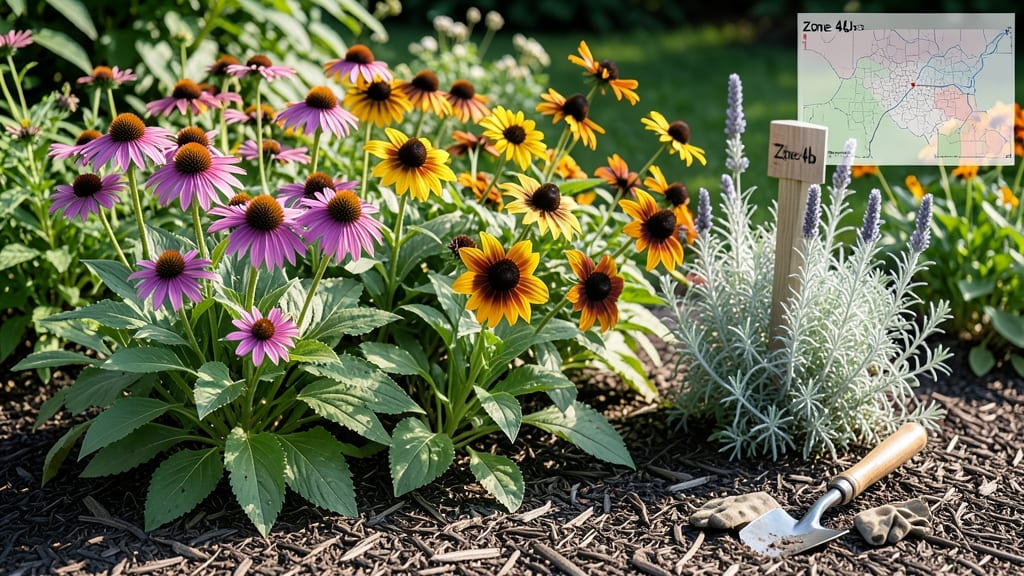
For Zone 4B gardening, prioritize hardy perennials like coneflowers, lavender, and Russian sage, with frost dates typically spanning from May 15 (last spring frost) to September 15 (first fall frost). Plant biennials, bulbs, and shrubs that endure -25°F to -30°F temperatures for reliable year-round growth.
Zone 4B's short growing season demands strategic plant choices that balance resilience and beauty. 🌿 The key is selecting varieties that not only survive winter but thrive in your area's unique conditions—whether that's rocky soil, high winds, or early frosts.
I've found that native plants like purple coneflower and catmint often require less maintenance while still delivering vibrant blooms from early summer through fall. What sets Zone 4B apart is how microclimates can shift frost dates by weeks, so always check your specific location's averages before planting.
Another critical factor is soil preparation. Since many Zone 4B areas have heavy clay or poor drainage, amending with compost and organic matter during fall creates a more hospitable environment for next spring's planting.
This simple step can mean the difference between struggling annuals and flourishing perennials that come back year after year. The plants that truly excel here are those with deep root systems that can access moisture during dry spells—a trait shared by many of the hardiest perennials.
💡 In This Article
- Understanding Zone 4B Frost Timelines and Microclimates
- Top 10 Cold-Hardy Annuals and Perennials for Zone 4B Gardens
Understanding zone 4B frost timelines and microclimates
Zone 4B's frost dates aren't set in stone—they shift dramatically based on elevation and location. Urban areas like Minneapolis often experience later spring frosts due to the "urban heat island" effect, where concrete absorbs and retains heat, delaying the last frost by 1-2 weeks compared to rural areas.
Conversely, high-elevation spots like northern Wisconsin can see frost lingering until May 25 or later. The USDA's frost maps provide averages, but your actual last frost might occur 2 weeks earlier or later depending on these factors.
Microclimates play an even bigger role in extending growing seasons. A south-facing slope can warm 5-10°F warmer than the surrounding area, allowing you to plant tender crops 2-3 weeks earlier in spring or keep them growing 1-2 weeks longer in fall.
For example, in Madison, WI, gardeners often plant tomatoes in protected south-facing beds by May 1—weeks before the official average last frost date. This is why professional growers use techniques like row covers or cold frames to create localized microclimates that push seasonal limits.
Calculating safe planting windows requires more than just checking frost dates. The 10-day rule is a gardener's golden standard: add 10 days to your average last frost date to account for late cold snaps.
For Zone 4B, this means treating May 25 as your true cutoff for warm-season crops like peppers and eggplants. Similarly, subtract 10 days from your first fall frost date (September 5) to determine when to start hardening off tender plants for overwintering.
Wind patterns create another layer of complexity. Open fields experience 30% more wind chill than sheltered garden spots, which can delay planting by 1-2 weeks as young plants struggle to establish. This is why fences, windbreaks, or even dense shrub borders become valuable assets in Zone 4B gardens.
The wind's drying effect also accelerates soil moisture loss, making irrigation timing critical—especially for shallow-rooted annuals that can't tolerate drought stress.
Soil temperature matters just as much as air temperature. Most seeds won't germinate until the soil reaches 50-55°F, which typically occurs 2-3 weeks after the last air frost. Using a soil thermometer is far more reliable than air temperature readings.
For example, in Duluth, MN, gardeners often wait until May 20 to plant peas, even though the average last frost is May 15, because the lake-effect cooling keeps soils cold longer.
Advanced gardeners use degree-day accumulations to predict when plants will mature. For instance, tomatoes need 1,200-1,500 growing degree days (GDD) to reach maturity.
In Zone 4B, this typically means planting by May 15 for a September 15 first frost date—but only if you're using early-maturing varieties like 'Stupice' or 'Glass Gem.' The math behind this involves tracking daily temperature averages above a baseline (usually 50°F for cool-season crops).
What most Zone 4B gardeners don't realize is how much their specific yard's conditions can differ from regional averages. A simple 7-day frost tracking journal—recording daily minimum temperatures—will reveal your true frost patterns.
I've seen gardens just 100 feet apart have 10-day differences in frost timing due to microclimates. This precision is what separates successful Zone 4B gardens from struggling ones. 🌱