
Pests
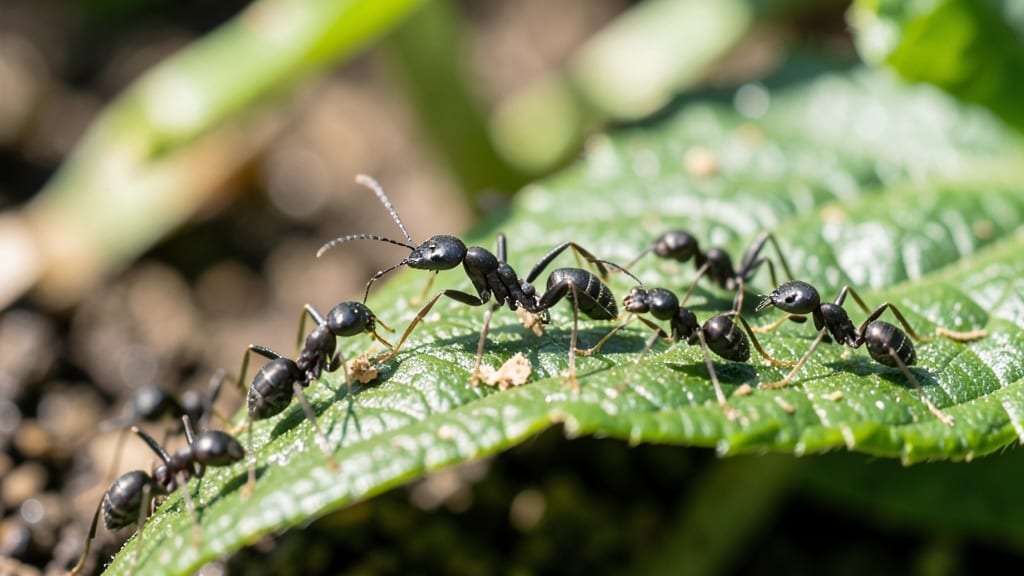
Will ants hurt my garden? Most garden ants actually help by aerating soil and controlling pests like aphids, but large colonies can damage roots or disrupt beneficial insects. Observe their behavior to determine if action is needed.
Ants play a dual role in your garden ecosystem. 🌱 On one hand, they act as natural pest controllers by preying on aphids and other sap-sucking insects, which can reduce the need for chemical interventions. Their tunneling also improves soil aeration and drainage, promoting healthier root systems.
However, when colonies grow too large, they may compete with beneficial pollinators or even gnaw on tender plant roots, especially in seedlings. The key is monitoring their activity—if you notice excessive trails or visible damage to plants, it's time to consider gentle management strategies.
For most gardeners, ants are more helpful than harmful, but their impact depends on the species and colony size. 🚫 The most common issue arises when ants farm aphids, protecting them in exchange for honeydew—a sticky substance that attracts sooty mold.
This can weaken plants over time. If you spot these signs, focus on removing food sources (like fallen fruit) and using organic deterrents before resorting to harsher methods.
💡 In This Article
- How Ants Impact Garden Soil and Plant Health
- Natural Ways to Manage Problematic Ant Colonies
How ants impact garden soil and plant health
Ants contribute to soil health through their tunneling habits, which create microscopic channels that improve aeration and water drainage. A single colony can construct up to 30 feet of tunnels per year, breaking up compacted soil and allowing roots to penetrate deeper.
This process mimics natural tillage, reducing the need for mechanical intervention while enhancing microbial activity in the soil. 🌱 For example, harvester ants (Pogonomyrmex spp.) are known to bring nutrients to the surface as they forage, creating small mounds that enrich the topsoil with organic matter.
Their role as pest controllers is equally significant, as many ant species prey on garden pests like aphids, whiteflies, and caterpillars.
A study from the University of California found that Argentine ants (Linepithema humile) can reduce aphid populations by up to 70% in treated areas, effectively acting as a natural pesticide.
However, this benefit comes with a trade-off—some ants, like the little black ant (Monomorium minimum), actually protect aphids, creating a harmful cycle where honeydew production attracts sooty mold, which blocks sunlight and weakens plants.
Root disturbance becomes an issue when ant colonies grow too large, particularly in gardens with young seedlings. Carpenter ants (Camponotus spp.), for instance, can chew through tender roots, while fire ants (Solenopsis spp.) aggressively defend their mounds, creating barren zones where other plants struggle to establish.
The damage is often subtle at first—wilting leaves or stunted growth—but becomes more obvious as colonies expand. 🚫 This is why monitoring ant trails and mound locations is crucial; a single mound can house thousands of workers, and their collective activity can disrupt entire garden beds over time.
Ants also play a role in nutrient cycling by redistributing organic matter. Leafcutter ants (Atta spp.), for example, carry leaf fragments to their nests, where fungi decompose the material into nutrient-rich compost.
While these species are more common in tropical regions, their behavior highlights how ants contribute to breaking down plant debris—a process that benefits soil fertility.
However, in temperate climates, this benefit is usually outweighed by the risks of root damage or competition with pollinators, especially when ants establish dominance in flower beds.
Colony size is the determining factor in whether ants become beneficial or problematic. Small, scattered colonies of pavement ants (Tetramorium caespitum) are unlikely to cause harm, as their foraging range is limited to 10-20 feet from the nest.
In contrast, large colonies of Argentine ants can spread across entire yards, creating dense trails that disrupt beneficial insect activity and concentrate honeydew-producing pests. The key is observing their behavior—if you notice ants tending to aphids or creating visible damage, it's time to intervene before the colony grows unmanageable.
Understanding these dynamics helps gardeners make informed decisions. While ants are rarely a total loss, their impact varies widely by species, colony size, and plant type.
For instance, ants are less likely to harm mature perennials with established root systems but can devastate a newly seeded vegetable bed. 🌿 This is why targeted management—rather than blanket eradication—is the most effective approach for maintaining a balanced garden ecosystem.