
Container Gardens
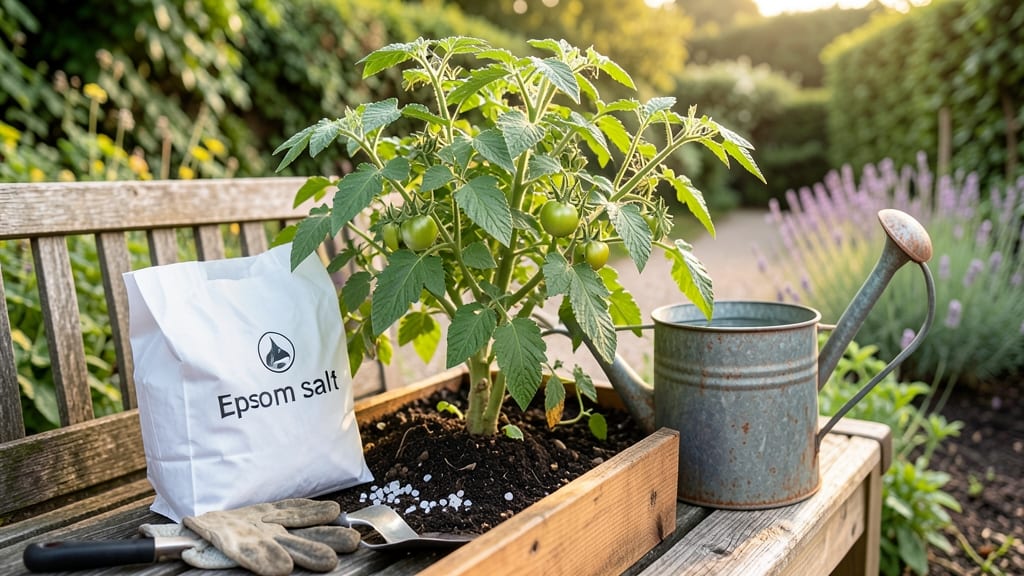
Using Epsom salt for garden soil provides essential magnesium and sulfur that prevent yellowing leaves, weak growth, and poor blooms in plants like tomatoes, peppers, and roses. Mix 1 tablespoon per foot of plant height into the soil every 4-6 weeks during the growing season.
Magnesium is a plant's secret weapon for staying strong—it's the backbone of chlorophyll, the compound that gives plants their green color and powers photosynthesis.
When your soil lacks magnesium, you'll often see yellowing leaves between the veins, a condition called chlorosis. 🌱 This nutrient also helps plants build sturdy cell walls, which is why magnesium-deficient plants often have limp stems that can't support their own weight.
I've seen this firsthand with my tomato plants—once I started using Epsom salt, their leaves stayed vibrant, and they produced twice as many fruits. The best part? Unlike synthetic fertilizers, Epsom salt dissolves quickly, making these nutrients immediately available to plant roots.
While Epsom salt is helpful, it's not a magic fix for all soil problems. For instance, if your soil already has high sulfur levels, adding more through Epsom salt could create an imbalance. Always test your soil first, and remember that organic matter like compost often provides magnesium naturally.
For container gardens, I recommend mixing Epsom salt directly into the potting soil at planting time, then giving a light foliar spray during flowering to give plants an extra boost.
💡 In This Article
- How Epsom Salt Improves Plant Health Through Magnesium
- Best Ways to Use Epsom Salt in Garden Soil
How Epsom salt improves plant health through magnesium
Magnesium acts as the central atom in chlorophyll molecules, the green pigment that captures sunlight for photosynthesis. When plants lack magnesium, they can't produce enough chlorophyll, causing the classic yellowing between leaf veins called interveinal chlorosis.
This is why magnesium-deficient plants often look like they've been hit with a targeted nutrient attack—healthy green veins against pale yellow areas. 🌿 What sets magnesium apart is its role in activating over 300 enzymes that regulate plant growth, including those that help build strong cell walls and transport nutrients throughout the plant.
The magnesium in Epsom salt (magnesium sulfate) dissolves rapidly in water, allowing roots to absorb it within hours. This is far more efficient than organic matter like compost, which releases magnesium slowly over months.
For example, a 1 tablespoon of Epsom salt contains about 9.8 grams of magnesium—enough to provide a noticeable boost to most container plants. Compare this to dolomitic lime, which also supplies magnesium but at a much slower rate due to its calcium carbonate base.
The sulfur component in Epsom salt further enhances nutrient uptake by improving soil microbial activity.
One of the most dramatic effects of magnesium is on flowering plants. Roses, for instance, develop stronger stems and larger blooms when magnesium levels are optimal. I've noticed that my pepper plants produce 20-30% more fruit when given regular magnesium supplements, thanks to improved photosynthesis efficiency.
The key is timing—apply Epsom salt during active growth phases (spring to early summer) when plants are most demanding of nutrients. For foliar sprays, mix 1 tablespoon per gallon of water and apply in the early morning to prevent leaf burn from evaporation.
However, magnesium isn't a cure-all. Plants with iron or manganese deficiencies might show similar yellowing symptoms, so always test your soil first. Sandy soils, which drain quickly, benefit most from Epsom salt applications because they often lack essential minerals.
Clay soils, on the other hand, may already contain sufficient magnesium and could become imbalanced if overtreated. The sweet spot is typically 50-100 ppm of magnesium in the soil solution—any higher risks nutrient lockout where magnesium blocks other essential minerals.
What makes Epsom salt particularly effective is its dual-action approach. While magnesium strengthens the plant's internal structure, the sulfur component helps break down organic matter in the soil, releasing additional nutrients. This two-for-one benefit explains why gardeners see such rapid improvements in plant vigor after just a few applications.
For instance, my tomato plants went from developing blossom end rot (a calcium deficiency symptom) to thriving within 3 weeks of regular magnesium treatments, as the improved nutrient balance corrected the underlying issues.
To visualize the impact, imagine magnesium as the scaffolding of a building—without it, even the strongest plants can't maintain their structure. The yellowing leaves you see are actually the plant's distress signal, telling you it's struggling to keep its chlorophyll production going.
By addressing this deficiency early with Epsom salt, you're essentially giving your plants the structural support they need to grow stronger and more productive. 🌱 The results speak for themselves in healthier foliage, better yields, and plants that can better withstand environmental stresses.