
Watering
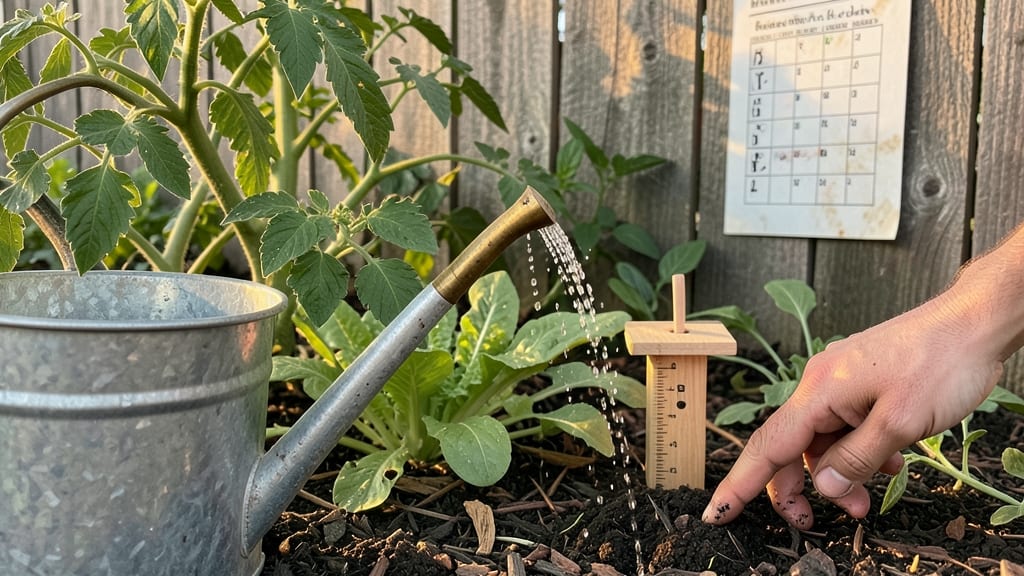
You should water your veggie garden based on soil moisture, not a calendar—because overwatering kills more plants than drought, and most gardeners don’t even realize they’re drowning their 🥬.
That’s right: rigid schedules backfire when your soil stays soggy for days. The truth? Your lettuce and tomatoes have wildly different needs, and a one-size-fits-all approach guarantees wasted water—or worse, root rot.
Here’s the game-changer: three simple soil tests to tell you exactly when to water, plus how to adjust for heatwaves, clay soil, or mulch. No guesswork, just healthy plants that thrive year after year.
Skip the trial-and-error. By the end, you’ll know when to water leafy greens every 2 days and when to let root crops go 5 days without a drop—plus how to spot the warning signs before it’s too late.
The 3 soil-moisture tests to determine perfect watering frequency
Determining when to water your vegetable garden isn’t about guessing or sticking to a rigid schedule—it’s about reading your soil’s moisture levels. The three most reliable tests are the finger test, trowel check, and moisture meter, each offering unique insights.
These methods help you adjust for leafy greens that need frequent shallow watering versus root crops that prefer deep, infrequent soaks.
Start with the simplest method: the finger test. Stick your index finger about 1-2 inches deep into the soil. If it feels dry at that depth, it’s time to water.
For sandy soil, check deeper (2-3 inches) since it drains faster. This test works best in morning hours when soil moisture is most stable, avoiding the confusion of recent watering.
For a more precise reading, use the trowel check. Dig a small hole (3-4 inches deep) and examine the soil’s color and texture. Dark, damp soil means wait; pale, crumbly soil signals thirst. This method is especially useful for heavy clay soils, which can hide moisture levels.
Pair this with a quick hand squeeze test: if the soil doesn’t hold its shape when pressed, it’s dry.
| Test Method | How to Perform | Best For | Watering Adjustment |
|---|---|---|---|
| Finger Test | Insert finger 1-2" deep; check moisture | Leafy greens, herbs | Water if dry at surface (shallow roots) |
| Trowel Check | Dig 3-4" deep; assess soil color/texture | Root crops, tomatoes | Deep water if soil is crumbly and dry |
| Moisture Meter | Insert probes to desired depth; read digital display | Large gardens, precision needs | Follow meter’s % scale (30-40% = water time) |
For large gardens or container plants, a moisture meter takes the guesswork out of watering. These devices provide a percentage-based reading at various depths, ideal for automated irrigation systems.
Aim to water when readings drop below 30-40% moisture. This tool is a game-changer for heatwaves, where evaporation rates skyrocket and daily checks become essential.
Adjust your watering frequency based on seasonal shifts.
During summer heat, most vegetables need watering every 1-2 days, while spring and fall may only require every 5-7 days. Rainy seasons can extend intervals to 10-14 days, but always check soil moisture first—never rely on rainfall alone.
Mulching with straw or wood chips helps retain moisture and reduces the need for frequent watering.
Leafy greens like lettuce and spinach thrive with shallow, frequent watering to keep the top inch of soil moist. In contrast, carrots and potatoes prefer deep watering every 3-4 days to encourage root growth.
Pay attention to wilting leaves, which can signal thirst—but also check the soil first, as overwatering often mimics drought stress with mushy stems and yellowing.
Pro tip: Water in the early morning (6-9 AM) to minimize evaporation and fungal risks. Avoid evening watering, as damp foliage overnight invites blight and mildew. For container gardens, weigh the pots—if they feel light, it’s time to water.
This method works surprisingly well for herbs like basil and parsley, which hate soggy roots.
Remember, soil type matters. Sandy soil drains quickly, while clay holds moisture longer. Amend your soil with compost to improve water retention and drainage.
Over time, you’ll develop an intuition for your garden’s unique needs, turning watering from a chore into a precision science that yields healthier, more productive plants.
Start with these three tests this week, and watch how your vegetables respond. Soon, you’ll be able to water with confidence, knowing exactly when your soil is thirsty—and when it’s had enough.
Watering schedules by vegetable type: how much and when
Not all vegetables thirst the same way—your tomatoes need daily hydration in summer heat, while zucchini can handle 5-day dry spells. The key is matching your watering to each plant’s root depth and growth stage.
Below, I’ve broken down the schedules for your high-maintenance stars (like peppers) and the low-fuss survivors (like beans), so you can stop guessing and start growing.
For leafy greens (spinach, lettuce) and fruiting plants (tomatoes, peppers), aim for consistent moisture—never letting the top 1 inch of soil dry out. Meanwhile, root crops (carrots, potatoes) and legumes (beans, peas) can handle slightly drier soil, as their roots store water better.
The trick? Water deeply 1-2 times per week (or daily in heatwaves) for most veggies, but adjust based on the table below.
Pro tip: Morning watering is non-negotiable—it reduces evaporation and fungal diseases like blossom end rot in tomatoes. Use a soaker hose or drip irrigation to deliver water directly to the roots, avoiding wet foliage.
And if your soil is sandy, water more frequently (it drains fast); if it’s clay-heavy, space out waterings to prevent soggy soil.
Watch for these red flags: Yellowing leaves often mean overwatering, while crispy edges on leaves signal thirst. For peppers, even slight underwatering triggers blossom end rot—a telltale black spot on the fruit.
Adjust your schedule weekly based on weather: heatwaves demand daily checks, while cool springs can stretch waterings to 5-7 days.
Remember, mulch is your best friend. A 2-inch layer of straw or wood chips locks in moisture, cutting your watering needs by 30-50%. Start with the table above, then tweak based on your local climate and soil type. Soon, your veggies will thrive without a single guess.