
Tools
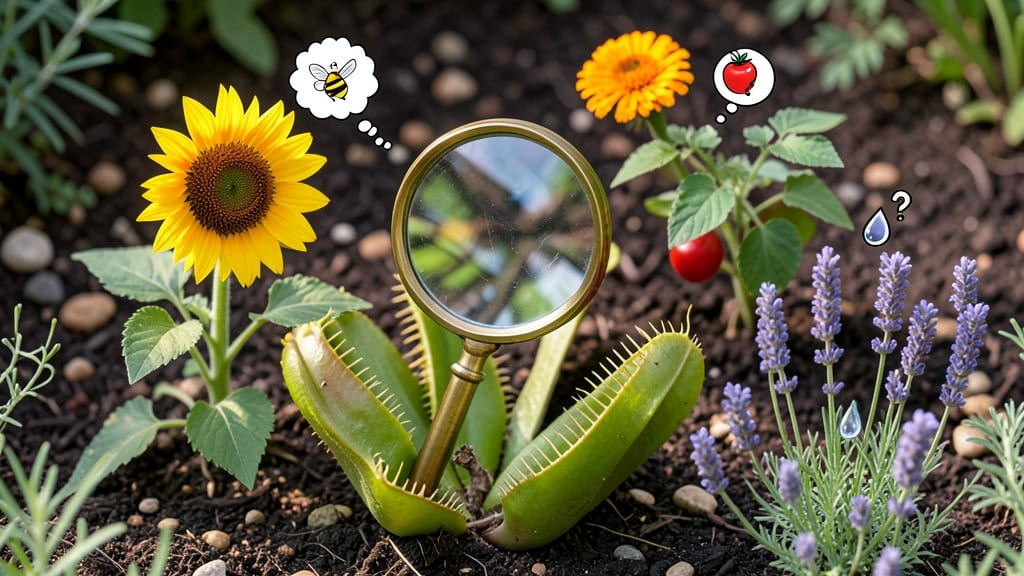
Fun facts about gardening reveal nature's hidden wonders, from sunflowers that track the sun's movement (heliotropism) to ancient Egyptian medicinal plants and flowers whose scents can travel up to 30 feet. Even composting works faster than you think, thanks to microbes breaking down organic matter in weeks.
Gardening isn't just about growing plants—it's a window into nature's most fascinating behaviors. 🌱 Take sunflowers, for example: they start life facing east to soak up morning sun, then rotate throughout the day to maximize energy.
Meanwhile, some flowers like the carnivorous pitcher plant lure insects with vibrant colors and sweet scents before trapping them for nutrients. These adaptations show how plants have evolved clever survival strategies over millions of years.
Beyond biology, gardening history is packed with game-changing discoveries. The potato, once a luxury crop in Europe, now feeds billions worldwide thanks to 16th-century Spanish explorers who brought it back from the Americas.
And let's not forget the Hanging Gardens of Babylon, an engineering marvel that may have inspired later botanical gardens across the globe. These stories prove that every seed planted carries centuries of innovation.
💡 In This Article
- Science Behind Unusual Plant Behaviors
- Historical Gardening Innovations That Changed the World
Science behind unusual plant behaviors
Sunflowers exhibit one of nature's most dramatic daily routines through heliotropism, where their flower heads track the sun's arc across the sky.
This movement is driven by growth differences between the plant's east and west sides—cells on the east side elongate faster when exposed to morning light, causing the flower to tilt toward the sun. By afternoon, the process reverses, creating a full 180° rotation.
This behavior maximizes photosynthesis efficiency, with sunflowers in full bloom capturing up to 30% more sunlight than stationary plants.
Some flowers have evolved deceptive strategies to attract pollinators. The orchid Ophrys apifera, for instance, mimics female bee pheromones and visual cues to trick male bees into "mating" with its flower. This false promise of reproduction ensures pollination while wasting the bee's energy.
Meanwhile, carnivorous plants like the Venus flytrap use a rapid electrical signal to snap shut on prey in just 0.1 seconds—faster than a human blink—triggered when tiny hairs on its leaves are touched twice within 20 seconds. 🌿 This mechanical response is powered by turgor pressure changes in specialized cells.
The deep-rooted mesquite tree can access groundwater up to 200 feet below the surface, while its roots spread horizontally for 50 feet or more. This extensive network allows it to survive in arid regions where surface water is scarce.
Even composting relies on microbial superheroes—bacteria and fungi break down organic matter through enzymatic hydrolysis, where complex molecules like cellulose are split into simpler compounds in as little as 2-4 weeks under ideal conditions (warmth, moisture, and oxygen).
Not all plant behaviors are beneficial. The strangler fig begins life as an epiphyte in tree branches, sending roots downward to envelop and eventually kill its host tree.
This slow-motion takeover can take decades, but the fig's aerial roots form a dense network that smothers the host while creating its own self-supporting structure.
Meanwhile, some plants like the mimosa pudica (sensitive plant) exhibit thigmonasty, where leaves fold inward within 3 seconds of touch due to rapid potassium ion loss from cells.
Flowers don't just look beautiful—they're chemical communication centers. The night-blooming jasmine emits scents detectable up to 30 feet away, using volatile organic compounds like benzyl acetate that travel through the air. These molecules bind to insect antennae, creating a scent trail that's more effective than visual cues in low-light conditions.
Even the stinkhorn mushroom uses foul-smelling gases to attract flies for spore dispersal, proving that nature's advertising strategies are as diverse as they are effective.
What most gardeners don't realize is how plants "listen" to their environment. Some species, like Arabidopsis thaliana, can detect vibrations from caterpillar chewing and produce defensive compounds in nearby leaves.
This systemic acquired resistance shows plants communicate danger signals through electrical impulses and chemical messengers, creating a primitive warning system. 🌱 These adaptations reveal plants as active participants in their ecosystems, not passive organisms.