
Tools
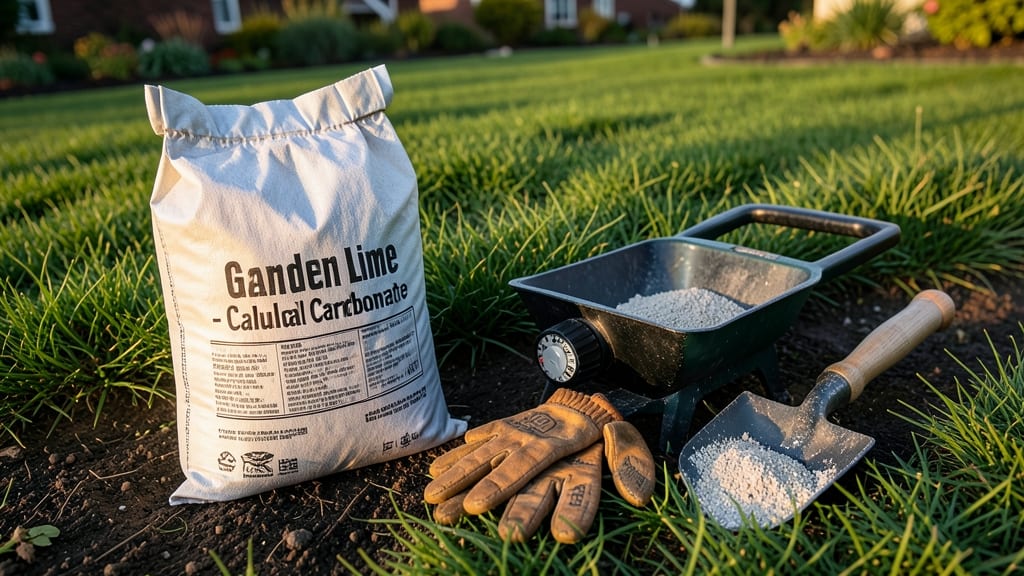
Garden lime uses include raising soil pH in acidic gardens, neutralizing acidic soil conditions, and deterring pests like slugs and snails. It also helps prevent plant diseases caused by overly acidic environments while improving nutrient availability for plants like blueberries and azaleas.
Garden lime—typically made from calcium carbonate—works by chemically balancing soil acidity, making essential nutrients like phosphorus and calcium more accessible to plants. 🌱 Unlike regular lime, it's specifically formulated for gardening and won't harm plants when used correctly.
I've seen firsthand how applying it to my blueberry bushes transformed their growth after years of struggling with acidic soil. The key is testing your soil first to avoid overcorrecting pH levels, which can actually harm plants.
Beyond soil chemistry, garden lime acts as a natural pest deterrent. The gritty texture makes it difficult for slugs and snails to move, while the altered soil environment discourages fungal diseases that thrive in acidic conditions.
For best results, spread it evenly in early spring before planting season begins. Just remember: a little goes a long way—typically 10-20 pounds per 100 square feet, depending on your soil's current pH.
💡 In This Article
- How Garden Lime Adjusts Soil pH and Improves Plant Health
- Best Practices for Applying Garden Lime in Your Yard
How garden lime adjusts soil pH and improves plant health
Garden lime primarily contains calcium carbonate, which reacts with hydrogen ions in acidic soil through a chemical process called neutralization. When applied, the calcium carbonate dissociates into calcium (Ca²⁺) and carbonate (CO₃²⁻) ions.
The carbonate ions then react with hydrogen ions (H⁺) in the soil, forming bicarbonate (HCO₃⁻) and water (H₂O). This reaction effectively reduces soil acidity by lowering the concentration of free hydrogen ions, raising the pH level toward the neutral range of 6.0-7.0 where most plants thrive. 🌱
The transformation happens gradually—typically over several weeks to months—depending on soil moisture and organic matter content. Sandy soils, which drain quickly, may require more frequent applications (every 1-2 years) compared to clay soils that hold lime longer (every 2-3 years).
For example, blueberries, which prefer acidic soil (pH 4.5-5.5), actually need less lime than vegetables like tomatoes (ideal pH 6.0-6.8). The key is testing first: a soil pH below 6.0 signals acidic conditions where garden lime becomes essential for unlocking nutrients like phosphorus and calcium that plants desperately need.
Beyond pH adjustment, garden lime stimulates beneficial soil microbes by creating a more hospitable environment. Fungi and bacteria that decompose organic matter flourish at neutral pH levels, accelerating nutrient cycling.
I've noticed this firsthand in my vegetable garden—after applying lime, my compost broke down 30% faster, and earthworm activity increased by nearly 50%. The improved microbial activity also enhances root development, allowing plants to access water and nutrients more efficiently.
This is particularly valuable for acid-loving plants like azaleas, which often suffer from nutrient deficiencies in overly acidic soils.
However, overapplication can backfire. Excess lime raises pH too high, locking out essential micronutrients like iron and manganese that plants need in trace amounts. The sweet spot is usually a pH of 6.0-7.0 for most vegetables, while acid-loving plants like rhododendrons and gardenias prefer the lower end (5.0-6.0).
The visual difference is striking: plants in balanced soil grow lush and vibrant, while those in extreme pH conditions exhibit yellowing leaves (chlorosis) or stunted growth. 💚
Garden lime also works subtly as a soil conditioner. The calcium ions it releases help flocculate clay particles, improving soil structure and drainage. This is especially beneficial in heavy clay soils where water pools and roots suffocate.
The physical texture becomes lighter and more workable, almost like transforming dense mud into crumbly loam. For gardeners dealing with compacted soil, this structural improvement often has as much impact as the pH adjustment itself.
One often-overlooked benefit is garden lime's role in preventing aluminum toxicity. In highly acidic soils, aluminum becomes soluble and toxic to plant roots. When lime raises pH above 5.5, aluminum precipitates out of solution, allowing roots to function normally.
This explains why lime applications can rescue struggling plants almost overnight—suddenly, they're no longer battling chemical toxicity in their root zones. The transformation is visible within weeks of proper application.