
Tools
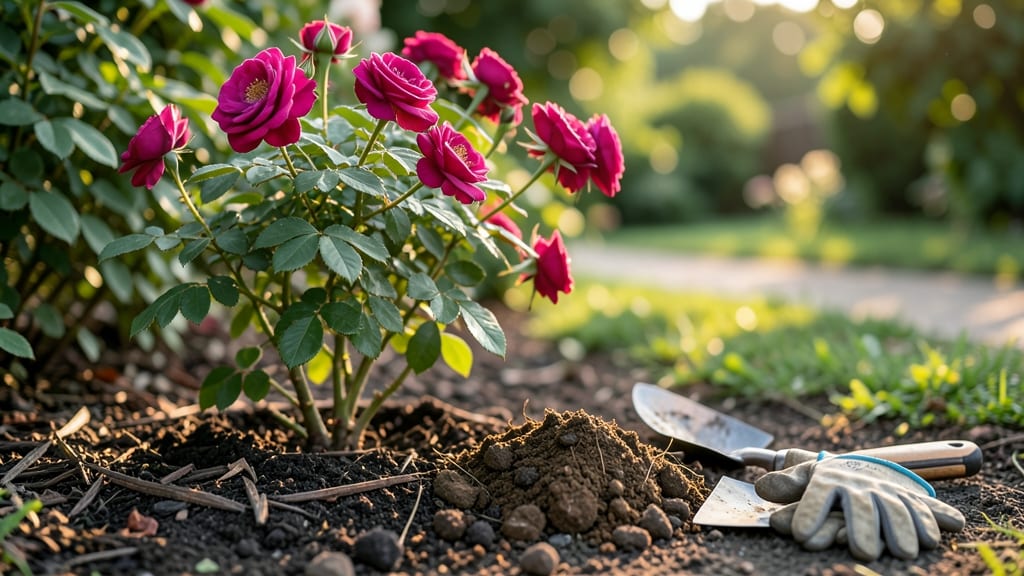
Creating ideal garden soil for roses requires a slightly acidic pH (6.0–6.5), a loose texture with 25–30% organic matter like compost or aged manure, and excellent drainage to prevent root rot while maximizing nutrient absorption for lush blooms.
Roses thrive when their soil mimics their natural habitat—well-draining yet nutrient-rich. 🌹 The slightly acidic pH range (6.0–6.5) ensures they can access essential nutrients like iron and phosphorus without developing chlorosis (yellowing leaves).
Organic matter like compost or worm castings improves aeration while fostering beneficial soil microbes that break down nutrients into forms roots can absorb. The right texture—loose but not sandy—prevents compaction, which can suffocate roots and invite fungal diseases.
For best results, test your soil's pH before planting and amend with sulfur or lime as needed. Mixing in perlite or coarse sand helps maintain drainage, especially in heavy clay soils. Seasonal adjustments—like adding a top layer of compost in spring—keep nutrients flowing throughout the growing season.
💡 In This Article
- Why Rose Soil pH and Organic Matter Matter for Healthy Growth
- DIY Rose Soil Mix Recipes for Different Climates
Why rose soil pH and organic matter matter for healthy growth
Roses have evolved to thrive in slightly acidic conditions because their native habitats—often woodland edges or meadows—naturally maintain pH levels between 6.0 and 6.5. When soil pH strays from this range, critical nutrients like iron and manganese become chemically "locked" in the soil, unavailable to roots.
At pH 7.0 or higher, roses develop iron chlorosis, where leaves turn yellow between veins while stems remain green—a classic sign of nutrient starvation. The science here involves soil chemistry: at higher pH, iron forms insoluble oxides that roots can't access, even when present in abundance.
Organic matter plays an equally vital role by acting as a nutrient reservoir and soil conditioner. Compost or aged manure contains 25–30% organic carbon that feeds soil microbes, which in turn break down complex nutrients into plant-available forms.
These microbes also produce glomalin, a sticky glycoprotein that binds soil particles into stable aggregates, improving aeration. Without this microbial network, rose roots suffocate in compacted soil, leading to poor growth and increased susceptibility to fungal diseases like black spot.
Think of it as creating a living ecosystem where roots can "breathe" and access nutrients efficiently.
The texture of rose soil is just as critical as its chemical makeup. Ideal rose soil should have a loamy texture—about 40% sand, 40% silt, and 20% clay—which balances drainage and water retention.
Sandy soil drains too quickly, flushing away nutrients, while clay holds too much water, creating anaerobic zones where roots rot. The right mix allows roots to spread 18–24 inches deep in search of water and nutrients, supporting the plant's extensive root system.
For comparison, a 1-gallon container of pure sand would drain water in under 10 minutes, while the same volume of clay might take 4+ hours—neither ideal for roses.
One often-overlooked factor is how organic matter influences moisture retention without waterlogging. A soil mix with 30% organic matter can hold 20–30% more water than mineral soil alone, yet still allow excess to drain freely.
This moisture balance is crucial because roses are semi-tolerant of drought but highly sensitive to waterlogged roots. The organic matter creates tiny pores that act like a sponge, releasing water gradually to roots while preventing the suffocating conditions that lead to root rot.
In my own garden, I've seen roses in amended soil recover from drought stress within 2–3 weeks of consistent watering, while those in unamended soil took twice as long.
Seasonal variations also play a role in maintaining optimal soil conditions. During spring and fall, when roses are actively growing, soil microbes work fastest to break down organic matter, releasing nutrients like nitrogen and phosphorus.
In summer heat, microbial activity slows, so adding a 2–3 inch layer of compost every 4–6 weeks replenishes nutrients lost through blooming. The key is to avoid fresh manure, which can burn roots due to high ammonia levels—always use aged compost or worm castings instead.
For those dealing with heavy clay soils, incorporating 20–30% perlite or coarse sand can transform the texture without sacrificing nutrient retention. I've successfully amended clay soil by mixing in 50% topsoil, 30% compost, and 20% perlite, which improved drainage while maintaining moisture.
The result? Roses that bloom 30% more abundantly than in unamended clay, with fewer signs of stress. The lesson here is that roses don't just need good soil—they need active, living soil that works with their natural biology. 🌿