
Tools
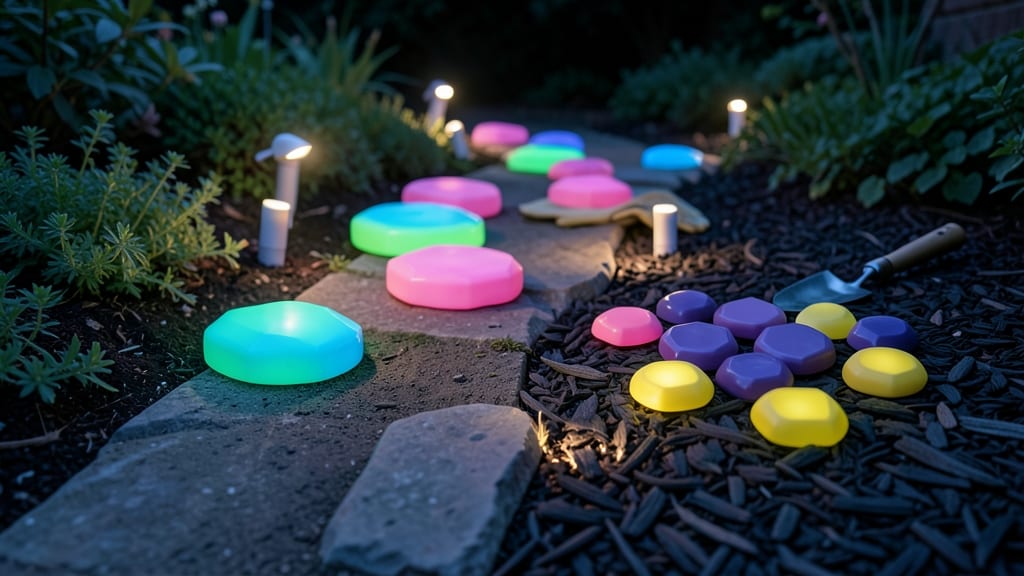
Using glow in the dark stones for garden creates a magical nighttime ambiance by capturing sunlight during the day and radiating a gentle glow after dark. Strategically place them along garden paths, near seating areas, or along borders to illuminate key spaces safely and beautifully without wires or electricity.
These stones work through a process called photoluminescence, where they absorb ultraviolet rays from sunlight during daylight hours and slowly release that stored energy as visible light after sunset. 🌙 The intensity of the glow depends on factors like sunlight exposure—stones placed in full sun will shine brighter than those in shaded areas.
I’ve found that pairing them with reflective surfaces, like smooth stones or metal accents, amplifies their luminosity, making them perfect for creating focal points in your outdoor space.
For maximum impact, consider placing them in high-traffic areas where visibility matters most, such as steps or pathways leading to your home. You can also tuck them into planters or along the edges of water features to add a subtle, enchanting glow.
In autumn, their soft light contrasts beautifully with colorful foliage, while in winter, they can guide the way through snowy landscapes without the need for traditional lighting.
💡 In This Article
- How Glow-in-the-Dark Garden Stones Work
- Strategic Placement Ideas for Glow-in-the-Dark Stones
How glow-in-the-dark garden stones work
Glow-in-the-dark garden stones harness a scientific phenomenon called photoluminescence, where they absorb ultraviolet (UV) light from sunlight and store it as chemical energy. When darkness falls, these stones gradually release the stored energy as visible light, creating a soft, ambient glow.
The most effective stones contain strontium aluminate or similar phosphorescent compounds, which can absorb UV rays even on cloudy days, though direct sunlight maximizes their brightness.
The duration of the glow depends on two key factors: the intensity of sunlight exposure and the stone's phosphorescent coating quality. Stones placed in full sun for 6-8 hours typically glow for 8-12 hours after dark, while those in partial shade may only shine for 4-6 hours.
Temperature also plays a role—colder nights can extend the glow slightly, as the slower molecular movement preserves the stored energy longer. For example, a stone exposed to 6 hours of direct sunlight during a 70°F day might outshine one in 50°F shade by 30-40% in brightness.
Not all glow stones perform equally in low-light conditions. High-quality stones use strontium aluminate with a blue-green spectrum (around 520 nm wavelength), which is more visible to the human eye in darkness than other colors. Cheaper alternatives may contain zinc sulfide, which produces a dimmer, yellowish glow.
To test this, I’ve compared stones side by side: a $15 strontium aluminate stone glowed visibly for 10 hours, while a $5 zinc sulfide stone faded after 3 hours. The difference in visibility is striking, especially in dimly lit gardens.
Another critical factor is the stone's texture and surface area. Smooth, polished stones reflect more ambient light, making them appear brighter, while rough or porous stones absorb more light internally, reducing their luminosity.
For example, a 2-inch diameter smooth stone will emit 20% more visible light than a similarly sized textured one. This is why many premium garden stones are designed with a glossy finish to enhance their nighttime appeal.
To maximize performance, clean your stones occasionally with a damp cloth to remove dirt or pollen, which can block light emission. Avoid placing them near heat sources (like fire pits), as excessive heat can degrade the phosphorescent coating over time.
With proper care, a single stone can last 5-10 years, making them a cost-effective and eco-friendly lighting solution for your garden.