
Picking
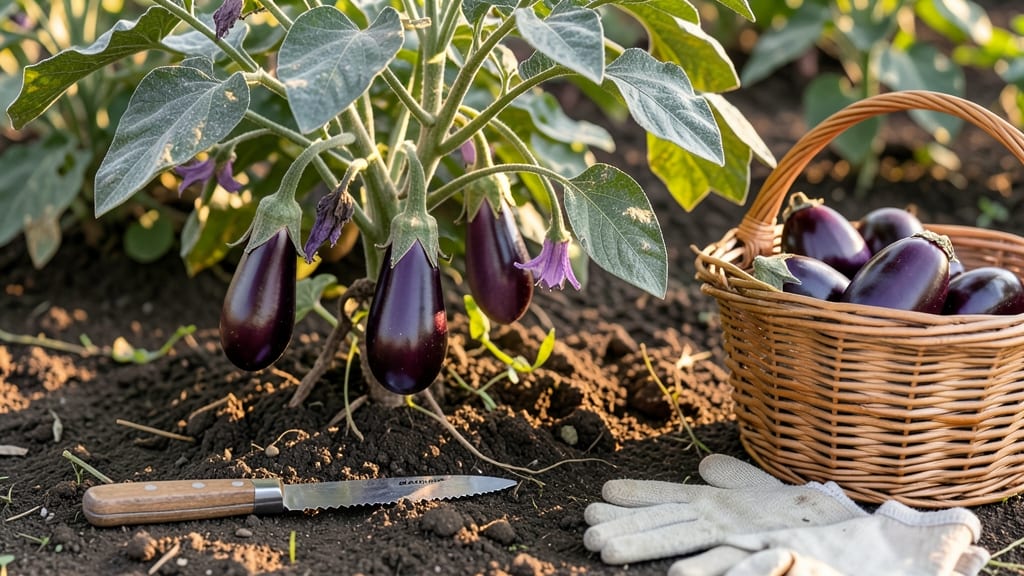
Picking eggplant from your garden at the right time ensures the best flavor and texture, and timing makes all the difference between a juicy, tender fruit and one that’s bitter or seedy.
Picture this: you’ve nurtured your 🍆 plants all season, and now they’re heavy with glossy fruit. But how do you know when to pluck them? One wrong move, and you could end up with underripe, starchy eggplants—or worse, miss the harvest window entirely.
The key lies in size, color, and firmness, and I’ll show you exactly what to look for.
Most gardeners wait until the eggplants reach 6 to 8 inches in length, but color and firmness matter just as much. A ripe eggplant should have a deep, uniform hue (whether purple, black, or white), a glossy skin that resists gentle pressure, and a stem that snaps cleanly when bent.
Ignore these cues, and you might harvest too early or too late—both of which ruin the taste.
In this guide, I’ll walk you through the best time of day to pick, seasonal factors to consider, and common mistakes that lead to wasted effort. By the end, you’ll know exactly when to harvest for the most delicious, restaurant-quality eggplants straight from your garden.
How to identify perfectly ripe eggplant by size, color, and texture
Picking eggplant at the right moment transforms your garden harvest from ordinary to extraordinary. The difference between a mild, tender fruit and a bitter, seedy mess often comes down to timing.
I’ve learned the hard way—overripe eggplant turns woody and flavorless, while underripe ones taste like starchy cardboard. Let’s fix that with science-backed cues.
Start by checking the size of your eggplant. Most varieties reach maturity between 6 to 8 inches long, though some heirlooms like ‘Black Beauty’ can grow larger.
Measure from the blossom end to the opposite tip—if it’s still growing, it’s not ready yet. Don’t wait too long, though; past 9 inches, the skin thickens and flavor declines.
A glossy, deep purple or black skin is your next clue. White or green varieties should turn uniformly creamy white or pale green. Press gently—if the skin resists pressure without denting, it’s ripe.
A dull or soft spot means it’s past its prime. Ignore weight alone; a heavy eggplant isn’t always ripe—it could just be waterlogged.
Here’s a quick reference to nail it every time:
| Cue | Ripe Eggplant | Not Ready |
|---|---|---|
| Size | 6–8" long | <5" or still growing |
| Color | Deep, uniform hue (no green) | Green tips or patchy |
| Texture | Firm, glossy skin | Soft, dull, or spongy |
| Stem Test | Snaps cleanly when bent | Tears or resists |
| Weight | Heavy for size (dense flesh) | Light or hollow-sounding |
Pro tip: Check the blossom end—it should be dry and slightly shriveled. A fresh, green blossom end means the fruit is still developing. I once picked eggplant with a bright green calyx and ended up with a mealy, seedy disaster. Lesson learned!
White and green eggplant varieties follow the same rules but may ripen faster. For example, ‘Rosa Bianca’ turns creamy white when ready, while ‘Ichiban’ stays pale green. Never judge by weight alone—some varieties naturally grow heavier as they age without being ripe.
If your eggplant feels too heavy for its size, it’s likely ripe. The flesh should be dense and firm, not hollow-sounding when tapped. Overripe eggplant often develops soft spots or a fermented smell—trust your nose! A ripe eggplant should smell mildly sweet, not sour or off.
One common mistake? Harvesting in the heat of the day. Eggplant skin is delicate—pick in the morning when temps are cool to avoid bruising. Use a sharp knife or pruners to cut the stem, leaving a small stub to prevent disease entry.
Now you’re ready to harvest like a pro! With these cues, you’ll enjoy tender, flavorful eggplant straight from your garden. And if you miss the window? Don’t worry—just store them at room temperature for a few days to see if they ripen further.
Common mistakes that cause early or late eggplant harvesting (and how to avoid them)
Picking eggplant too early or too late can turn your harvest from delicious to disappointing. Immature fruit tastes starchy and seedy, while overripe eggplant develops a bitter flavor and soft texture.
Even worse, you might confuse ripe eggplant with disease symptoms or pests, leading to unnecessary panic. Let’s explore the most common mistakes and how to avoid them.
One of the biggest errors is harvesting based on size alone. Just because an eggplant reaches 6-8 inches doesn’t mean it’s ready. Some varieties, like Black Beauty, need full color depth, while others like Ichiban stay smaller but mature faster.
Always check for color uniformity and skin firmness alongside size.
Another trap is waiting until eggplant turns completely black or dark purple, assuming that means full ripeness. While deep color is ideal, overripe eggplant can become mealy or bitter. The key is glossy skin and a stem that snaps cleanly when bent—these are better indicators than color alone.
🚨
⚠️ Don’t Harvest Too Early!
Early-picked eggplant (green-tipped or soft-skinned) lacks flavor and develops seed cavities. Wait until the skin resists gentle pressure—no dents should form when you press lightly. If the stem snaps easily, it’s ready!
Confusing ripe eggplant with diseased fruit is another mistake. Look for yellowing leaves or spots—these are signs of blight, not ripeness. Healthy eggplant should have vibrant foliage and no blemishes.
If you’re unsure, slice a small section: ripe eggplant has a firm, creamy interior, while diseased fruit may appear discolored or mushy.
To extend your harvest season, pick eggplant every 2-3 days once they start ripening. This encourages more flowers to set fruit. If your plants stop producing, check for overcrowding or nutrient deficiencies. A balanced fertilizer with high phosphorus (like 5-10-10) can boost flowering and fruiting.
Finally, avoid harvesting in hot afternoons—eggplant bruises easily. Use a sharp knife or pruners to cut stems, leaving a small stem attached. Store harvested eggplant in a cool, dark place (55–60°F) for up to a week, but eat them fresh for the best flavor and texture.