
Tools
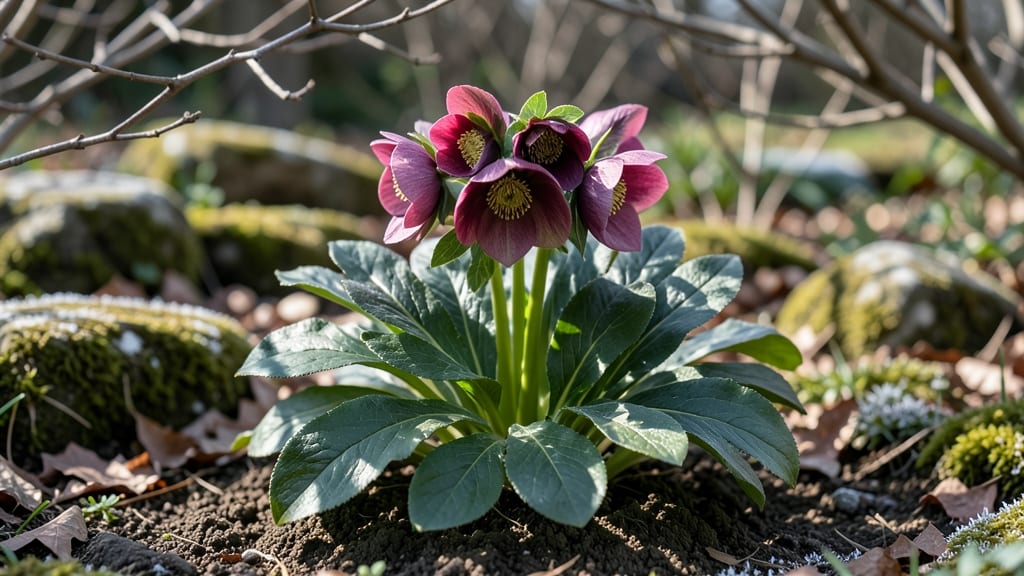
Using hellebores in garden creates stunning early-season color with their evergreen leaves, as these shade-loving perennials flourish with minimal care in moist, well-drained soil and partial sunlight.
Hellebores are my go-to for adding winter interest and spring color to shaded garden areas.
Their unique fleshy roots store moisture efficiently, letting them thrive even in drier conditions once established. 🌿 The secret to their continuous blooming lies in their adaptability—they handle everything from woodland dappled light to bright shade, though they'll reward you with more flowers when planted in spots with morning sun.
I've found that mulching around their roots helps maintain consistent moisture while preventing soil compaction, which these plants hate.
What makes hellebores so versatile is their range of varieties—from delicate Helleborus niger (Christmas rose) with its nodding white blooms to bold Helleborus orientalis hybrids in deep purples and greens.
These perennials also play beautifully with other shade-loving plants like ferns and hostas, creating layered textures that bloom at different times throughout the season. The key is spacing them about 12-18 inches apart to allow for their gradual spread while maintaining good air circulation.
💡 In This Article
- Hellebore Plant Care Essentials for Year-Round Success
- Best Hellebore Varieties and Garden Design Tips
Hellebore plant care essentials for year-round success
Hellebores have evolved a fascinating root system that makes them uniquely resilient. Their thick, fleshy roots function like natural water reservoirs, allowing them to store moisture during dry periods while still thriving in consistently damp conditions.
This adaptation explains why they perform so well in both woodland gardens and urban landscapes where soil can become temporarily parched. The roots also help anchor the plant firmly, preventing the delicate stems from toppling under heavy blooms—a common issue with lighter perennials.
The ideal sunlight balance for hellebores creates what botanists call "filtered light conditions," typically found under 30-50% shade coverage. In full sun, their leaves can scorch (especially in hot climates), while too much deep shade reduces flowering.
The sweet spot is morning sun with afternoon shade, which mimics their native habitat under deciduous trees. For cooler climates, they tolerate more sun, while southern gardens benefit from afternoon shade protection.
Soil pH should stay between 6.0-7.5, as these plants prefer slightly acidic to neutral conditions that prevent nutrient deficiencies.
Seasonal care adjustments make all the difference in maximizing blooms. In spring, avoid heavy pruning—simply remove any dead foliage at the base while leaving last year's leaves until they naturally yellow. These leaves provide winter protection and photosynthesize even when dormant.
During summer, maintain consistent moisture without waterlogging the roots, as hellebores are more prone to root rot than drought stress. In fall, add a 2-3 inch layer of organic mulch (like shredded bark) to insulate roots and prevent soil temperature fluctuations that can stress the plant.
What most gardeners overlook is how hellebores respond to temperature fluctuations. They're hardy down to -20°F in winter but prefer cooler summers (below 85°F) for optimal blooming. In hotter regions, shade cloth (30-50% coverage) during peak summer months can double your flower production.
The key mechanism here is how heat stress triggers dormancy, while cooler conditions stimulate bud formation. This explains why northern gardens often get more prolific blooms than southern ones without proper shade management.
For container growing, select pots with drainage holes that are at least 12 inches deep to accommodate their root system. The soil mix should combine 50% peat or coconut coir (for moisture retention) with 30% garden soil and 20% perlite (for aeration).
Containers dry out faster than ground soil, so check moisture levels weekly by inserting your finger 2 inches deep—water when the top layer feels dry to the touch. This prevents the common mistake of overwatering, which can suffocate the roots.
One often-asked question is about fertilizing. Hellebores are light feeders that respond best to a low-nitrogen, balanced fertilizer (like 5-10-5) applied in early spring just as new growth appears. Too much nitrogen promotes leafy growth at the expense of flowers.
The real secret is in the soil preparation: amending planting areas with composted leaf mold provides slow-release nutrients while improving soil structure for better moisture retention. This organic approach mimics their natural forest floor habitat where nutrients are gradually released over time.