
Size
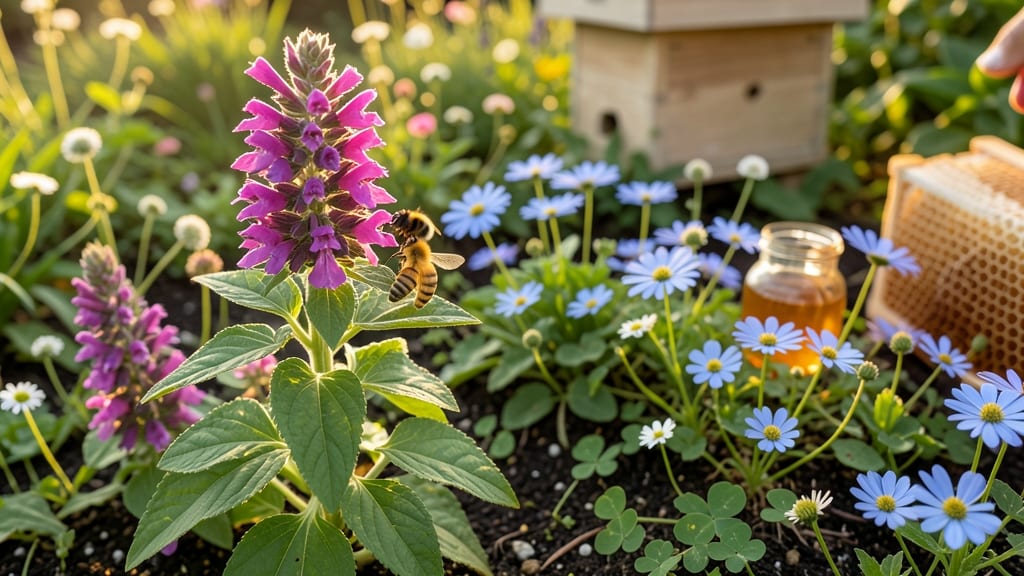
To grow honey in your garden, cultivate nectar-rich plants like lavender and sunflowers, then set up a beekeeping hive with honeybees. Create water sources and eliminate pesticides to encourage thriving bee colonies for natural honey production.
Creating your own honey starts with understanding what bees need to thrive. 🐝 Planting a diverse mix of flowering plants ensures bees have consistent food sources throughout the growing season. I've found that combining early bloomers like crocus with late-season favorites such as goldenrod creates a continuous nectar supply.
The key is variety—bees prefer different flowers at different times, and a well-planned garden can support them from spring through fall.
Once you've established a bee-friendly garden, the next step is setting up proper hive conditions. This means selecting the right location—partial shade with morning sun works best—and providing fresh water sources like shallow dishes with pebbles.
I always recommend starting with a nucleus colony from a local supplier, as they're already established and more likely to thrive in your climate. Remember, healthy bees equal better honey production!
💡 In This Article
- Best Flower Varieties for Honeybee Attraction
- Step-by-Step Guide to Starting a Backyard Beekeeping Hive
Best flower varieties for honeybee attraction
Honeybees are drawn to flowers with abundant nectar and pollen, particularly those with open, accessible structures. Lavender stands out because its tubular flowers produce high volumes of nectar per bloom, and its strong fragrance attracts bees from 50 feet away.
Sunflowers are another powerhouse—their large, flat faces provide easy landing spots, and a single plant can yield 1,000-1,200 flowers in one season, making them a bee buffet. 🌼 The secret lies in their pheromone signals: bees release scents when foraging, creating a feedback loop that brings more bees to productive plants.
Seasonal timing matters just as much as variety. Early spring bloomers like crocus and apple trees provide critical food when bees emerge from hibernation, while summer favorites such as borage (with its 20% sugar nectar content) and black-eyed Susans sustain them during peak activity.
I've noticed that bees prefer blue and purple flowers—their ultraviolet patterns guide them to nectar sources invisible to human eyes. Planting in 3-foot clusters creates visual "beacon zones" that bees can locate more efficiently than scattered individual plants.
Don't overlook native plants—they've co-evolved with local bee species for millions of years. Goldenrod, often maligned as a weed, is actually a late-season superstar, producing 100-200 flowers per stem that bees harvest for protein-rich pollen.
Mixing natives with ornamentals creates a 24/7 forage system: while your roses bloom in June, wild bergamot takes over in July, and asters extend the season into October. This diversity prevents hunger gaps that lead to colony decline.
One common mistake is planting only showy annuals—bees need year-round resources. Perennials like bee balm and Russian sage return reliably, while evergreens such as heather provide winter forage.
I recommend dedicating 10-15% of your garden space to bee-friendly plants, arranged in sunny, south-facing sections where bees can warm their flight muscles efficiently. Avoid double-flowered varieties—they often lack pollen, leaving bees empty-handed.
The real magic happens when you combine nectar producers with pollen sources. While lavender excels at nectar, clover delivers protein-rich pollen that bee larvae need to develop.
This balance ensures your bees have both energy (sugar) and building materials (protein) for colony growth. 🐝 Pro tip: Place water sources within 500 feet of your flowering areas—bees can carry only 50mg of water at a time, so proximity prevents dehydration during foraging trips.