
Light Requirements
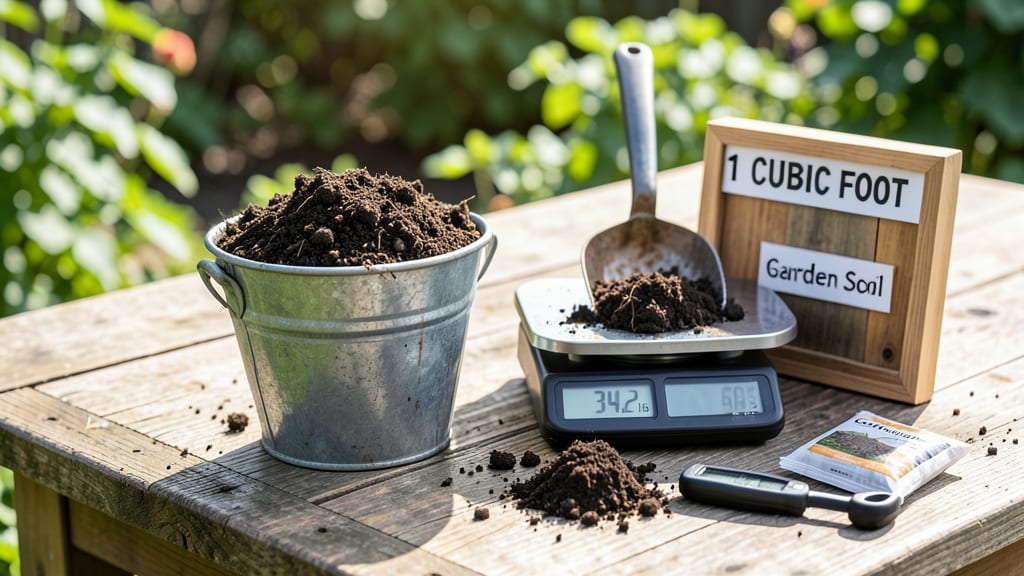
How much does 0.75 cubic feet of garden soil weigh? It typically ranges from 20 to 25 pounds, but this depends on soil composition—sandy soil sits at the lighter end (around 20 lbs), while dense loam or clay-heavy soil can hit 30 lbs or more due to moisture and particle density.
Understanding soil weight matters because it directly impacts your garden's drainage and plant health. 🌱 Sandy soils are lighter but drain too quickly, while heavier clay soils retain moisture but can suffocate roots.
I've found that most gardeners aim for a loamy mix—about 22-24 lbs per 0.75 cubic feet—because it balances nutrients, aeration, and moisture retention perfectly. The key is testing your soil's moisture content first: dry soil weighs less, while freshly watered soil can add 5-10 extra pounds to that same volume.
For practical applications, like filling raised beds, this weight difference becomes critical. A 5-gallon bucket (about 0.375 cubic feet) of sandy soil might weigh 8-10 lbs, while the same bucket of clay-heavy soil could hit 12-15 lbs.
Always check container weight limits—overloading can warp wood or crack plastic. Pro tip: mix in 10-20% compost to lighten heavy soils while improving fertility.
💡 In This Article
- Soil Density Factors Affecting Weight per Cubic Foot
- Practical Ways to Measure and Adjust Soil Weight for Gardening
Soil density factors affecting weight per cubic foot
Soil weight varies dramatically because it's not just dirt—it's a complex mix of minerals, organic matter, water, and air. The primary factor is particle size and composition.
Sandy soil, made of large particles with lots of air gaps, weighs about 90-100 pounds per cubic foot when dry, but only 20-22 lbs for 0.75 cubic feet due to its low density.
In contrast, clay soil has tiny particles packed tightly, creating a density of 110-130 lbs per cubic foot—meaning that same 0.75 cubic feet could weigh 27-30 lbs when dry. 🌱
Moisture content is the next game-changer. Water adds 62.4 lbs per cubic foot (since 1 gallon of water weighs 8.34 lbs).
A sandy soil at 10% moisture might jump from 20 lbs to 22 lbs, while clay soil at 20% moisture could surge from 28 lbs to 34 lbs. That's why freshly tilled soil often feels heavier—it's not just the particles, but the water clinging to them.
Organic matter also plays a role: compost adds 20-40 lbs per cubic foot but improves aeration, slightly reducing overall weight.
Compaction is another critical factor. When soil is packed down—like in a heavily walked garden path—its density increases by 10-20%. This means what was 25 lbs in a loose state could become 28-30 lbs when compacted.
The same principle applies to raised beds: if you're filling them with soil that's been stored or transported, it's likely more compacted than freshly dug earth. Always fluff it up before planting to restore natural aeration and reduce weight.
Here's how these factors stack up in real-world scenarios:
- Sandy soil: 20-22 lbs (dry), 22-24 lbs (moist), 18-20 lbs (well-drained with organic matter)
- Loamy soil: 22-25 lbs (dry), 25-28 lbs (moist), 20-23 lbs (amended with compost)
- Clay soil: 27-30 lbs (dry), 30-34 lbs (moist), 25-28 lbs (amended with perlite/sand)
For gardeners, this means your 0.75 cubic feet of soil isn't a fixed weight—it's a dynamic variable that changes with the season, your watering habits, and how you prepare it. The best approach is to test your soil's moisture content before estimating weight.
A simple moisture meter can show you whether your soil is at the lighter or heavier end of the spectrum. 💧
Understanding these density factors helps explain why some plants thrive in sandy soil while others prefer clay. For example, carrots need loose, lighter soil to grow straight, while blueberries tolerate the acidity and density of peat-heavy mixes.
Knowing your soil's weight characteristics lets you adjust it for optimal plant health—whether that means adding sand to clay or compost to sand.