
Light Requirements
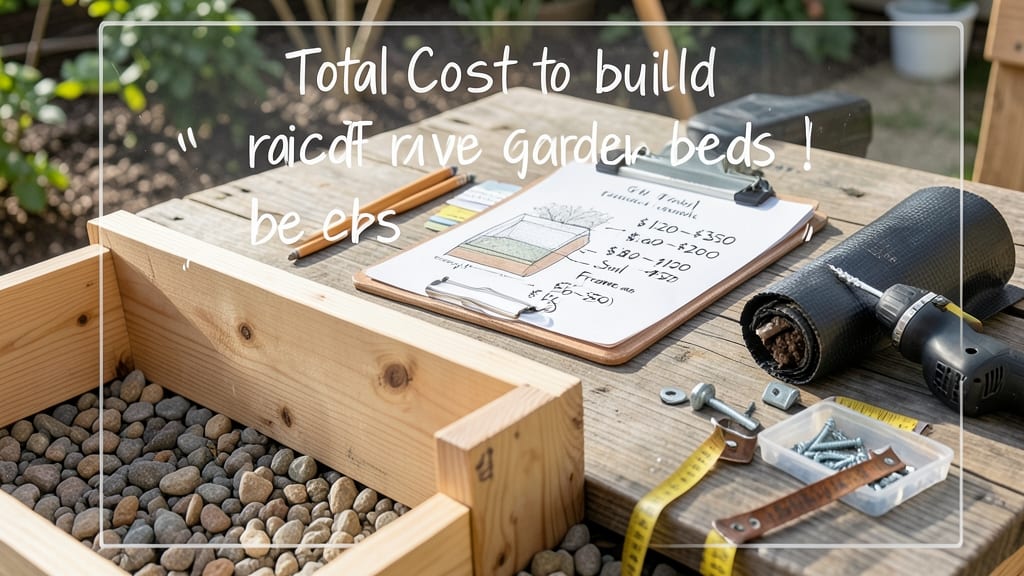
To build raised garden beds, costs range from $200 to $1,500+, depending on materials, size, and whether you DIY or hire professionals. A standard 4x8-foot cedar bed typically costs $300–$600, while custom or pre-built designs can exceed $1,000 for premium materials or labor.
Your budget will swing wildly based on what you choose to build.
Cedar and redwood are popular for their natural rot resistance, but composite lumber (plastic wood) can last decades and costs $10–$15 per board foot, while cedar runs $5–$12 per board foot. 🌿 For a basic 4x4-foot bed, you're looking at $150–$300 in materials alone if you DIY, but adding soil amendments like compost or potting mix can push that to $400+ for a fully functional bed.
The biggest cost jump comes when you opt for professional installation—labor alone can add $500–$1,000 to your total.
What’s interesting is how quickly costs add up with customization. A simple rectangular bed with basic hardware stays affordable, but adding corner braces, trellises, or tiered designs can inflate your budget by 30–50%.
I’ve seen people skimp on materials only to replace their beds in 3–5 years—so investing in quality lumber upfront often saves money long-term. For example, a 6x12-foot bed in cedar might cost $800–$1,200 to build yourself, but pre-fabricated kits in the same size can hit $1,500+.
💡 In This Article
- Cost Breakdown: Raised Garden Bed Materials and Their Pricing
- DIY vs. Professional Build: What Affects Your Raised Bed Budget
Cost breakdown: raised garden bed materials and their pricing
The foundation of your raised bed costs starts with lumber selection, where material type dramatically impacts both upfront expenses and long-term durability. Cedar, a popular choice, costs $5–$12 per board foot due to its natural rot resistance from aromatic oils—ideal for beds lasting 10–15 years with minimal maintenance.
Redwood, even more expensive at $8–$15 per board foot, offers superior longevity (up to 20+ years) but requires careful sourcing due to sustainability concerns.
Composite lumber (plastic wood) eliminates rot entirely but runs $10–$15 per board foot, with brands like Trex offering warranties up to 25 years.
Hardware costs add another $50–$150 to your total, depending on whether you use basic deck screws ($0.50–$1 each) or heavy-duty corner braces ($3–$8 each). For a standard 4x8-foot bed, you'll need about 20–25 screws and 4 corner connectors.
Soil amendments—critical for plant health—can push costs up significantly. A 12-inch-deep bed filled with a mix of 50% topsoil, 30% compost, and 20% perlite will cost $150–$300 for materials alone, compared to $50–$100 if you use cheaper fill dirt. The difference? Better drainage, nutrient retention, and root growth.
Pre-built kits simplify construction but often include premium materials at a markup. A 4x8-foot cedar kit might run $400–$600, while DIY lumber purchases for the same size would cost $250–$400. The trade-off?
Kits come with pre-cut boards, hardware, and sometimes even assembly instructions—saving you 5–10 hours of labor time. For example, a 6x12-foot bed built from scratch with cedar could cost $600–$900, while a comparable kit might hit $1,000–$1,300.
The choice depends on your budget and whether you prioritize customization or convenience.
Long-term costs reveal where material quality pays off. Cedar beds may need replacement in 10–15 years, while composite lasts 20–25 years with minimal upkeep. Redwood, though pricier upfront, can outlast both—meaning you might spend $1,200–$1,500 over 20 years for a cedar bed versus $1,000–$1,300 for redwood.
The key is balancing initial investment with your gardening goals: Heavy vegetable gardens need sturdier materials, while decorative beds can use lighter options. 🌱
Don’t overlook hidden costs like bed height or design complexity. Raising the bed to 12–18 inches (ideal for root crops) adds $50–$100 in materials but improves accessibility and drainage. Tiered designs or built-in trellises can add $100–$300 but enhance functionality.
For instance, a 4x4-foot bed with a trellis system might cost $350–$500 versus $250–$350 for a flat design. Weigh these extras against your gardening needs—sometimes simplicity saves more than you think.
One often-missed expense is bed liner material. Landscape fabric ($10–$20 per roll) prevents weeds and improves drainage, while hardware cloth ($15–$30 per roll) deters burrowing pests. For a 4x8-foot bed, this adds $15–$30 but extends your bed’s lifespan by 3–5 years.
Skipping it might save money now but lead to higher replacement costs later. The right liner can also reduce soil erosion by 40–50%, keeping nutrients where they belong.
Finally, consider regional price variations. Cedar costs 20–30% more in coastal areas due to shipping, while redwood prices fluctuate based on sustainability certifications. Always check local lumberyard prices—sometimes buying in bulk or during sales can cut costs by 10–20%.
For example, a 6x12-foot bed might cost $700 in one region but $900 in another. Local sawmills or salvage yards often offer discounted reclaimed wood, perfect for budget-conscious builders. 💡