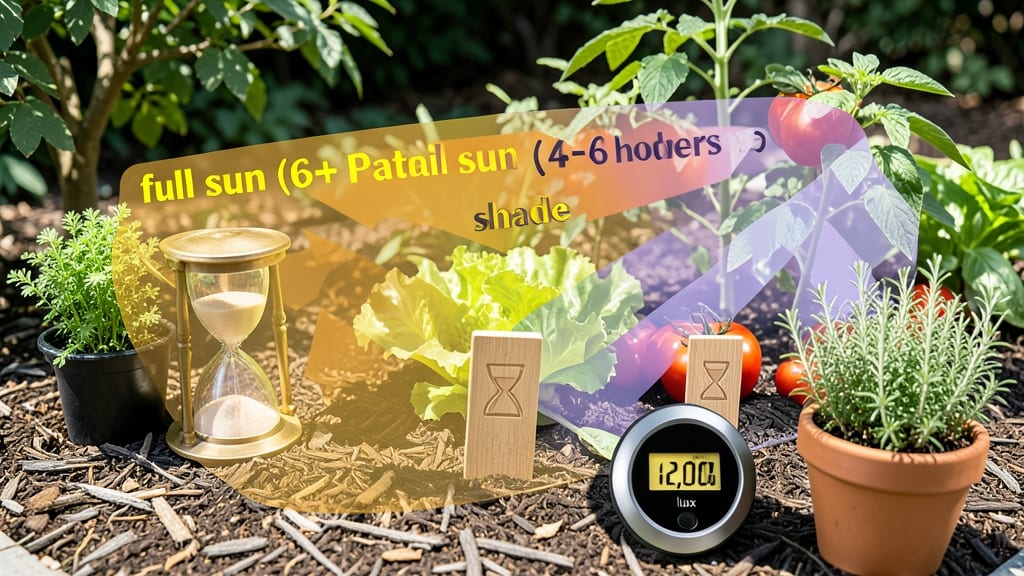
How much sun does a vegetable garden need? Most crops thrive with 6 to 8 hours of sunlight daily, but many gardeners guess wrong—and end up with half the yield they could have.
Picture this: your tomato plants are wilting by noon, your leafy greens bolt to seed by midday, and your zucchini flowers never turn into fruit. The problem isn’t your soil or watering—it’s sunlight, and most of us get it wrong by planting based on general advice instead of plant-specific needs.
Some vegetables, like tomatoes and peppers, demand full sun to produce heavy yields, while others, such as lettuce and spinach, can tolerate partial shade. The key is knowing exactly how much sun each plant needs—and how to measure sunlight in your garden accurately.
In this guide, I’ll break down the exact sun requirements for 15+ common vegetables, show you how to assess sunlight in your space, and share tricks for maximizing yields even in shady spots. Ready to grow more?
Light Requirement
Full Sun
6-8 hours of direct sunlight daily
🔆
LowMediumBrightDirect
🪟Maximum sun exposure
Sunlight requirements by vegetable type: exact hours for optimal growth
Sunlight is the lifeblood of your vegetable garden—get it wrong, and even the hardiest plants will struggle. Most vegetables thrive with 6+ hours of direct sunlight daily, but some tolerate less. The key is matching each plant's needs to your garden's microclimates.
For example, tomatoes and peppers demand full sun, while lettuce and spinach can handle partial shade. Misjudging sunlight can cut yields by 30-50% or worse.
Before planting, observe your garden's sunlight patterns for at least a week. Note how shadows shift between morning and afternoon—this will reveal sunny, partially shaded, and shady spots. A simple trick: Place a stake in your garden at noon.
If it casts no shadow, you have full sun. A short shadow means partial sun, while a long one signals shade. This quick assessment prevents costly mistakes.
Here's the critical breakdown: Full sun (6+ hours) is essential for fruiting vegetables like tomatoes and cucumbers, while partial sun (3-6 hours) suits leafy greens and herbs. Shade-tolerant varieties (under 3 hours) exist but often yield less.
The table below shows exact sunlight needs for 15+ common vegetables, including yield impacts when sunlight is insufficient.
Vegetable
Sunlight Needs
Yield Impact (Low Sun)
Notes
Tomatoes
6-8+ hours
50% smaller fruit, poor flavor
Stake or cage for support
Peppers
6-8 hours
Blossom drop, stunted growth
Needs consistent warmth
Cucumbers
6-8 hours
Bitter taste, fewer vines
Trellis for better air flow
Zucchini
6-8 hours
Smaller, deformed fruit
Fast grower—needs space
Basil
6+ hours
Loses flavor, leggy stems
Harvest regularly for bushiness
Lettuce
3-6 hours
Bolts early, bitter taste
Use shade cloth in hot climates
Spinach
3-4 hours
Slower growth, fewer leaves
Tolerates light frost
Carrots
4-6 hours
Pale, woody roots
Loose soil prevents forking
Green Beans
6-8 hours
Fewer pods, slower growth
Bush or pole varieties available
Radishes
3-5 hours
Pithy, slow to mature
Fast-growing—ready in 30 days
Kale
3-6 hours
Slower leaf production
Sweeter after frost
Swiss Chard
3-6 hours
Thinner stems, fewer leaves
Cut-and-come-again harvest
How to measure sunlight in your garden and adjust plant placement
Understanding your garden's sunlight patterns is the secret to placing plants where they'll thrive. Most gardeners assume all vegetables need full sun, but leafy greens and root crops often do better with less. Start by observing your space for at least one full week—sunlight patterns change dramatically between seasons.
Use a simple sunlight calculator or app to track exposure. These tools map your garden's sunlight throughout the day, accounting for seasonal shifts. For example, a spot that gets 6 hours of sun in summer might only receive 3 hours in winter due to lower sun angles.
Here's how to assess your garden's sunlight accurately:
1
Morning Sun (6 AM - 12 PM) Check for 2-3 hours of direct rays—ideal for shade-tolerant plants like lettuce or spinach.
2
Afternoon Sun (12 PM - 6 PM) Note 3+ hours of intense light—critical for tomatoes, peppers, and cucumbers.
3
Full-Day Sun (6+ Hours) Look for uninterrupted sunlight—perfect for squash, corn, and eggplants.
4
Dappled Shade (Filtered Light) Spots with broken sunlight work for herbs like cilantro or bush beans.
Once you've mapped your garden, group plants by their sunlight needs. Place full-sun lovers in the brightest spots and shade-tolerant varieties where light filters through. For example, basil and peppers should never share space with kale or carrots—the latter will struggle in hot, dry conditions.
Adjust your layout seasonally. In summer, move heat-sensitive greens to morning sun only, while in winter, extend their time in sunnier areas. Use reflective mulch or light-colored containers to bounce extra light onto shade-loving plants during shorter winter days.
Pro tip: Place taller plants on the north side of your garden to avoid casting shadows on shorter crops. This simple trick can add 1-2 extra hours of sunlight to nearby plants without extra effort.