
Watering
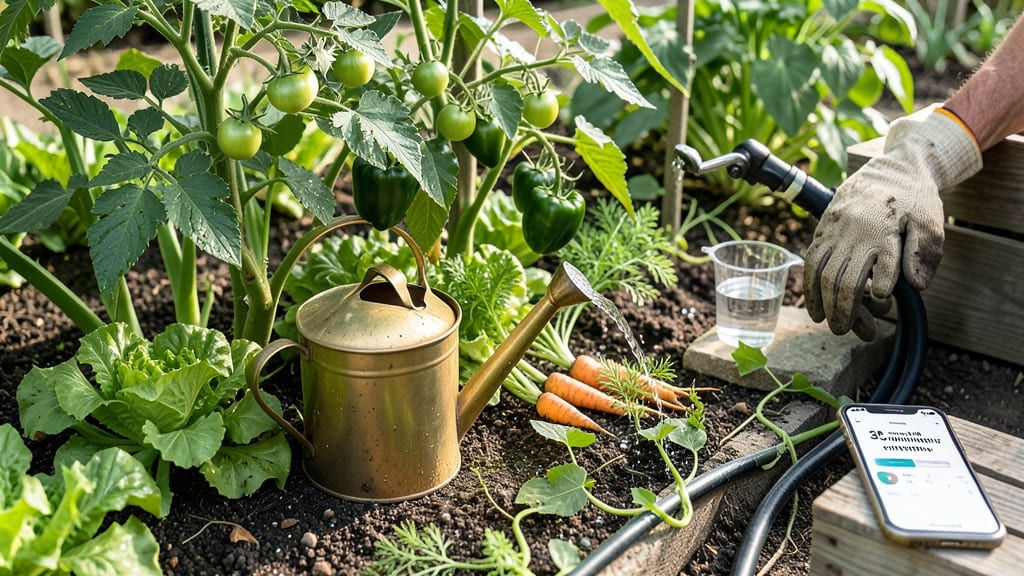
Watering your vegetable garden the right way means knowing how often to water for healthy, thriving plants 🥬—but the answer isn’t one-size-fits-all.
Too much water drowns roots, while too little leaves your veggies wilting by noon. The key? Understanding your soil type, climate, and the specific needs of each plant—because what works for leafy greens might kill your tomatoes.
In this guide, I’ll break down the science behind watering schedules, from sandy soil that drains fast to clay that holds moisture like a sponge. You’ll learn how to adjust for heatwaves, rain, and even mulch tricks to keep your garden perfectly hydrated.
Ready to stop guessing and start growing? Let’s dive into the exact schedule your vegetable garden craves for peak yields.
Watering frequency by soil type: clay vs. sandy vs. loamy gardens
Your vegetable garden's soil type is the foundation of its watering schedule. Clay soil holds moisture like a sponge, while sandy soil drains like a sieve, and loamy soil strikes the perfect balance.
Understanding these differences prevents root rot or drought stress in your plants. Let's dive into how each soil type behaves and what it means for your watering routine.
I've tested these soil types in my own garden, and the difference in watering needs is staggering. Clay soil can retain moisture for up to 3x longer than sandy soil, meaning you might water once a week in clay but need daily watering in sand.
This dramatic difference affects everything from seed germination to harvest yields. Let's break down the science and practical schedules for each type.
| Soil Type | Moisture Retention | Watering Frequency | Watering Depth | Key Risks |
|---|---|---|---|---|
| Clay | Very High (3x longer) | Every 5-7 days | 6-8 inches | Root rot, poor aeration |
| Loamy | Moderate (ideal balance) | Every 3-5 days | 4-6 inches | None (balanced) |
| Sandy | Very Low (dries quickly) | Daily or every other day | 2-4 inches | Drought stress, shallow roots |
💧 Pro Tip: Use a soil moisture meter to verify when to water—don't guess!
In my clay-heavy garden, I've learned to water deeply but infrequently. The key is to soak the soil to 6-8 inches deep every 5-7 days, allowing water to penetrate before the surface dries.
This mimics natural rainfall and encourages deep root growth. I use a soaker hose to deliver water slowly, preventing runoff that can occur with overhead watering.
For sandy soil, frequency is critical. My neighbor's garden in sandy soil needs watering daily or every other day during hot summers. The secret here is shallow but frequent watering to 2-4 inches deep.
I've found that drip irrigation works best, as it delivers water directly to the root zone without wasting it on evaporation. Mulching with straw helps retain whatever moisture is available.
Loamy soil is the gardener's dream—it's balanced and forgiving. In my own backyard, loamy soil allows me to water every 3-5 days with 4-6 inches of depth.
This consistency keeps my vegetables like tomatoes and peppers thriving without the extremes of clay or sand. The goal is to maintain even moisture without waterlogging or drying out.
One common mistake I see is assuming all gardens need the same watering schedule. Overwatering clay soil can suffocate roots, while underwatering sandy soil leads to stunted growth. Always check the top 1-2 inches of soil—if it's dry, it's time to water.
For clay, wait until the surface is dry to the touch; for sand, check more frequently.
Seasonal adjustments are also crucial. In summer heat, sandy soil may need watering twice daily, while clay soil might only need an extra day between waterings. In spring or fall, reduce frequency by 30-50%.
I've found that morning watering is best—it reduces evaporation and fungal risks. Avoid watering at night, especially in humid climates.
To improve your soil's water retention naturally, consider adding organic matter like compost or aged manure. This is especially helpful for sandy soil, where nutrients and moisture wash away quickly.
For clay, gypsum can help break up compacted soil over time. Both amendments create a more loam-like structure, making watering easier to manage.
Remember, healthy roots are the goal. Deep watering encourages roots to grow downward, making plants more resilient. Shallow watering leads to weak, surface roots that struggle in dry conditions. Use a long-handled shovel to check root depth—healthy roots should extend at least 6-12 inches deep, depending on the plant.
If you're unsure about your soil type, do the jar test: Fill a jar with soil and water, then shake and observe. Clay settles slowly with a thick layer at the bottom, sand settles immediately, and loam has a gradual gradient.
This simple test can save you from overwatering or underwatering disasters in your veggie patch. 🌱
Plant-specific watering needs: the 5 most common vegetables ranked
Not all vegetables thirst the same way—some love frequent sips while others prefer deep, infrequent drinks. Understanding your plants' watering needs prevents blossom-end rot in tomatoes or bolting lettuce. Let’s rank the top 5 veggies by their hydration demands, from the most delicate to the most drought-tolerant.
Your garden’s watering schedule should prioritize root depth and leaf surface area. For example, shallow-rooted lettuce needs daily moisture, while deep-rooted carrots thrive with less frequent but deeper watering. Here’s how to match your watering routine to each plant’s personality.
Tomatoes top the list as the most water-dependent veggie, requiring daily attention during fruiting. Their deep roots demand 1-2 inches of water weekly, but uneven moisture triggers blossom-end rot—a telltale sign of calcium deficiency from inconsistent watering.
Use drip irrigation to deliver water directly to roots and avoid wetting leaves.
Peppers and herbs follow closely, needing every 2-3 days of hydration. Peppers, in particular, suffer from fruit drop when stressed, while herbs like basil bolt or develop bitter flavors if drought-stressed. For herbs, morning watering reduces fungal risks like powdery mildew, which thrives in damp foliage.
Lettuce and carrots are the most drought-tolerant on this list but still need care. Lettuce’s shallow roots mean it wilts fast—keep soil consistently moist to prevent bolting (premature flowering).
Carrots, however, reward patience: deep watering every 3-4 days encourages straight, sweet roots. Overwatering here leads to splitting or forked shapes.
Watch for these red flags: yellowing leaves (overwatering), crispy edges (underwatering), or stunted growth (root stress). Adjust your schedule based on weather—hot days mean more frequent watering, while cool, cloudy periods allow for longer gaps.
Mulching with straw or wood chips helps lock in moisture and regulate soil temperature.
Pro tip: Group plants with similar water needs together in your garden layout. This zone-based watering saves time and ensures no plant gets overlooked. For example, pair tomatoes with peppers and herbs in one bed, while carrots and lettuce can share another.
Use a soil moisture meter to check depth-specific hydration levels—aim for 60% moisture at the root zone.