
Planting
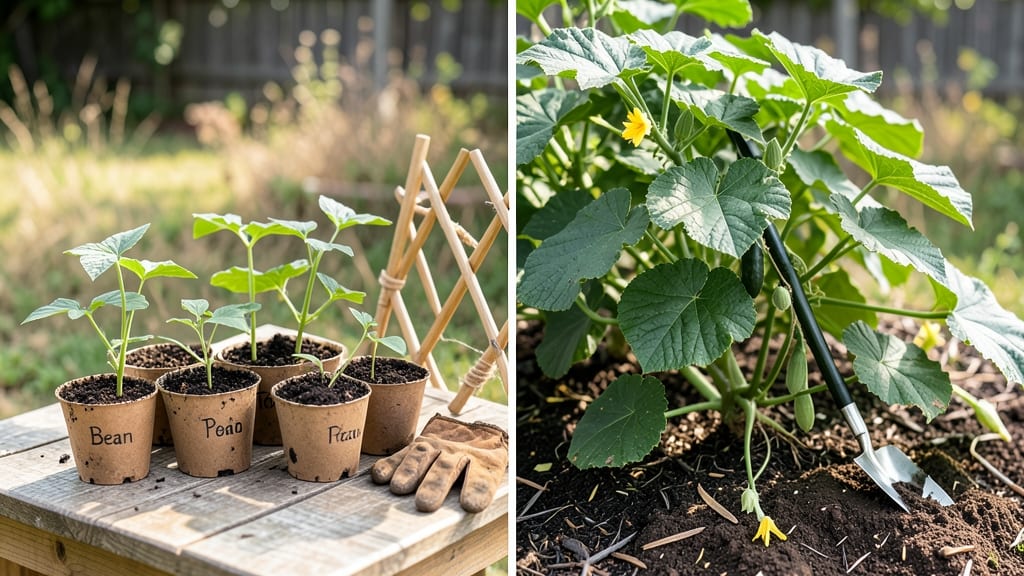
To plant cucumbers in a garden, start with well-draining soil, full sun, and spacing that matches your variety 🥒—because the right setup means the difference between a handful of fruits and a bushel.
Picture this: You’ve waited all spring for those first crisp cucumbers, only to find your vines sprawling everywhere, flowers dropping off, and yields so small you wonder if you even planted them right. Most gardeners miss just three key steps that turn a good harvest into a great one.
You’ll learn how to prep soil for maximum root growth, space plants for airflow (and fewer diseases), and choose the right trellis or cage to save space and boost production. No more guessing—just proven methods that work in Zone 6a and beyond.
From planting depth to watering schedules, I’ll walk you through every stage so your cucumbers thrive from seed to harvest, ready to pick in July and August. Let’s get those vines climbing!
Optimal cucumber planting techniques: soil, spacing, and sunlight essentials
Growing cucumbers thrives on the right conditions, and getting the soil, spacing, and sunlight just right is half the battle. Cucumbers are fast-growing annuals that demand fertile, well-draining soil and plenty of warmth to produce those crisp, vine-ripened fruits you crave.
Without proper preparation, you risk stunted growth, poor yields, or even failed germination—a common frustration for new gardeners.
Let’s start with the foundation: soil. Cucumbers prefer a slightly acidic to neutral pH between 6.0 and 6.8, rich in organic matter like compost or aged manure.
If your soil is heavy clay or sandy, amending it with 1-2 inches of compost before planting will improve drainage and nutrient retention. A quick soil test kit (available at garden centers) can confirm your pH and save you from guesswork.
Next, consider your cucumber variety. Vining types (like 'Straight Eight' or 'Marketmore') sprawl 6-10 feet and need ample space, while bush varieties (such as 'Bush Champion') stay compact at 1-3 feet.
Spacing is critical: plant vining cucumbers 3-4 feet apart in rows 5-6 feet apart, while bush types can tolerate 2-3 feet apart. Crowding invites disease and stifles growth.
Now, let’s talk sunlight. Cucumbers are sun-worshippers and require 6-8 hours of direct sunlight daily. In hot climates, afternoon shade can prevent sunscald on leaves, but morning sun is non-negotiable.
If your garden lacks full sun, consider container growing near a south-facing window or wall, though yields may be smaller.
| Category | Requirement | Specification |
|---|---|---|
| Soil Type | Drainage | Well-draining, loamy |
| Soil pH | Ideal Range | 6.0–6.8 |
| Spacing (Vining) | Plant Distance | 3–4 feet apart |
| Spacing (Bush) | Plant Distance | 2–3 feet apart |
| Sunlight | Daily Needs | 6–8 hours |
| Planting Depth | Seed Depth | 1 inch deep |
| Planting Time | After Frost | Mid-April to early May |
| Germination Temp | Ideal Range | 70–90°F |
| Common Issue | Poor Germination | Cold soil or dry seeds |
Timing your plantings is just as important as the conditions. Cucumbers are frost-sensitive, so wait until soil temperatures reach 60°F and the last frost date has passed (typically mid-April to early May in most climates).
For a longer harvest, stagger plantings every 2 weeks—this ensures a steady supply of cucumbers throughout the summer.
If your seeds aren’t germinating within 7-10 days, check the soil temperature with a thermometer. Cold soil (below 60°F) slows germination, while dry seeds may not absorb moisture properly.
Pre-soaking seeds in warm water for 4-6 hours before planting can jumpstart the process. Keep the soil consistently moist (not soggy) until sprouts appear.
Once seedlings emerge, thin them to the strongest plant per hill, leaving weaker ones to decompose as natural fertilizer. This reduces competition and gives your cucumbers room to thrive.
Mulch around the base with straw or shredded leaves to retain moisture, suppress weeds, and keep fruits clean and off the dirt.
Finally, monitor your plants for signs of stress, like yellowing leaves (often a nutrient deficiency) or powdery mildew (a fungal issue from poor air circulation). Rotate crops next season to prevent soil-borne diseases, and consider companion planting with radishes, beans, or marigolds to deter pests naturally.
With these techniques, you’ll be well on
Cucumber trellis systems compared: vertical gardening for space-saving and disease prevention
Vertical gardening transforms your cucumber patch from a sprawling mess into an organized, high-yielding system 🌱. By training vines upward, you save 70% of garden space, improve air circulation (reducing powdery mildew by 50%), and make harvesting easier.
The right trellis also keeps fruits cleaner and less prone to rot. Let’s compare the top three systems—A-frame trellises, string trellises, and cucumber cages—so you can pick the best fit for your garden layout and variety.
Each trellis type offers unique benefits. A-frame trellises provide sturdy support for heavy vines and are ideal for bush varieties, while string trellises are budget-friendly and work well in small spaces. Cucumber cages, though less structured, offer convenience for beginners.
Below, we’ll break down their pros, cons, and installation steps to help you decide which system will give you the best harvest.
For A-frame trellises, start by driving two 6-foot wooden stakes into the ground 3 feet apart. Connect them at the top with a horizontal beam, then add crossbeams every 2 feet for vine support.
This system works best for vining varieties like 'Straight Eight' or 'Marketmore,' which can climb 10+ feet. The vertical structure improves airflow, cutting down on fungal diseases that thrive in damp foliage.
If you’re working with limited space, a string trellis is your best bet. Install two 8-foot posts at the edges of your planting area, then stretch twine or nylon rope horizontally between them in a zigzag pattern.
Train vines to climb by gently tying them to the strings every 1-2 feet. This method is perfect for small gardens or containers and costs under $10 to set up.
Avoid these common mistakes when installing any trellis: using metal cages that conduct heat (burning vines), placing trellises in shady spots, or skipping the first tying when vines are just 6 inches tall.
Also, never let vines sprawl on the ground—this invites pests like cucumber beetles and squash bugs. Instead, train them upward within 48 hours of planting to encourage strong growth.
Vertical gardening isn’t just about saving space—it’s about creating an environment where cucumbers thrive. With better airflow and easier access to fruits, you’ll enjoy healthier plants, higher yields, and fewer pests.
Whether you choose an A-frame, string system, or cage, your cucumbers will thank you with crisp, abundant harvests all season long 🥒.