
Advice
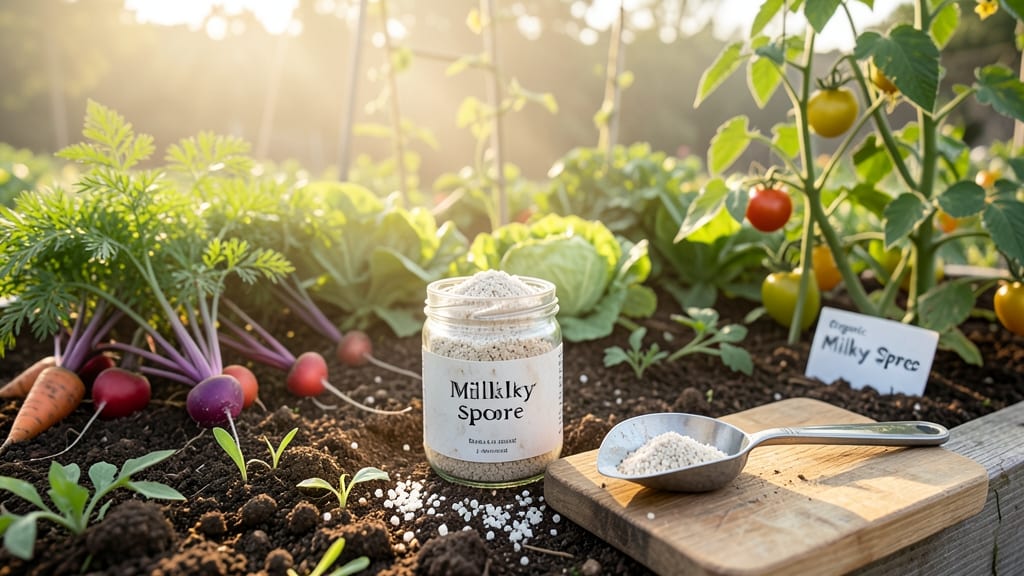
Milky spore is generally safe for vegetable gardens as it targets grubs in the soil without harming plants or edible crops, but its long-term effects on soil microbes and organic matter require careful consideration before application.
Milky spore, made from the bacteria Bacillus popilliae, is specifically designed to combat Japanese beetle grubs while leaving vegetables unharmed. 🌱 However, its impact on soil health isn't fully understood—some studies suggest it may reduce beneficial microbes over time, potentially affecting decomposition.
I recommend testing a small area first and monitoring plant vigor, especially if you rely on compost or organic matter for fertility. The key is balance: effective pest control shouldn't compromise your garden's long-term productivity.
The bacteria works by infecting grubs, turning their bodies into milky spores that spread naturally in the soil. This targeted approach makes it safer than chemical alternatives, but its persistence means you'll need patience—results take 1-2 years to fully develop.
For organic gardeners, this trade-off often justifies the wait, though pairing it with crop rotation can help maintain soil diversity.
💡 In This Article
- How Milky Spore Works and Its Impact on Soil Health
- Best Practices for Using Milky Spore Around Vegetables
How milky spore works and its impact on soil health
The milky spore bacterium, Bacillus popilliae, operates through a fascinating biological process called endospore formation. When grubs ingest the spores, they germinate in the insect's gut, multiplying until the grub's body becomes a liquid mass of spores—this is what gives the name "milky spore."
The spores then spread through the soil, waiting for another grub to complete the cycle. This targeted action means vegetables remain untouched, as the bacteria only infects Japanese beetle larvae, not plants or beneficial soil organisms.
What makes this mechanism intriguing is its persistence. Studies show milky spore can remain active in the soil for 5-10 years after application, creating a natural barrier against grubs. However, this long-term presence raises questions about soil health.
Some research suggests it may reduce decomposer microbes like fungi and bacteria that break down organic matter, potentially slowing nutrient cycling. For gardens relying on compost, this could mean slightly slower decomposition of plant residues over time.
The impact on soil microbes isn't uniformly negative, though. Unlike chemical pesticides that kill broad spectra of organisms, milky spore's specificity means it doesn't directly harm earthworms or mycorrhizal fungi—critical players in soil fertility.
The trade-off lies in its potential to shift microbial balance toward dominance by Bacillus species, which may outcompete other beneficial bacteria in the long run. This is why gardeners with highly organic soils should monitor plant health closely after application.
For practical application, milky spore works best in well-drained soils where Japanese beetle grubs thrive. The bacteria needs moisture to spread effectively, so applying it after a light rain or irrigation ensures optimal uptake by grubs.
Unlike chemical treatments that provide immediate results, milky spore builds up over 1-2 years, making it ideal for long-term planning rather than quick fixes.
Consider this comparison: chemical grub controls like imidacloprid kill everything they contact, while milky spore creates a selective pressure that only targets grubs. The ecological trade-off is worth noting—you're essentially trading short-term microbial diversity for long-term grub control.
For most vegetable gardens, this balance leans toward safety, but organic gardeners might want to pair it with compost teas to support microbial diversity.
One often-overlooked detail is how milky spore affects soil structure. The process of grub infection doesn't directly damage roots, but the resulting spore masses can create minor soil disturbances.
These are usually negligible, but in high-grub areas, you might notice slightly more granular soil texture as the process repeats over seasons. This isn't harmful, but it's worth noting if you're growing sensitive crops like carrots or radishes that prefer fine soil.