
Landscaping
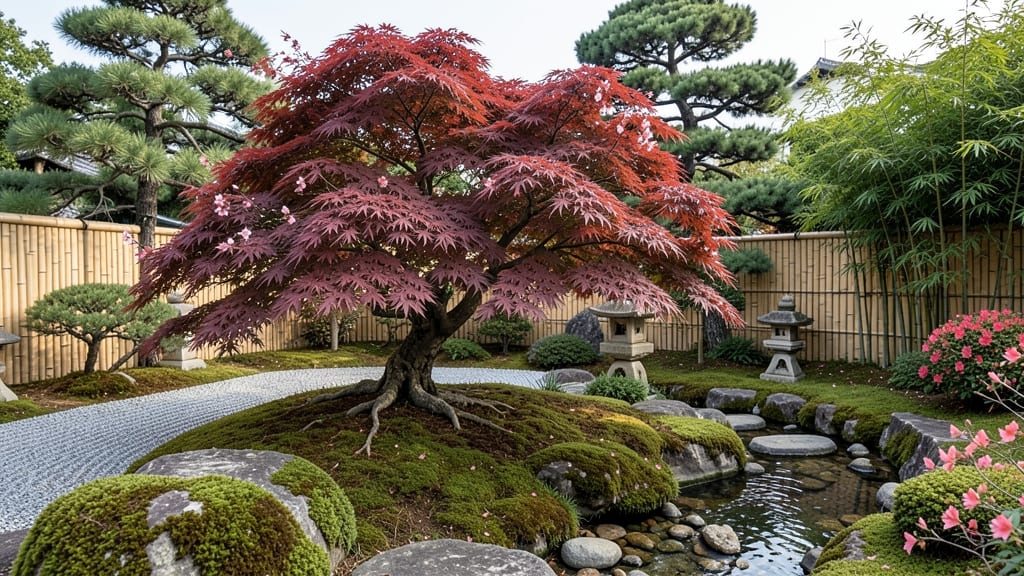
Los Angeles features stunning Japanese gardens where you can experience authentic Zen retreats, including the iconic Japanese Garden at the Getty Center, complete with tranquil koi ponds, historic tea houses, and meticulously landscaped Zen gardens. Don’t miss the Japanese Garden at the Huntington Library or Rancho Los Alamitos’ Japanese Tea Garden, both offering peaceful escapes steeped in cultural tradition.
These gardens aren’t just beautiful—they’re carefully crafted to reflect Japanese design principles while adapting to LA’s climate. 🌿 The Getty’s garden, for example, uses dry landscapes (karesansui) to symbolize water, while the Huntington’s features traditional water elements like streams and bridges.
Each space is designed for mindfulness, with winding paths encouraging slow exploration. Whether you’re visiting for the serene atmosphere or to study horticulture, these gardens offer something special for every interest.
For those planning a visit, timing matters—some gardens have limited hours or seasonal closures. The Getty’s garden is open daily, while Rancho Los Alamitos’ tea garden requires reservations. Pro tip: Weekday mornings are the quietest, perfect for photography or quiet reflection.
And if you’re a plant lover, you’ll appreciate the curated collections of maples, azaleas, and bamboo that thrive in these carefully maintained spaces.
💡 In This Article
- Design Principles Behind LA’s Japanese Gardens
- Best Japanese Gardens in LA for Visitors and Gardeners
Design principles behind LA’s Japanese gardens
Japanese gardens in LA follow strict design principles rooted in centuries-old traditions, yet they cleverly adapt to Southern California’s Mediterranean climate. The most fundamental concept is wa (harmony), achieved through balanced elements like water, stone, and vegetation.
At the Getty Center’s garden, for example, the 1.5-acre dry landscape (karesansui) uses raked gravel to symbolize water, a technique that requires precise 15-degree angles for the gravel ridges to create the illusion of ripples. This method conserves water while maintaining the garden’s serene aesthetic—critical in drought-prone LA.
The placement of stones is another science. Each rock is strategically positioned to represent mountains or islands, often following the odd-number rule (1, 3, or 5 stones) to avoid symmetry.
At the Huntington’s garden, you’ll see granite boulders weighing up to 3 tons carefully arranged to frame views of the Japanese tea house. These stones are typically sourced from local quarries but treated with acid-washed techniques to mimic the weathered look of stones aged by centuries in Japan.
The moss, another key element, is cultivated in shaded areas using shade cloths to protect it from LA’s intense 260+ sunny days per year.
Seasonal plant selection is where LA’s gardens get creative. Traditional Japanese gardens rely on maples, wisteria, and cherry blossoms, but Southern California’s mild winters allow for extended blooming seasons.
The Getty’s garden features dwarf Japanese maples (like the 'Bloodgood' variety) that thrive in LA’s USDA Zone 10 climate, their leaves turning vibrant reds in autumn. Meanwhile, the Huntington’s garden incorporates California native plants like toyons (Heteromeles arbutifolia) alongside traditional choices, creating a fusion that respects both cultures.
This adaptation ensures the gardens remain vibrant year-round, even during LA’s dry summers.
Water features play a dual role: they’re both practical and symbolic. The Japanese Garden at Rancho Los Alamitos includes a 1,200-gallon pond with koi fish that thrive in the garden’s 68-72°F water temperature. The pond’s design follows the curvilinear principle, with no straight lines to mimic natural water flows.
In contrast, the Huntington’s garden uses a stone-lined stream that channels water through the landscape, creating a soothing auditory element. This dual approach—both still and flowing water—caters to different visitor preferences while staying true to Japanese aesthetics.
Lighting is another often-overlooked principle. Many LA gardens incorporate traditional lanterns (tōrō) that not only illuminate paths but also create a warm, inviting glow. The Getty’s garden uses stone lanterns with LED bulbs, which provide 1,200 lumens of soft light without the harshness of modern floodlights.
These lanterns are placed along the 1.2-mile walking path to guide visitors through the garden after sunset, enhancing the meditative experience. The placement follows the rule of three: lanterns are grouped in threes to create visual balance and rhythm.
What makes these gardens truly special is how they blend tradition with innovation. For instance, the Japanese Garden at the Japanese American National Museum in Little Tokyo uses recycled materials for its bridges and benches, a nod to modern sustainability practices.
Meanwhile, the Huntington’s garden incorporates automated irrigation systems that deliver water precisely where needed, reducing waste by up to 40% compared to traditional sprinklers. These adaptations prove that Japanese garden design isn’t rigid—it’s a living art form that evolves with its environment.