
Pests
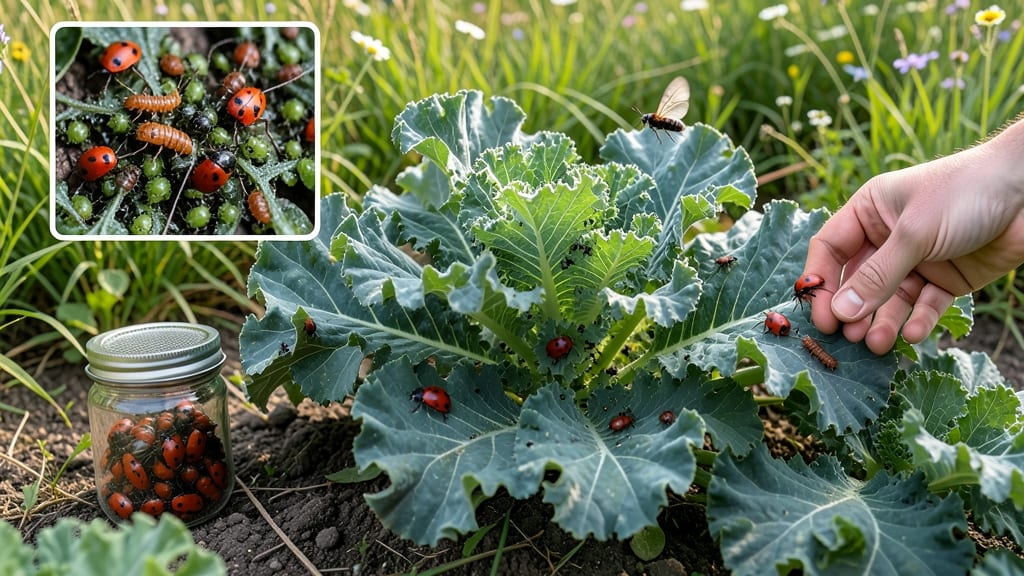
Ladybugs for garden pest control naturally eliminate aphids, mites, and soft-bodied insects by consuming up to 5,000 pests per adult in their lifetime, making them an eco-friendly alternative to chemical sprays. Release them at dusk for best results and provide water sources to retain them in your garden.
These tiny predators are nature's pest patrol, with a voracious appetite for common garden nuisances like aphids and spider mites. 🌿 Their effectiveness comes from their life cycle—larvae and adults both hunt, but adults can devour hundreds of pests daily.
I've seen them clear entire infestations within weeks when released properly, especially in shaded areas with water access. The key is timing: releasing them at dusk helps them avoid predators like birds and gives them time to establish territory before daylight hunting begins.
What makes them stand out is their precision—ladybugs won't harm your plants, only the pests feeding on them. This selective approach means you get natural pest management without collateral plant damage.
For best results, I recommend releasing them in batches of 500-1,000 per acre, especially during warm weather when pest populations peak. Just remember to avoid pesticides entirely—they'll kill your ladybugs faster than the pests!
💡 In This Article
- How Ladybugs Hunt and Consume Garden Pests
- Optimal Ladybug Release Strategies for Maximum Pest Control
How ladybugs hunt and consume garden pests
Ladybugs are specialized predators with a hunting strategy perfectly adapted to garden ecosystems. Their diet focuses on soft-bodied insects like aphids, mealybugs, scale insects, and mite eggs—pests that lack protective exoskeletons.
Adult ladybugs use their sharp mandibles to pierce prey, injecting digestive enzymes that liquefy internal tissues before sucking out the nutrients. This process is remarkably efficient: a single adult can consume 50-100 pests daily, while larvae are even more voracious, devouring 400-500 pests during their 2-3 week development period.
Their preference for soft-bodied insects stems from evolutionary adaptations. Ladybugs have developed sensory hairs on their legs that detect the chemical cues (like honeydew) produced by sap-sucking pests.
These hairs act like biological antennae, guiding them directly to infestations. 🐞 What's fascinating is their multi-stage hunting approach: adults patrol larger areas while larvae focus on dense clusters, creating a coordinated pest-control system.
The entire life cycle—from egg to adult—is dedicated to pest consumption, with each stage contributing to the garden's defense against outbreaks.
Temperature plays a crucial role in their hunting efficiency. Ladybugs are most active between 60-85°F, with peak predation occurring at 75°F. Below 50°F, their metabolism slows dramatically, reducing their appetite by up to 70%.
This explains why releases in cooler climates require larger initial populations or repeated introductions. Their hunting behavior also changes with light conditions: they're most active during early morning and late afternoon, avoiding the heat of midday when many pests become dormant.
What sets ladybugs apart from other natural predators is their mobility. Unlike ground-dwelling beetles, ladybugs can fly short distances, allowing them to quickly locate new pest hotspots across your garden. Their wings aren't just for transport—they use them to glide between plants with remarkable precision.
This aerial capability means they can cover up to 100 feet daily in search of food, making them ideal for larger gardens or landscapes where pest populations are spread out.
Interestingly, ladybugs exhibit what scientists call "area-restricted search behavior"—they linger in areas with high pest densities, creating a feedback loop where more pests attract more predators. This behavior explains why targeted releases near known infestations can lead to rapid population control.
The key is providing them with both water sources (like shallow dishes with pebbles) and shelter (like dense foliage or leaf litter), which encourages them to establish territories rather than dispersing immediately.
One often overlooked aspect is their reproductive strategy: female ladybugs lay eggs in clusters near pest populations, ensuring the next generation will have immediate access to food. This means a single release can lead to exponential pest control over 4-6 weeks as the ladybug population grows.
The most effective gardens maintain ladybug populations year-round by avoiding pesticides and providing overwintering sites like leaf piles or undisturbed garden corners.